Mini Split Installation in Livingston, MT
Tell us about the house, and a licensed contractor who covers Park County will get in touch.
Tell us about the job
It takes about a minute.
Livingston asks a mini-split to heat, not cool
Winter nights here average 13°F from December through February. A mini-split installed in Livingston needs to hold its heating output at temperatures well below where a lot of equipment is tested, and it runs that job 12 months a year, since homes here don't need cooling at all. Summer afternoons average 73°F, so the compressor spends its life on heat, not on the switch to cooling most systems are built around.
Any mini-split installed new has to meet the federal minimum for a split-system heat pump, 14.3 SEER2 for cooling and 7.5 HSPF2 for heating. In a place like this, the heating number matters more than the cooling one ever will. Park County also sees its share of winter storms, and with 18% of Montana households losing power for 24 hours or more in 2024, it's worth asking a contractor how the unit you choose handles a cold restart once power comes back on.
- 13°F
- the average winter night it heats against
- 73°F
- the average summer afternoon it cools against
Montana requires HVAC contractors to hold a state license.
The state license is held by the contractor, not by each job. Montana's Department of Labor and Industry licenses HVAC contractors. There is one carve out. Work under $2,500 does not need a licensed contractor at all.
A mini-split installation runs past that $2,500 line, so the contractor doing this job should hold the state license. The job will also need a permit from the local building office, and an inspection once the work is done, the way most cities and counties handle a new heat pump install.
Source: Montana Legislature
- Is a mini split worth it?
- For most homes here, yes, especially if the alternative is heating or cooling a room that ductwork does not reach well. A mini split is a heat pump, so it can heat and cool with the same unit, which matters here since homes need heat all 12 months of the year. Winter nights average 13°F, so the unit has to be sized for real cold, not just mild weather. Whether it makes sense for your house depends on layout and how it fits with your current heat, which a contractor should look at directly.
- How many rooms can a mini split cover?
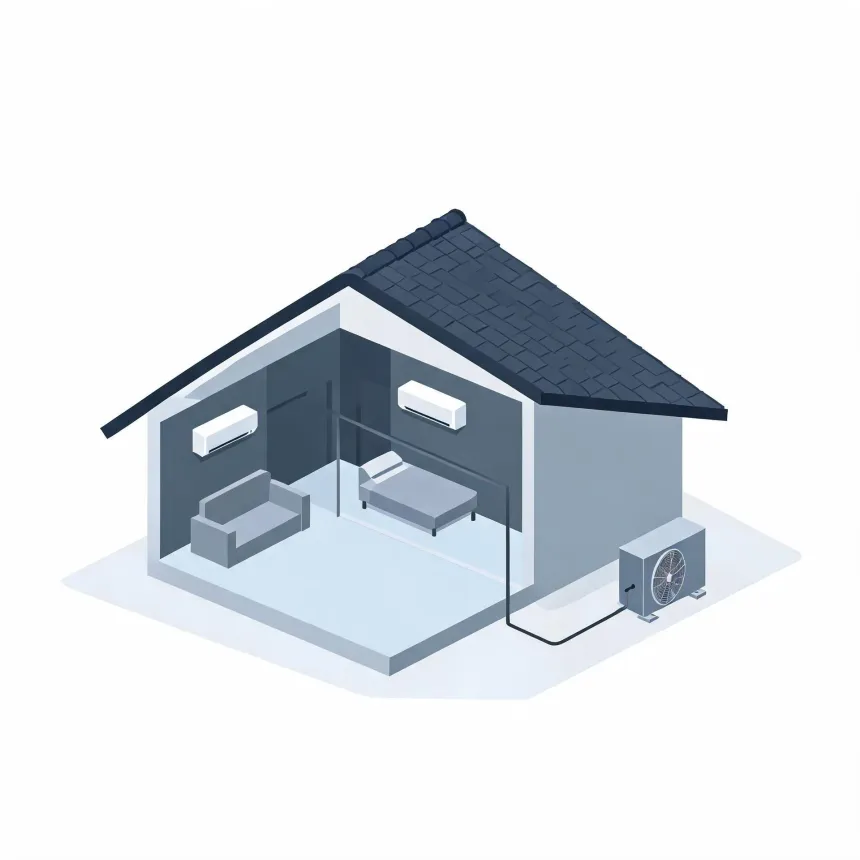
- A single outdoor unit can run one indoor head or several, depending on the system. Multi-zone systems support multiple indoor heads, each one heating and cooling its own room or open area on its own. The number that makes sense for your house depends on square footage, layout, and how much heat each room loses, which a contractor sizes room by room rather than guessing at a whole-house number.
- Can a mini split heat a whole house?
- It can, if it is sized and placed to cover every room, but that usually means a multi-zone system with an indoor head in each area rather than one unit trying to heat the whole place. Homes here need heat all 12 months, and winter nights average 13°F, so the system has to be sized for that cold, not just for mild weather. A contractor can work out whether whole-house coverage means multiple zones or whether mini splits should supplement your existing heat instead.