Mini Split Installation in Bozeman, MT
Tell us about the house, and a licensed contractor who covers Gallatin County will get in touch.
Tell us about the job
It takes about a minute.
Bozeman asks a mini-split to heat, not just cool
Homes here need heat from September through June, ten months a year. Winter nights average 13°F from December through February, so a mini-split spends most of its life pulling heat out of cold air, not putting cool air into a warm house. Summer afternoons only average 74°F, so cooling is the easy part of its job here.
Any mini-split manufactured from 2023 on has to meet the federal minimum of 7.5 HSPF2 for heating and 14.3 SEER2 for cooling. Given how this place uses one, the heating rating is the one that matters most.
- 10 months
- September through June, your system heats
- 13°F
- the average winter night it heats against
- 74°F
- the average summer afternoon it cools against
Montana requires HVAC contractors to hold a state license.
The license comes from the Montana Department of Labor and Industry, and it belongs to the contractor rather than each job they do. Work under $2,500 does not need a licensed contractor in Montana.
A mini-split installation runs well past that $2,500 line, so the contractor doing yours should hold that state license. Most cities and counties also require a permit for this kind of installation, with an inspection once the work is finished. That inspection is what checks the work itself, the refrigerant lines, the electrical hookup, the mounting. The license tells you who is allowed to do the job. The permit and inspection tell you whether this particular installation was done right.
Source: Montana Legislature
- Is a mini split worth it?
- For most homes here, yes, because you need heat ten months of the year and a mini split handles that with one outdoor unit. Winter nights average 13°F, and a heat pump built for cold climates is designed to keep pulling heat at those temperatures, so you are not left relying only on backup heat. The bigger question is coverage. A mini split is worth it when it is sized and placed to match the rooms it serves, and a contractor can walk the house to work that out.
- How many rooms can a mini split cover?
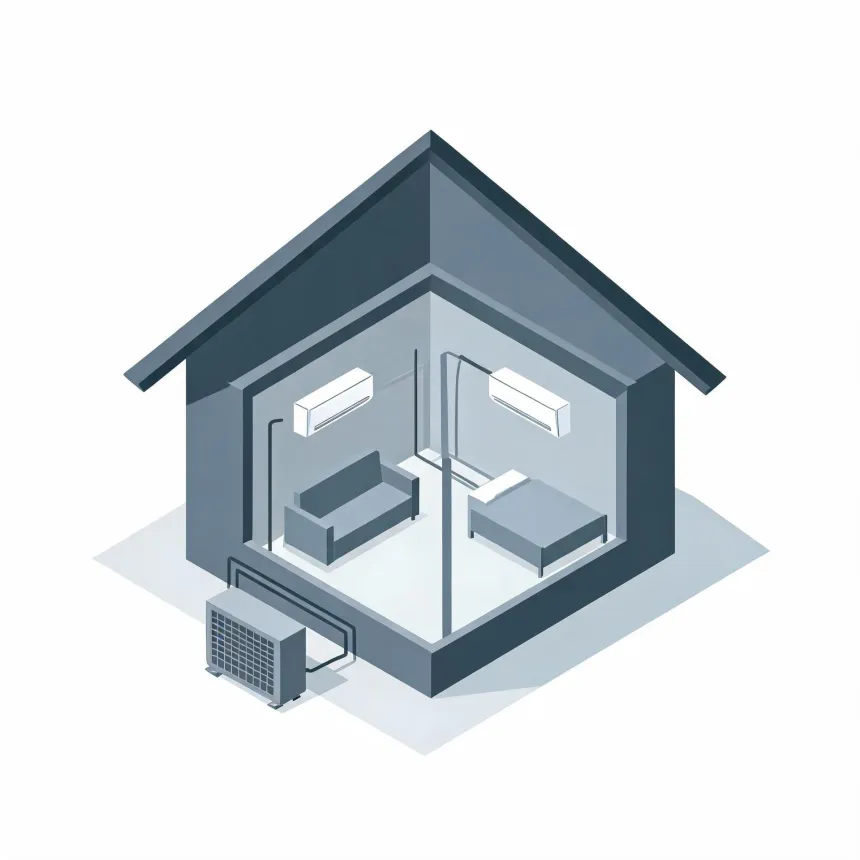
- A single outdoor unit can run one indoor head or several, so the number of rooms depends on which setup goes in. One head handles one room or an open area well. Covering separate bedrooms or a whole floor means adding indoor heads, and each one needs its own line running back to the outdoor unit. A contractor sizes the system to the rooms you want covered, not the other way around.
- Can a mini split heat a whole house?
- It can, but it takes the right number of indoor heads placed in the right rooms, not one unit trying to cover every space. Heat has to reach each room on its own, since there is no ductwork moving it around behind the walls. With winter nights averaging 13°F and heat needed from September through June, sizing matters more here than in a milder climate. A contractor can lay out how many heads a given house needs and where they go.