Mini Split Installation in Columbus, MT
A new system here will heat from September through June and cool from July through July every year. Tell us about the house, and a licensed contractor who covers Stillwater County will get in touch.
Tell us about the job
It takes about a minute.
Eleven months of work, one of them cooling
A mini-split in Stillwater County spends most of the year heating. That work runs September through June, ten months, with winter nights averaging 15°F. Cooling only matters in July, when afternoons average 78°F. The heat pump side is what earns its keep here.
Units installed new have to meet 7.5 HSPF2 for heating and 14.3 SEER2 for cooling. The heating number is the one that counts for this county, since the system spends ten times as long warming the house as cooling it. Winter storms are common here too, and Montana households often lose power for a day or more during them. Most mini-splits come back on by themselves once power returns, without anyone resetting anything.
- 10 months
- September through June, your system heats
- 1 months
- July through July, it cools
- 15°F
- the average winter night it heats against
- 78°F
- the average summer afternoon it cools against
NOAA nClimDiv, 1991–2020 normals
Montana requires HVAC contractors to hold a state license.
The Department of Labor and Industry tests the contractor before handing out this license, and it covers the business, not any one job. It applies across everything that contractor takes on. Montana does carve out an exception for small jobs. Work under $2,500 does not need a licensed contractor. A mini-split installation costs more than that once you count the equipment and the labor, so it falls under the license requirement.
Because this job needs a licensed contractor, that license is what stands behind the work. The installation will also typically need a permit from the local building office. An inspector checks the work once it is finished, and that inspection is what confirms the unit was installed correctly.
Source: Montana Legislature
- Is a mini split worth it?
- For most homes here, yes, since heat or cooling is needed 11 months out of the year. A mini split handles both jobs from one system, and it puts heat or cooling right into the room instead of pushing air through ducts that lose some of it along the way. Winter nights here average 15°F, and a mini split built for cold climates keeps pace with that. A contractor can look at your house and tell you whether it fits how you use the space.
- How many rooms can a mini split cover?
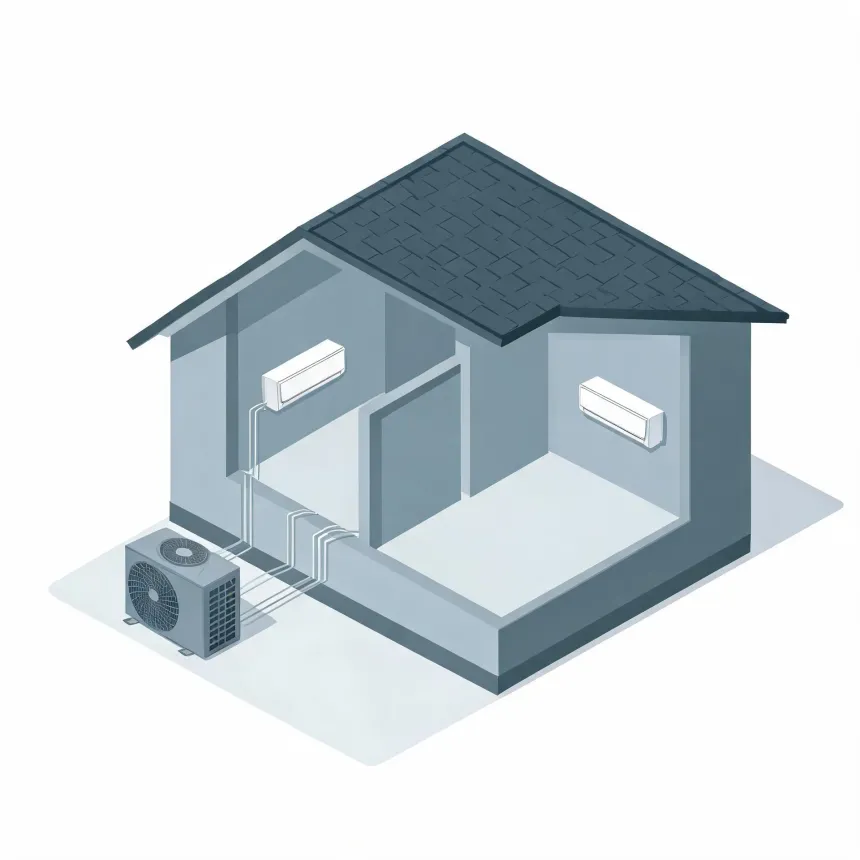
- A single outdoor unit can run one indoor head or several, depending on the system. Single-zone systems cover one room or open area. Multi-zone systems tie one outdoor unit to several indoor heads, each set to its own temperature. How many rooms make sense on one system depends on the size of each room and how the house is laid out, so a contractor sizing the job will walk through that with you.
- Can a mini split heat a whole house?
- It can, if enough zones are placed to reach every room. A multi-zone mini split with a head in each main room can carry the whole heating load, including through winter nights here that average 15°F, as long as the system is sized for that cold and the heads are placed where the house actually loses heat. A contractor can work out how many zones your house needs and where they belong.