
HVAC Installation in Livingston, MT
Tell us about the house, and a licensed contractor who covers Park County will get in touch.
Tell us about the job
It takes about a minute.

Livingston asks a lot of a furnace, and almost nothing of an air conditioner
Winter nights here average 13°F from December through February, and your furnace needs to hold that line every night of the year. Homes in Livingston need heat all 12 months. There's no real off season for it, no stretch where the system gets to sit idle and rest before the next cold snap.
Summer afternoons average just 73°F, so cooling asks almost nothing of a new system here. That changes what a new install should weigh most. Sizing and installing for the cold matters far more than sizing for a summer that barely shows up. Winter storms are common in this part of Montana, and any new system should be set up to start reliably after a cold night, not just run well once it's going.
- 13°F
- the average winter night it heats against
- 73°F
- the average summer afternoon it cools against
Montana requires HVAC contractors to hold a state license.
The state tested this contractor and keeps a record of the license, and that license belongs to the business, not to any one job it does. A job under $2,500 falls outside that requirement, but a full heating and cooling installation runs well past that mark, so the contractor doing this work needs to hold the license.
The license is what stands behind the work here, but it is not the only check on an installation like this. Most cities and counties in Montana require a permit from the local building office before the old furnace, air conditioner or heat pump comes out, and an inspection once the new one is in. That inspection is where a bad connection or a wiring mistake gets caught before it becomes a problem in the house.
Source: Montana Legislature
- When should I replace my HVAC system?
- Replace it when repairs get frequent, the system is old, or it can no longer keep up with a Livingston winter. A furnace working hard to fight nights averaging 13°F takes more wear than one in a milder climate, so age matters more here than the calendar alone suggests. If a technician is coming out for the same problem every heating season, or the system is past the age where parts are easy to find, replacement usually costs less over time than another round of repairs. A contractor can look at the specific unit and tell you where it stands.
- Should I replace my furnace and air conditioner at the same time?
- If both are near the end of their life, replacing them together often makes sense, since a system installed as a matched set tends to run better than pairing an old unit with a new one. That said, homes here need heat all 12 months and cooling isn't part of the picture the way it is elsewhere, so the furnace is doing the real work. If your air conditioner still has good years left, there's no rule that says it has to go just because the furnace does. A contractor can check both and tell you whether pairing them makes sense for your house.
- What happens during an HVAC installation?
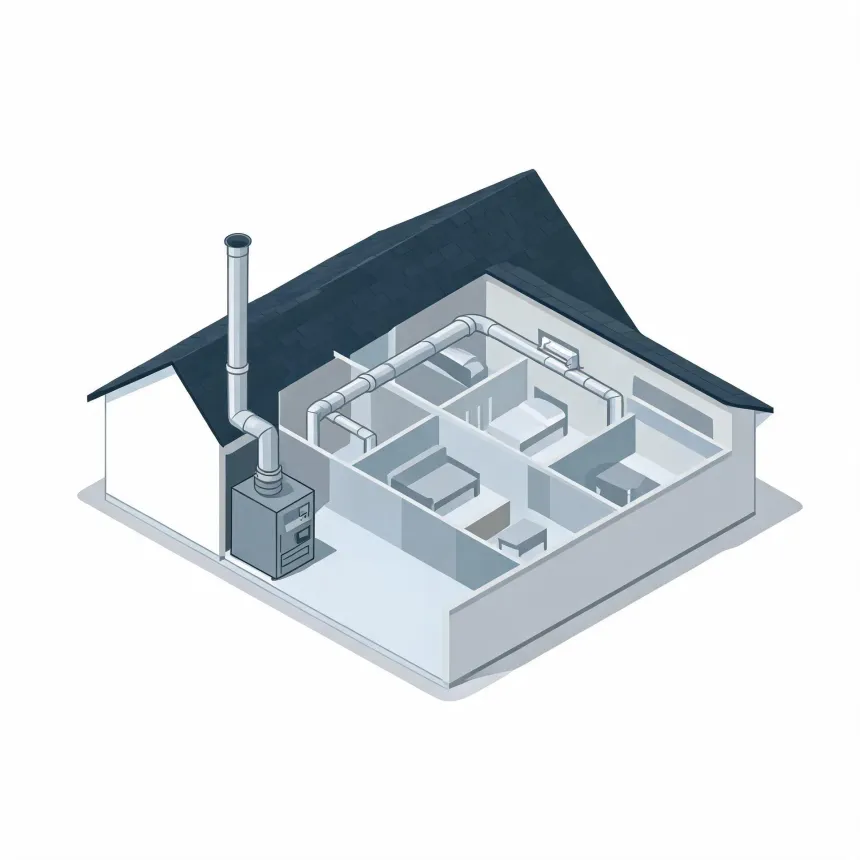
- A contractor removes the old equipment, sets the new furnace and air conditioner, and connects them to the existing ductwork, gas line, and electrical. They check the ducts for leaks or damage since ducts carry the air the new system heats or cools, and a leak there undercuts even a good unit. Once everything is connected, they test the system, check refrigerant levels if it's a cooling unit, and confirm it's heating or cooling properly before they leave. In most places, including here, replacing a furnace or air conditioner needs a permit from the local building office and an inspection once the work is done. Montana also requires the contractor doing the work to hold a state HVAC license.