
Montana HVAC Pros
Profile view of a bearded man wearing a dark baseball cap and a dark gray T-shirt against a plain off-white background.

How often to clean a dryer vent in Montana

Duct and vent cleaningMontana
Step 1 of 3

What kind of equipment?

How often should I clean my dryer vent in Montana?

You run a load of towels and notice it's taking longer than usual to dry, or you just haven't thought about that vent since the house was built. Montana's dry air feels like it should keep lint from being a problem, but the vent still fills up the same way it does anywhere else. You want a plain number to work from, not a guess.

Once a year, more often if you use the dryer most days

Lint builds up inside the vent every time the dryer runs, and it doesn't matter how dry the air outside is. A once a year cleaning clears it before it packs tight enough to slow the airflow. If there are several people in the house doing laundry most days, that buildup happens faster, and the vent is worth checking twice a year instead. A dryer that's taking longer to dry a normal load, or a dryer vent hood outside that doesn't flap much when the dryer is running, are both signs the vent is due. Since most homes in Montana heat with gas, a blocked dryer vent also means the exhaust has a harder time getting out of the house, which is its own problem beyond a slow dryer.

A pile of beige, navy, and teal towels sits on top of a washer or dryer in a dim laundry room with a window and an upper cabinet.

It's almost nine on a Tuesday and you're still in the laundry room. The dryer's been running since before dinner, two cycles now, and the towels on top are still damp at the fold. You press a hand against the front panel and it's hotter than it should be. The room smells faintly warm, like dust on a heater coil. Outside the window it's already dark, that early dark that settles in once the heat of the day burns off. You open the lint trap, clean it anyway, knowing that's not where the problem is. The dryer hums on, working harder than it has any reason to.

Clean It Yourself or Call Someone

Clean it yourself

  • A handheld brush kit can pull lint out of the first few feet of duct from either end, which is often where it collects worst.
  • You can see right away whether the vent hood flap outside opens freely when the dryer runs, which tells you lint isn't blocking the exit.
  • It costs you nothing but time, and you can do it on a weekend between loads without waiting for anyone.
  • If your duct run is short and mostly straight, a brush and a shop vac will reach most of the length without much trouble.
  • You won't know for certain if lint is packed in a bend or a long horizontal run, since a brush only goes as far as it's rigid enough to push.

Have it cleaned

  • Someone who services vents all season knows which runs clog fastest, the long ones and the ones with several turns before they reach outside.
  • A full cleaning clears the whole duct, not just the reachable ends, so a blockage sitting in the middle gets found instead of missed.
  • A local contractor can check the vent hood and the seal at the dryer itself, both places lint builds up that a homeowner often skips.
  • Because the match is to one licensed local contractor, you're not fielding calls from several companies trying to win the job.
  • It takes the search for who to call off your plate, which matters once you've noticed the dryer running long and want it handled.
A white hooded dryer vent cover mounted on beige horizontal vinyl siding above a concrete foundation wall with gravel at the base.

Vent clear and open

This is what a clean vent looks like from outside. The hood sits flush against the siding and the flap moves freely when the dryer kicks on. Air pushes out fast enough that you'd feel it from a foot away, and lint never gets the chance to build up behind the screen.


A square plastic dryer vent hood mounted on light-colored horizontal lap siding above a concrete foundation, with gray lint clogging its screened opening.

Vent clogged with lint

Lint has packed in behind the hood until it's smothering the screen. Airflow slows to a trickle, so moisture has nowhere to go but back into the duct. Left alone, that buildup is dry fuel sitting a few feet from the dryer's heating element.

A white plastic dryer vent hood mounted on horizontal lap siding, clogged with gray lint at its lower opening, above a concrete foundation and walkway.
Before you get your dryer vent cleaning
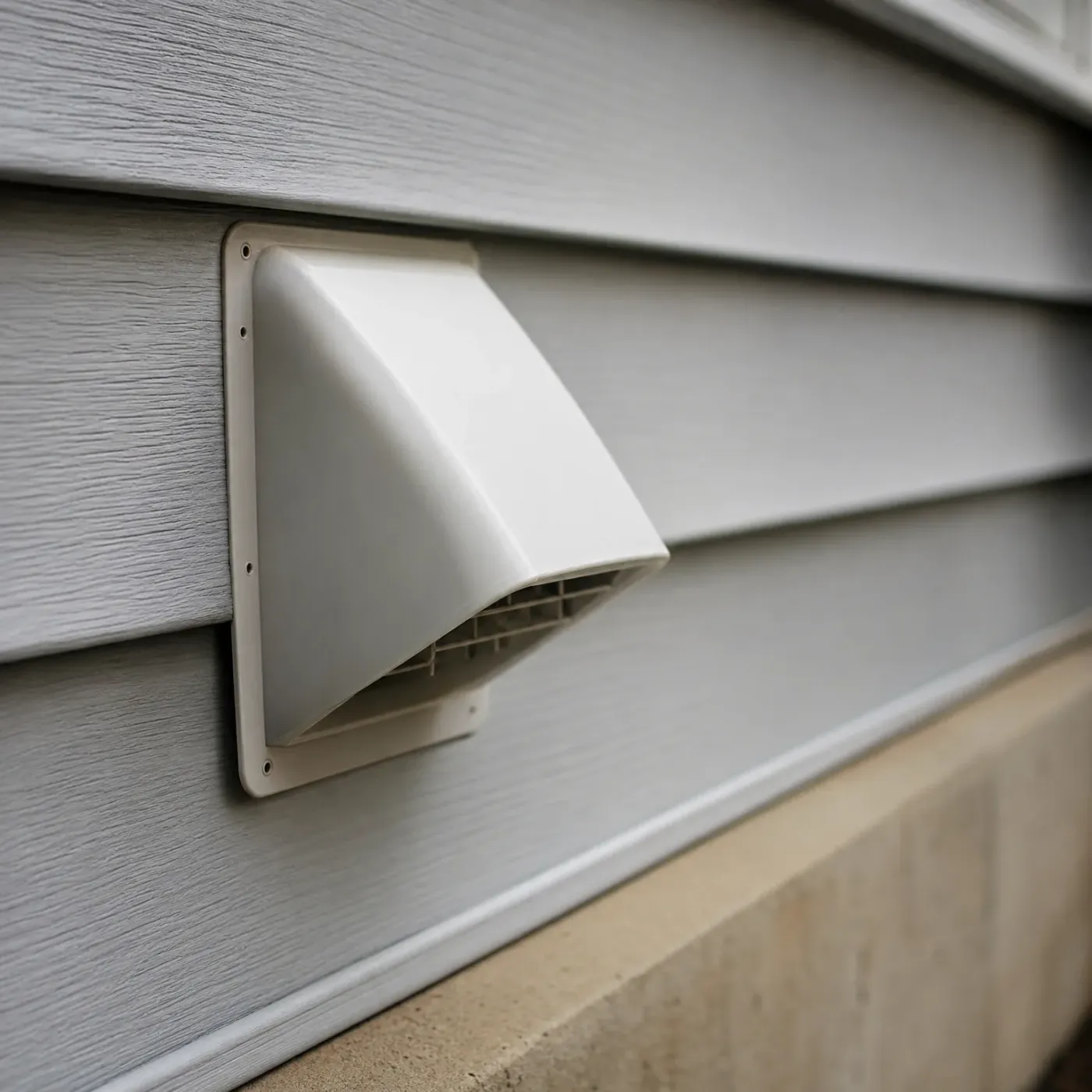
A white plastic hooded dryer vent with a screened opening mounted on gray horizontal lap siding above a concrete foundation and gravel bed.
After you get your dryer vent cleaning

Let someone else find the pro

Only one pro gets your request, so you hear from one company.

It costs nothing to send, and you don't have to hire anyone.

How a dryer vent actually clogs

  • Lint builds up fastest in the first few feet near the dryer and again at the outside hood, not evenly through the duct.
  • A clogged vent forces the thermal fuse to cut the heating element before the cycle finishes, which is why clothes come out cool and damp.
  • Rigid metal duct runs straighter and collects less lint than the flexible foil type, which sags and traps lint at every bend.
  • Every elbow in the duct run slows the airflow a little, so a vent with three or four turns clogs faster than a straight shot outside.
  • The outside hood has a flap that should swing open all the way when the dryer runs and snap shut when it stops.
  • Lint that never gets pushed outside collects behind the flap and inside the hood itself, not just in the duct you can't see.

Lint doesn't spread evenly through the duct. It piles up fastest right where the dryer connects, in the first few feet, and again at the hood outside where the warm air finally has to push through. Everything in between can look clear while those two spots choke the airflow down to nothing. That's why a dryer can still run and still feel warm while it takes two cycles to dry a load of towels. The heating element has a thermal fuse built in, and when airflow drops too low, that fuse cuts the element before the cycle is done. The drum keeps turning, the dryer keeps running, but the heat stops, and you're left with cool damp clothes and no obvious cause.

The duct material matters too. Rigid metal duct runs straight and sheds lint better than flexible foil duct, which sags between the studs and gives lint a place to settle at every low point. Add elbows to either kind and the airflow slows a little more with each turn, so a run with three or four bends clogs faster than a straight shot to the wall.

Outside, the hood has a flap that's supposed to swing open all the way when the dryer runs and seal shut when it stops. When that flap doesn't open fully, lint collects right behind it and inside the hood itself, a spot nobody checks because the duct looks fine from the laundry room.

A smiling bearded man in a green t-shirt sits on a gray sofa, looking down toward a device at the bottom of the frame, with a bookshelf and a green plant blurred behind him.
A bearded man in a plaid flannel shirt stands indoors beside a wood-framed, frost-covered window, looking outside, with a steaming brown mug on the sill and a wooden cabinet behind him.

Once a year, minimum

That's the standard for most homes. If you've got a long run of duct, more than one elbow, or a gas dryer running most weeks, check it closer to every six months.

Find a local pro

Dry air doesn't stop lint

Montana's low humidity keeps lint light and airborne, so it packs into bends and the outside hood just as fast as anywhere else. Dry air isn't a pass on cleaning it.

Find a local pro
A smiling man in a dark green sweater sits at a wooden table with a light gray mug in a kitchen with white tile backsplash, pendant lights, and an adjoining living room visible.
A smiling man in a dark gray sweater stands indoors looking to the side, with a kitchen counter holding a ceramic mug and open wooden shelves behind him and a living area in the background.
A smiling man in a dark blue button-up shirt stands at a white kitchen island, with open shelving, a gas range, a potted plant and a window in the background.
A smiling man with dark wavy hair and a beard, wearing a dark green knit sweater, sits in an open-plan living room and kitchen with a brown sofa, large windows, and a counter holding a mug and a wooden bowl.

Power costs 12.99 cents per kilowatt-hour statewide

At under 13 cents a kilowatt-hour, running the dryer longer than it needs to still won't wreck your bill the way it might elsewhere. That can mean a clogged vent goes unnoticed longer, since a second cycle on damp towels doesn't sting enough to make you check the duct.

EIA-861 2025 statewide residential average

A white hooded exterior vent cover with a screened lower opening, screwed to beige horizontal lap siding above a concrete foundation.

The hood sits flush and the flap swings free

Four screws hold this cap tight to the siding, and the louvers hang open and loose. Air from the dryer pushes them out with force. Nothing is blocking the grille, inside or out.

A hooded dryer vent mounted on beige lap siding, with gray lint buildup packed in and hanging from its louvered opening.

The louvers are packed shut with lint

You can see the gray mat built up across every slat, thick enough that the flap barely moves. Air that should push out hard is instead finding the smallest gap it can. That buildup against dry siding is what a fire marshal would call a hazard, not a maintenance note.

Once a year, check the vent. Twice a year if you run a gas dryer most weeks or the duct has a long run with more than one bend. That's the whole answer, and nothing about Montana's dry summers changes it, since lint builds up the same whether the air outside is dry or not. What changes is whether you notice the signs in time, a longer dry time, a hot panel, a hood flap that won't swing free. A contractor who works on vents in this area every season has usually already seen what's failing in yours, whether that's a crushed section of duct behind the dryer or a hood packed shut with lint, and knows where to look first instead of starting from scratch. You'd be working with one licensed local contractor on this, not fielding calls from several companies trying to win the job. Where you stand now is simple: the vent either needs a look or it doesn't, and you already know which one applies to your laundry room tonight.

A white plastic hooded dryer vent with a louvered grille mounted on gray horizontal vinyl siding above a concrete foundation.

Done looking for a dryer vent pro

Get a licensed local pro

Your dryer vent cleaning request goes to one local pro.

There's no charge for the request.