4 inches
That's the standard diameter of a dryer vent duct. Lint narrows that opening a little more with every load until the dryer can't push air through it fast enough.
Matched to your dryer vent job
Once a year is the usual rule, but how much laundry you run and how long your vent line is can push that sooner. A clogged vent makes your dryer work harder and takes longer to dry a load, and in a hard Yellowstone County winter that strain shows up fast. Answer that below, then get matched with a local contractor who can look at your setup directly.
Find a dryer vent proClean your dryer vent once a year. That's the baseline for a household running a normal amount of laundry through a standard vent run. Lint builds up inside the duct every time you dry a load, and it doesn't flush itself out. Once it narrows the vent enough, your dryer has to push air through a tighter space, so it runs longer and hotter to get clothes dry. In Yellowstone County, where winters are hard and most homes heat with gas, a dryer working harder adds to a system that's already under strain from the cold. A longer vent run, a larger household, or back to back loads most days means more lint moving through the duct, and that calls for cleaning more than once a year. If your dryer is taking noticeably longer than it used to, or the outside vent hood barely moves air when the dryer is running, that's your sign it's time now, not at the next annual mark.




2.37 people per household on average
Households here average 2.37 people, so most run several loads a week. That's enough laundry to build up lint fast enough to need that yearly cleaning.
Half the homes here were built by 1982
Half the homes in Yellowstone County were built in 1982 or earlier. A vent run that old has likely seen some wear, bends, or sagging that make lint pile up quicker.
Power here costs 14.42 cents per kilowatt-hour
Electricity here runs 14.42 cents per kilowatt-hour, close to the national average. A clogged vent still costs you in run time, even if the rate itself isn't steep.
ACS 2020-2024 · EIA-861 2025



It's past seven and you're pulling the last load out, but the towels on top are still damp at the fold. You run the dryer again. Forty more minutes and they're still not right, just warm and heavy. Outside it's already dropping toward a hard Yellowstone County freeze, and the laundry room is the one warm spot in the house, humid now too, the window fogged at the corner. You press a towel to your cheek out of habit, checking, then set it back on the pile and lean against the dryer, waiting out the second cycle.
You figure the dryer is just pushing air straight down a pipe to the outside, so it seems strange that lint would pile up along the way instead of riding that air out of the house. If the airflow is strong enough to dry your clothes, it seems like it should be strong enough to carry lint the rest of the way too. But that's not quite how the vent works.
Air moving through a duct doesn't move at the same speed everywhere inside it. It's fastest in the center and slower near the walls, and that's where lint drops out of the airstream and sticks, especially at seams, at the joints between sections, and anywhere the duct bends. A straight run loses less lint than one with turns, but every run has some. Each load adds a little more, and once a layer builds up, it catches more lint going forward, the same way dust gathers faster once it's already there. Nothing in the vent brushes that buildup loose on its own. It stays put until something pulls it out, which is the work a cleaning does.


The pro who gets in touch is licensed in Montana and works in Yellowstone County.
You're not committing to anything by asking.
A tech starts at the dryer, not the wall cap outside. The flexible duct connecting the dryer to the wall comes off first, and that connection point often holds more packed lint than people expect, since it sits right at the drum exhaust where lint is heaviest. From there a rotary brush goes in from the inside and works the full run, section by section, knocking lint off the duct walls instead of just stirring it loose and leaving it in place. A shop vac follows right behind, pulling that lint back out through the same opening rather than letting it travel further down the line, because pushed lint just packs somewhere else in the run. The exterior hood is the last thing to come off, which matters more than it sounds like it should. If a tech pulled that flap first, loosened lint from inside the duct would have nowhere to go but back down toward it. Duct length and the number of bends get checked too, since every turn in the run is a spot where lint can catch instead of blowing straight through. What the duct is made of changes how this goes. Metal duct takes a rotary brush without issue. Plastic or foil duct, the kind still found running through some older Yellowstone County homes, doesn't hold up the same way under that same brushing, which is part of why a tech checks what's actually back there before starting.


That's the standard diameter of a dryer vent duct. Lint narrows that opening a little more with every load until the dryer can't push air through it fast enough.
Your vent only serves your dryer, so whatever builds up inside came from your own laundry. Nothing clears it out except a cleaning.
At 2.37 people, your household is running a steady stream of loads through that vent most weeks, not just an occasional one. Keep the yearly cleaning on schedule rather than waiting for a sign something's wrong, since by the time drying times stretch out the duct is already packed tight.
ACS 2020-2024

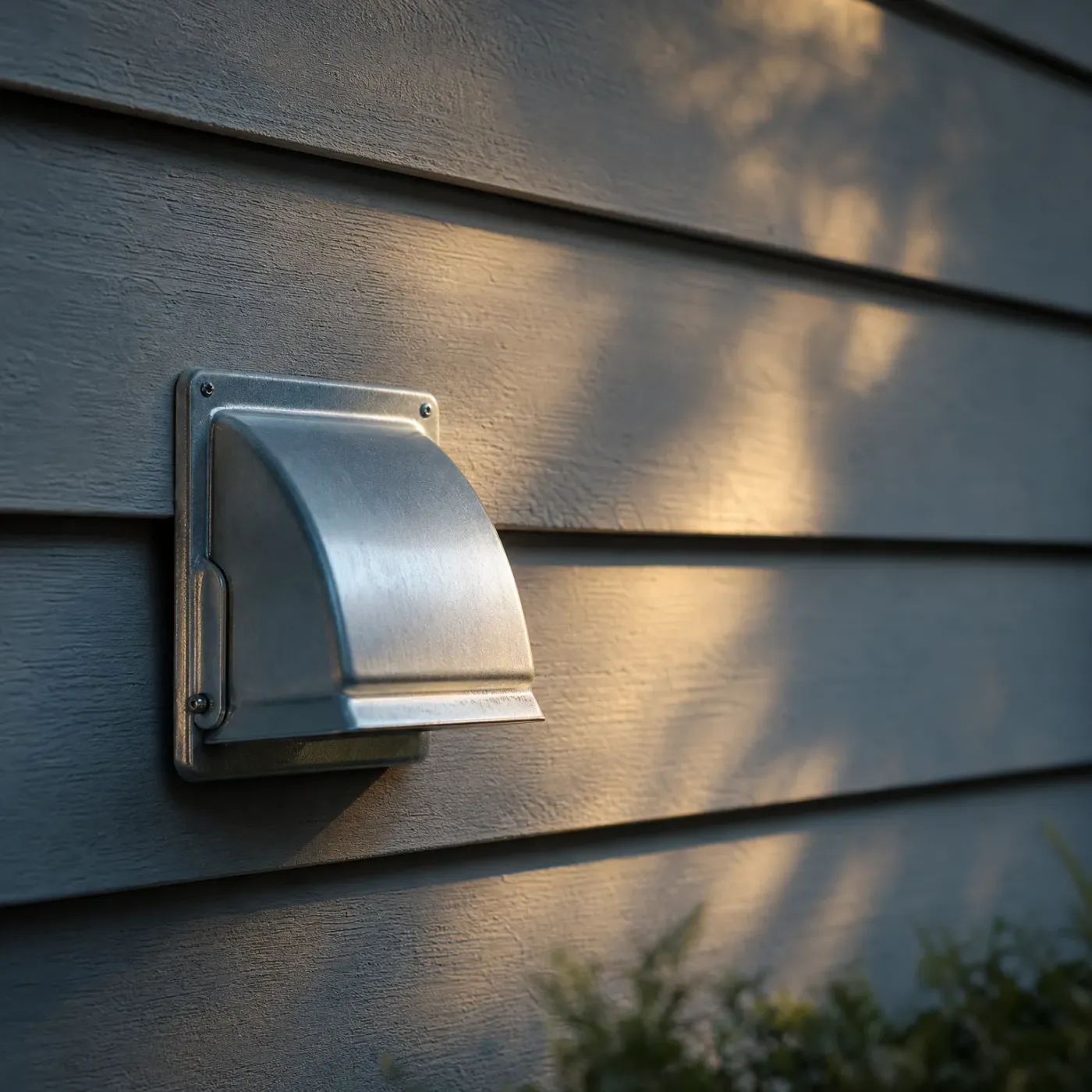
This is what a clear vent looks like from outside. The cap sits flush against the siding, and the flap hangs loose, ready to swing open the moment the dryer kicks on. Air and moisture push straight out in seconds, with nothing to slow it down.

Gray lint has built up around the flap until it can't close anymore. Instead of a quick burst of air out the wall, moist heat has nowhere to go but back into the duct. The dryer runs longer, and that lint sitting against the siding is dry fuel right where your house doesn't need it.

A year is the span that makes sense for your vent. Clean it on that schedule and the dryer keeps doing its job in ten or fifteen minutes a load, even when a hard winter outside means more laundry inside. Skip past a year and the lint already packed into that four inch duct just keeps narrowing the path, and you're the one who notices first when towels come out warm instead of dry.
A local contractor who works on vents all through Yellowstone County has seen what a neglected one looks like and what usually causes it, whether that's a long duct run or a flap packed shut with lint. Get matched with one who takes on your vent specifically, and you hear back from that one contractor directly, not a handful of them competing for your callback.


A local pro for your dryer vent cleaning