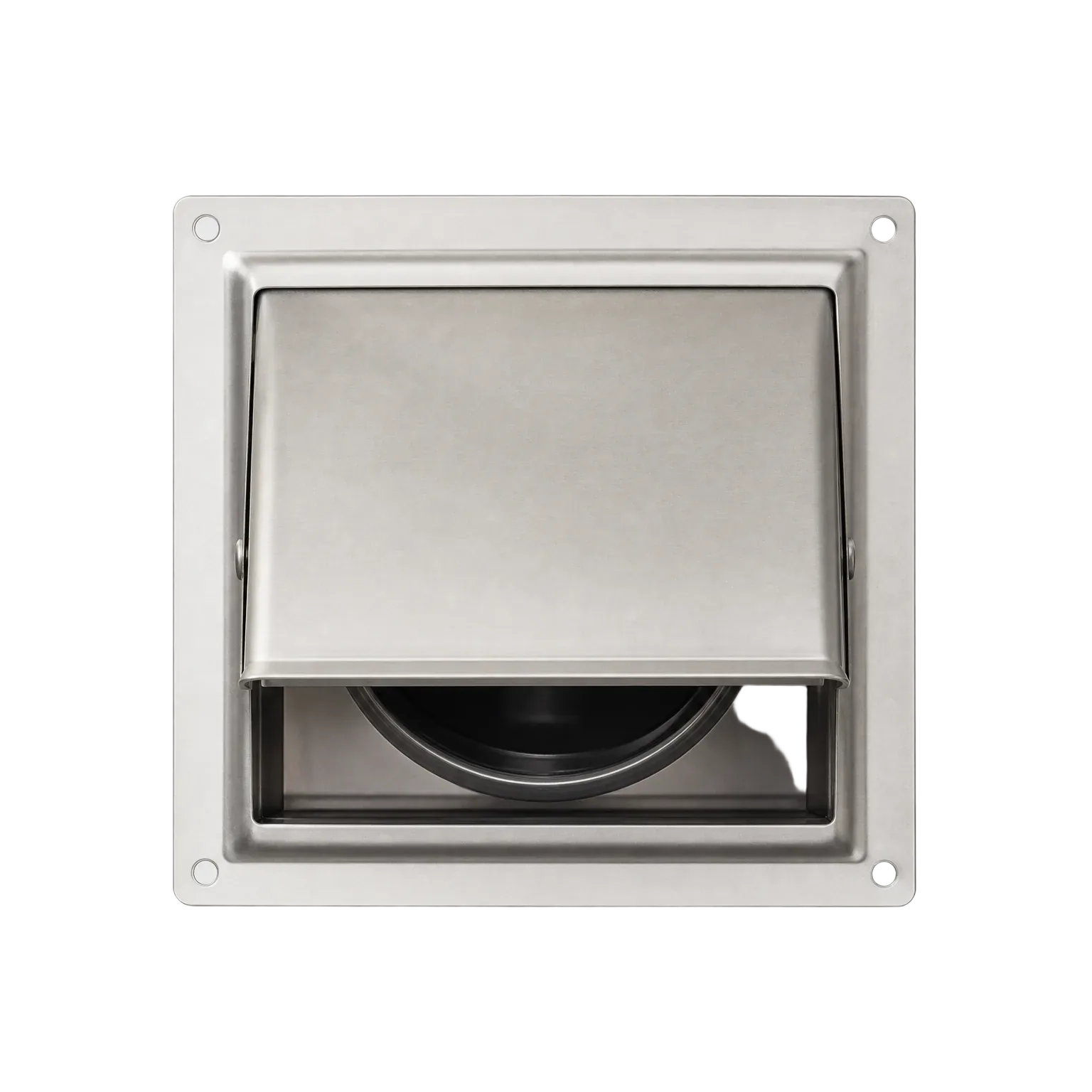
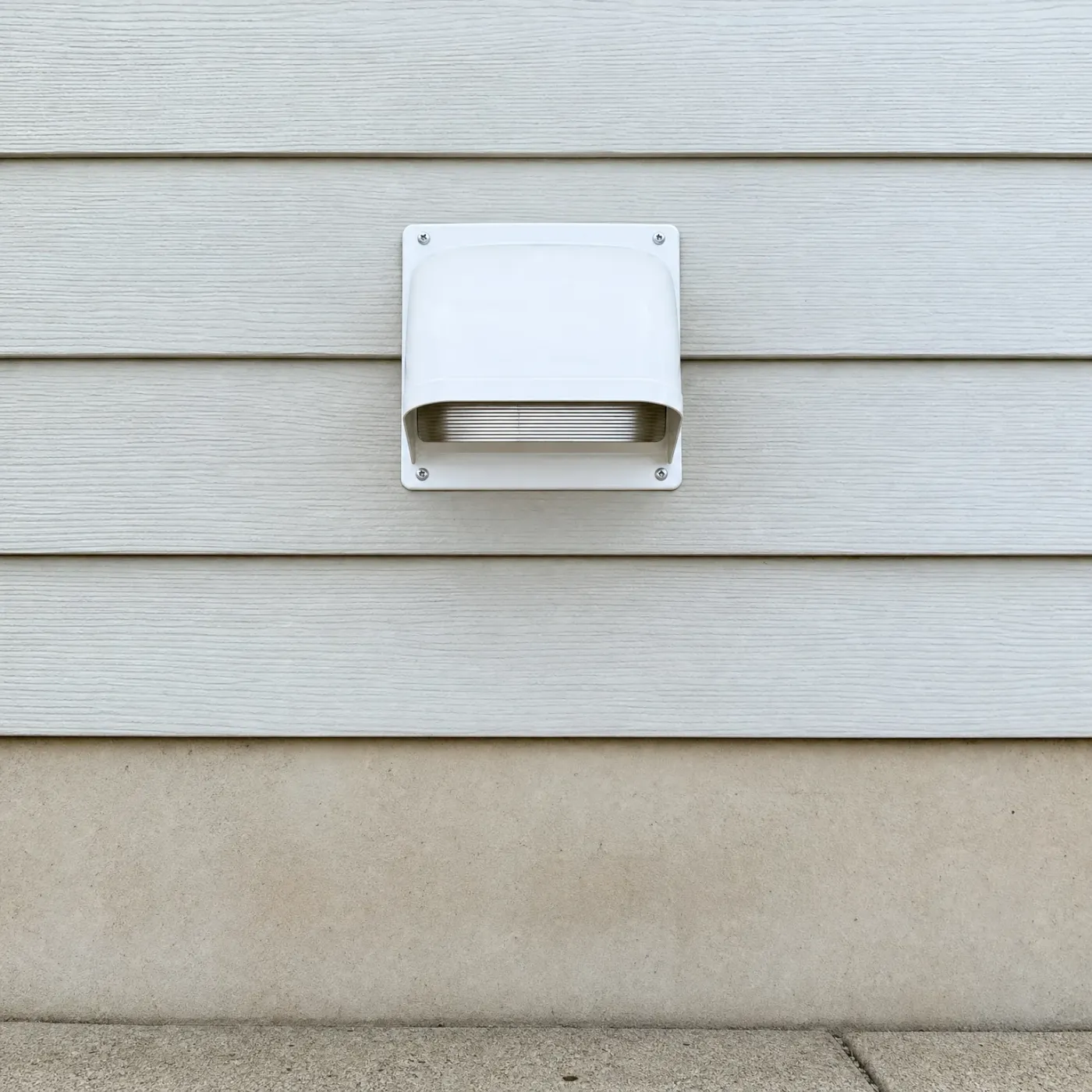
Vent clear and open
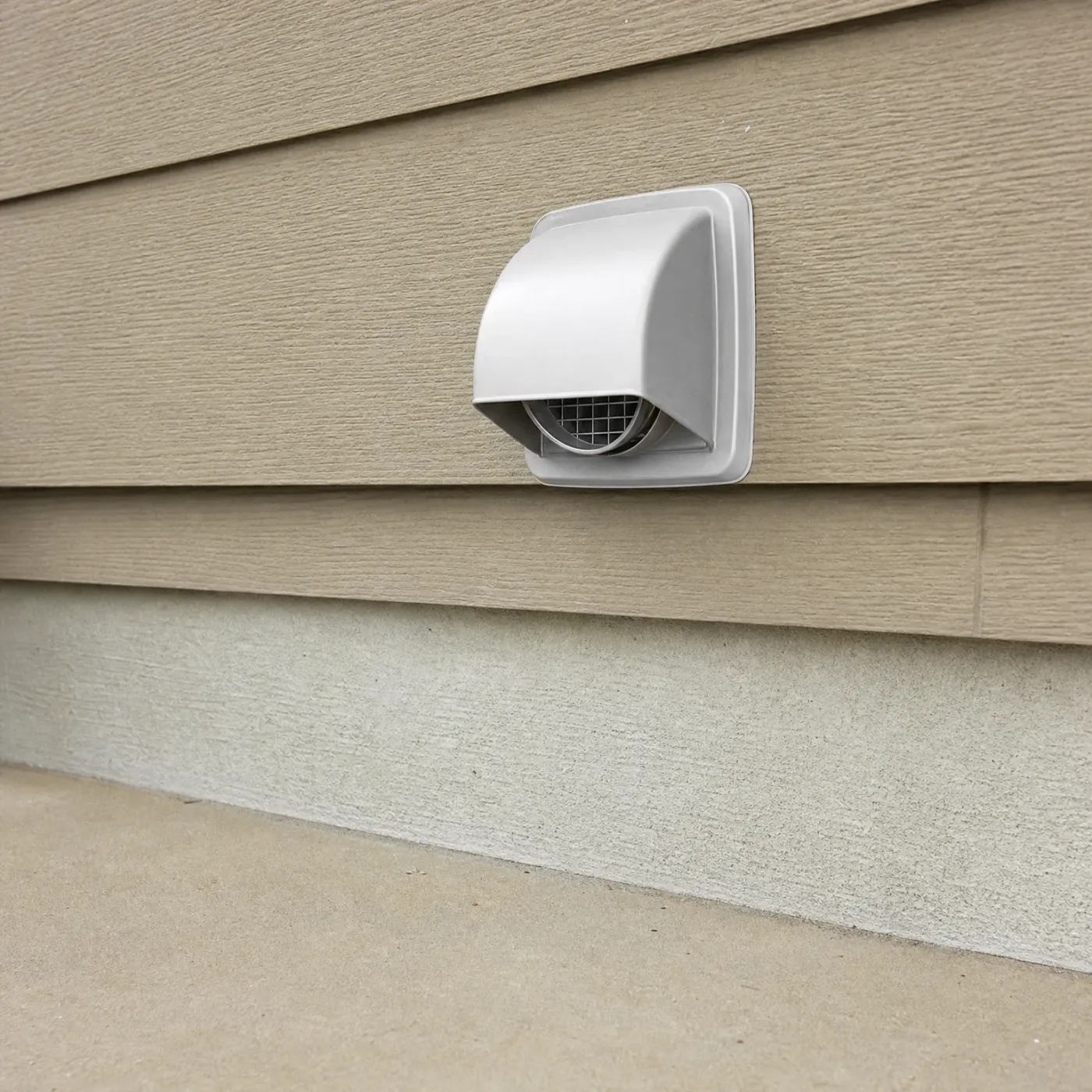
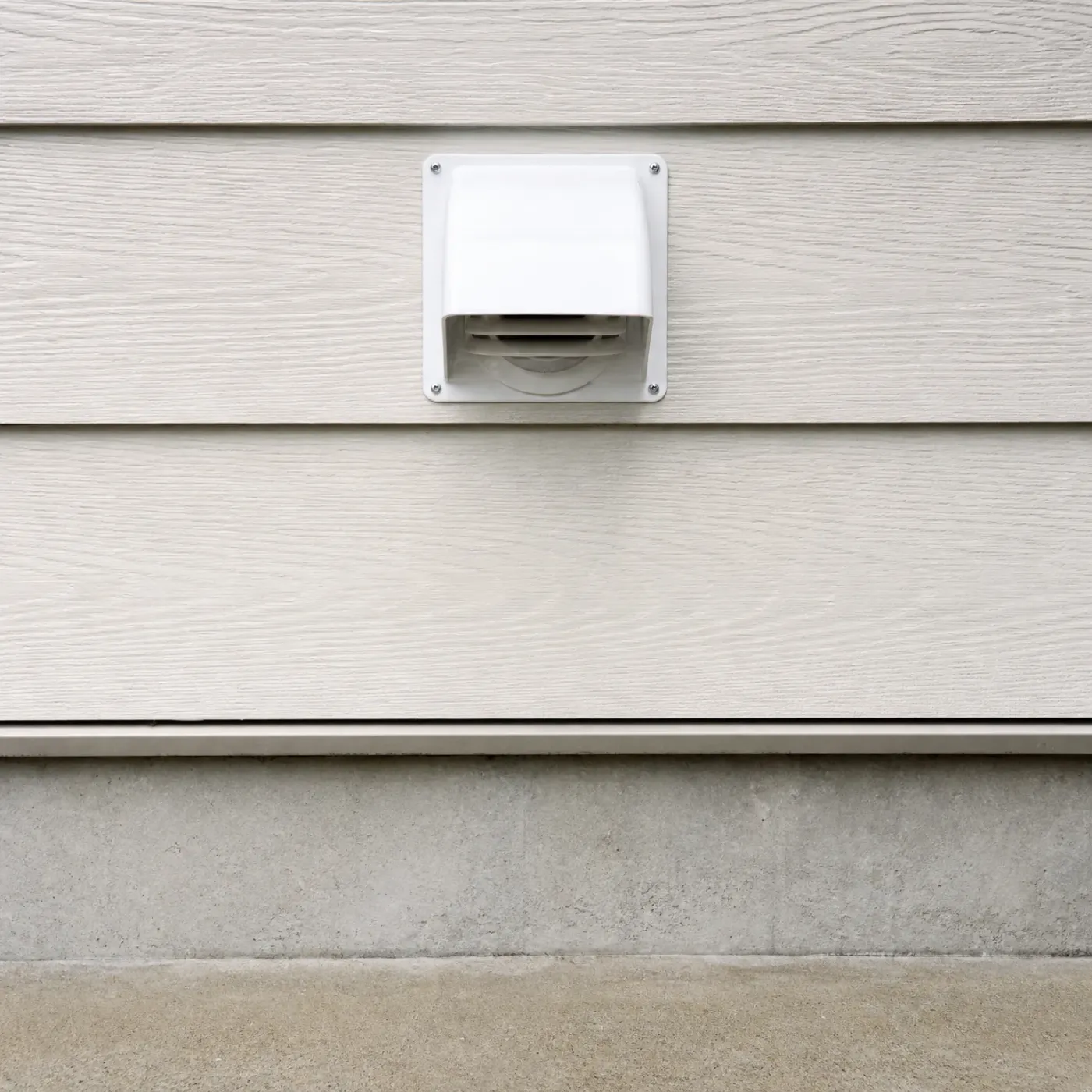
Air moves straight out through the louvers with every load. The cap sits loose and swings open when the dryer runs. Lint stays where it belongs, inside the trap you pull out and clean, not packed into the duct behind the wall.
Yes, a clogged dryer vent is a fire risk, and it is one of the more common causes of house fires tied to a single appliance. Lint builds up inside the vent and in the duct that runs out through the wall, and it is highly flammable. The dryer's heating element keeps working against that blockage, so the air inside the duct gets hotter than it should, and heat has nowhere to go. In Missoula, where many homes run their dryer hard through a long, hard winter, that duct run can collect lint for months without anyone checking it. A clogged vent also makes the dryer work longer to dry a load, which means more heat and more wear on the machine. If clothes are taking longer to dry than they used to, or the outside vent hood barely moves air when the dryer runs, that is the vent telling you it is blocked.


2.23 people per household on average
The average Missoula County household runs 2.23 people. More loads through the dryer each week means lint moves through that vent faster, and it builds up faster too.
Half the homes here were built by 1985
Half the homes in Missoula County were built in 1985 or earlier. A vent run that old has had decades to collect lint in bends and joints a newer house wouldn't have yet.
Power here costs 13.05 cents per kilowatt-hour
Power here runs 13.05 cents per kilowatt-hour. A dryer fighting a clogged vent runs longer to dry the same load, and that time shows up on the bill.
ACS 2020-2024 · EIA-861 2025
Air moves straight out through the louvers with every load. The cap sits loose and swings open when the dryer runs. Lint stays where it belongs, inside the trap you pull out and clean, not packed into the duct behind the wall.
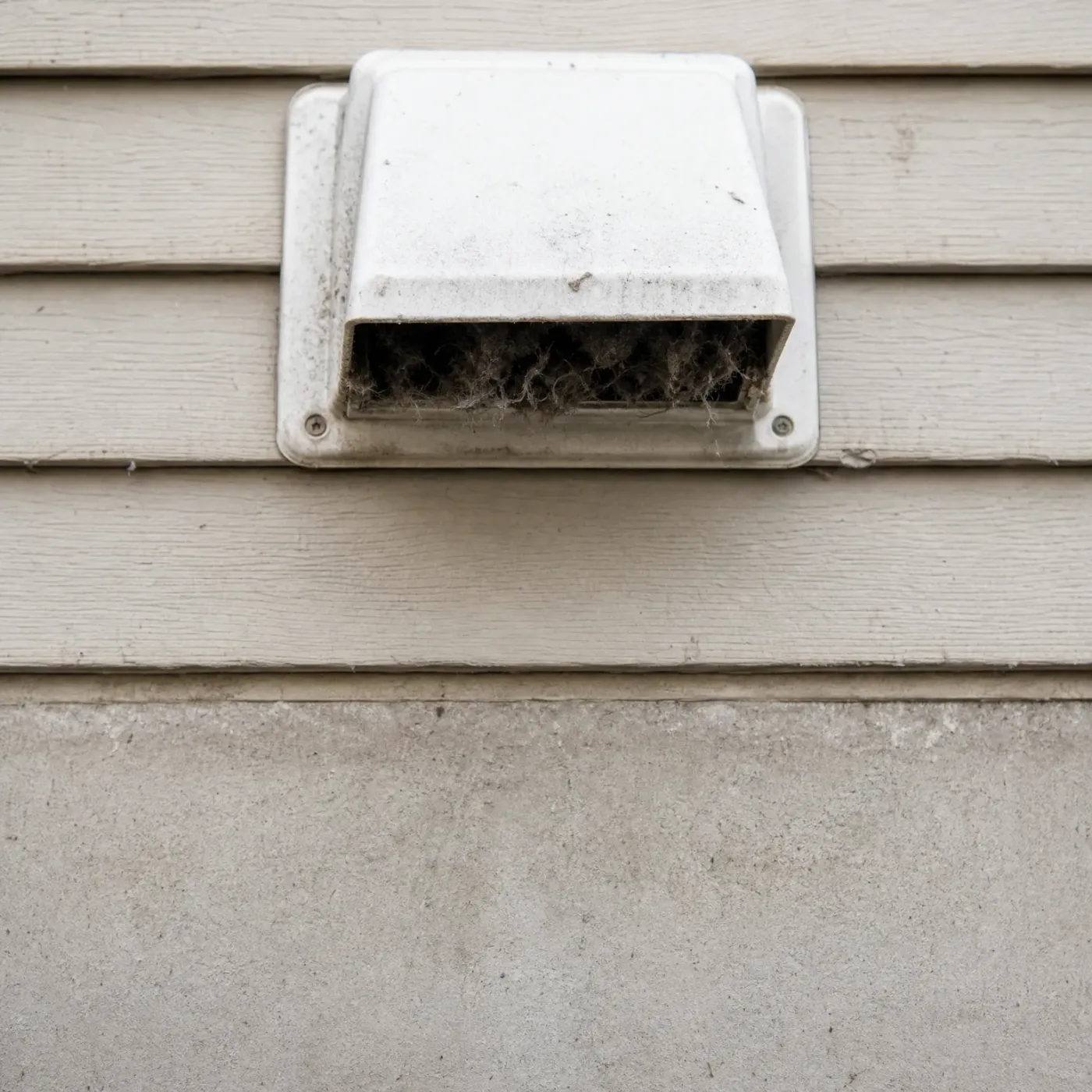
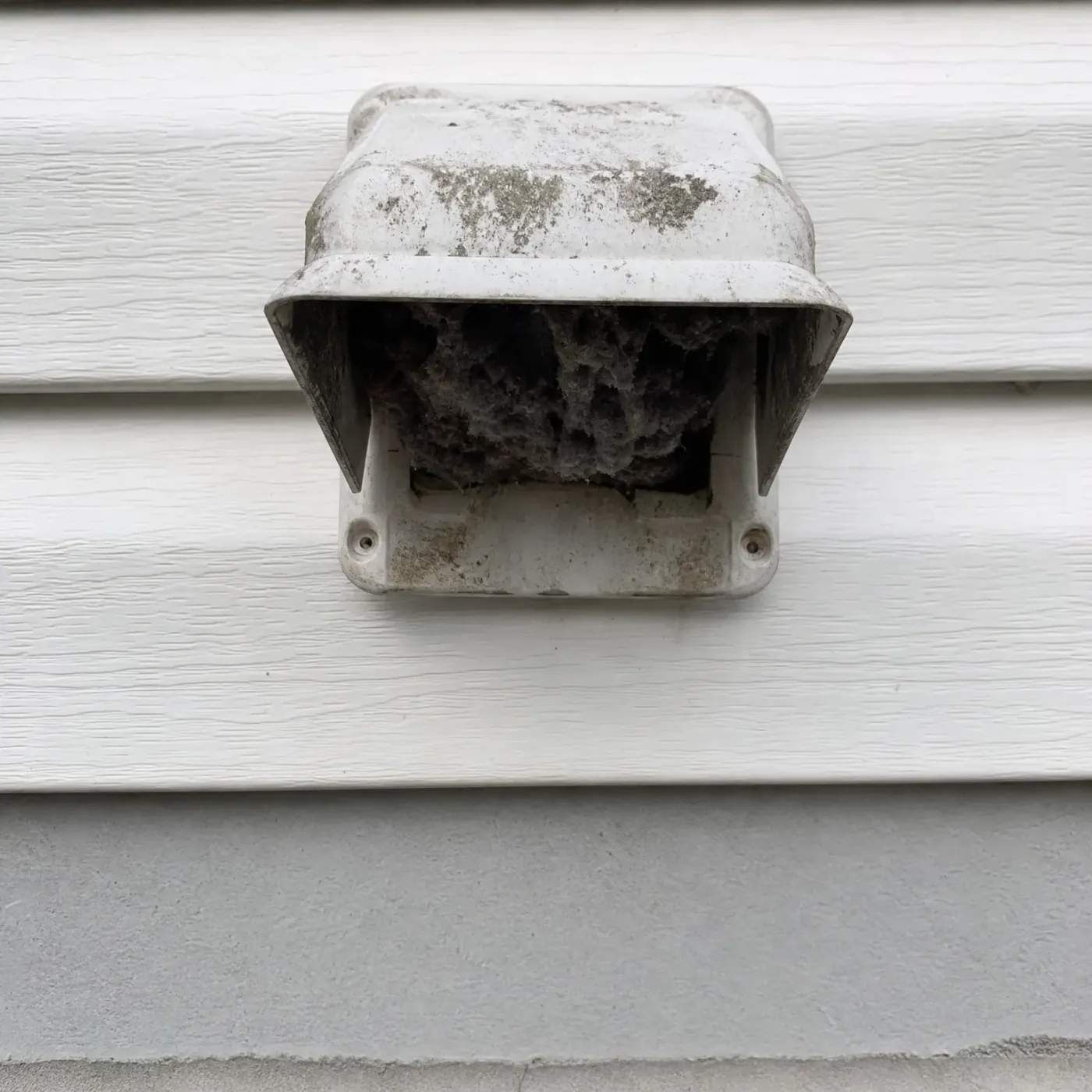
The opening is choked with gray lint, thick enough to block most of the airflow. Heat and moisture have nowhere to go, so they back up into the duct. That trapped heat against a wall of lint is what starts a dryer vent fire.
Notice if towels come out warm but not dry, or if you're running the same load twice to get jeans dry. Feel the outside vent cap while the dryer runs. Weak airflow or almost none means lint has packed the duct behind your wall. Check the dryer itself too. A hot-to-the-touch cabinet, a burnt smell, or the drum staying damp after a full cycle all point the same direction. Lint trapped in that duct sits a few inches from a heating element that runs every single load. With gas dryers common in Missoula County homes, that same blocked duct also keeps exhaust from venting outside the way it should.

It's past seven on a weeknight and you're pulling the last load out, except it isn't the last load. The towels are still damp, heavier than they should be, and you've got them piled on top of the dryer while you decide whether to run them again or hang them over the shower rod instead. The dryer ticks as it cools. The laundry room is warmer than usual, that close, overheated smell hanging in the air. You press a hand to one of the towels again, hoping you misjudged it. You didn't. Outside, the vent cap hasn't moved in a while.
You already know the vent is slow. Maybe you've felt the weak air at the cap, or you're running loads twice and telling yourself it's the weather. A clogged vent doesn't clear itself, and it doesn't wait for a convenient weekend either. The lint keeps building with every load until the duct is packed tight and the dryer is pushing hot air against a wall of it. Finding someone to clean it out usually means a string of calls, voicemail after voicemail, explaining the same problem to each one, then sitting with two or three quotes trying to guess who actually shows up on time. Send the request once and that part is done. A licensed contractor in the Missoula area gets it, not a list of five competing for your callback, and you go back to running the dryer without checking the vent cap every load.
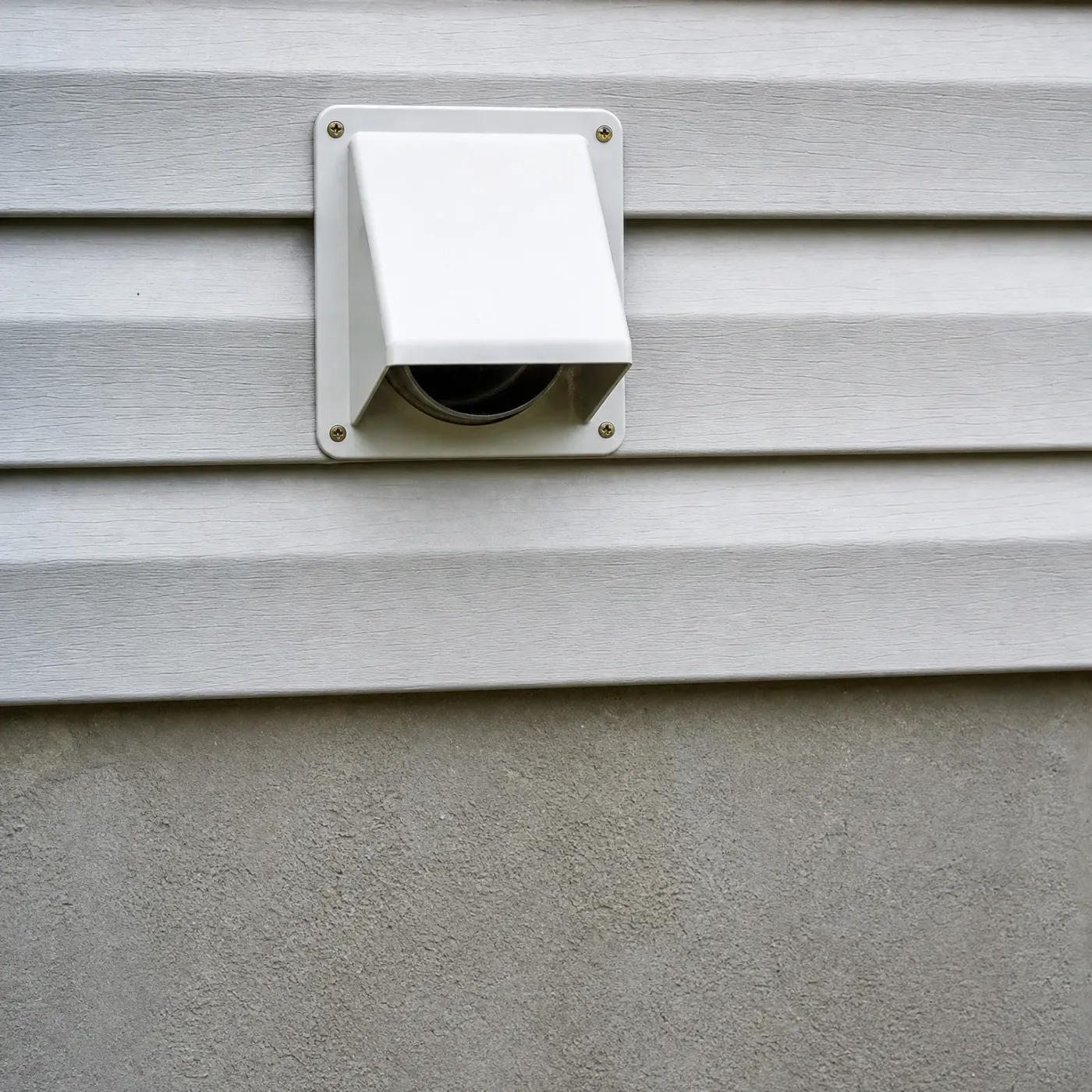
This is what a clear vent looks like from outside. The hood sits open, held by its own weight, with nothing blocking the flap. Air pushes it open every time the dryer runs and it falls shut again between loads.
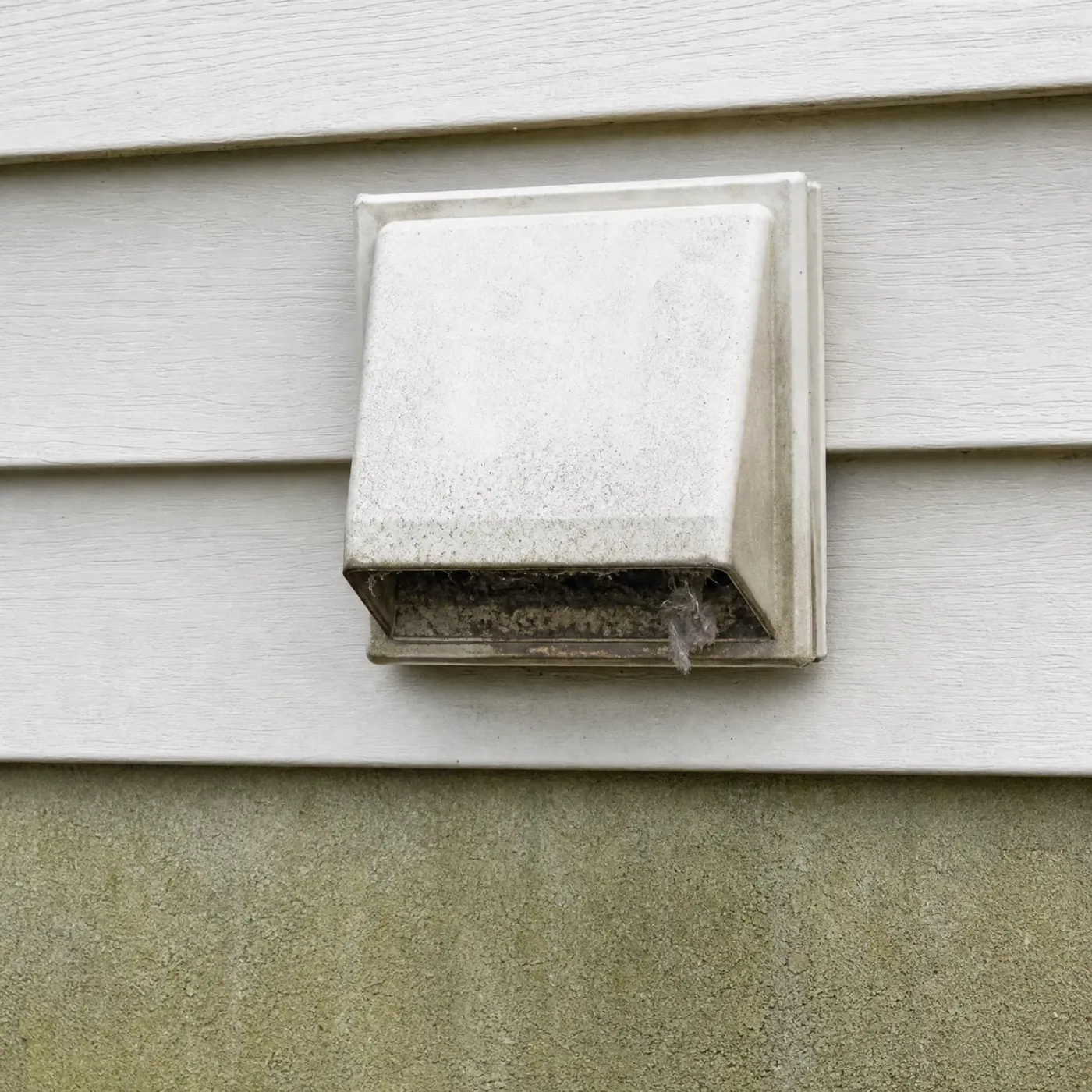
Here lint has worked its way to the outside and packed into the opening. The flap can't seat flush anymore. What you see at the cap is usually the small end of what's built up in the duct behind it.
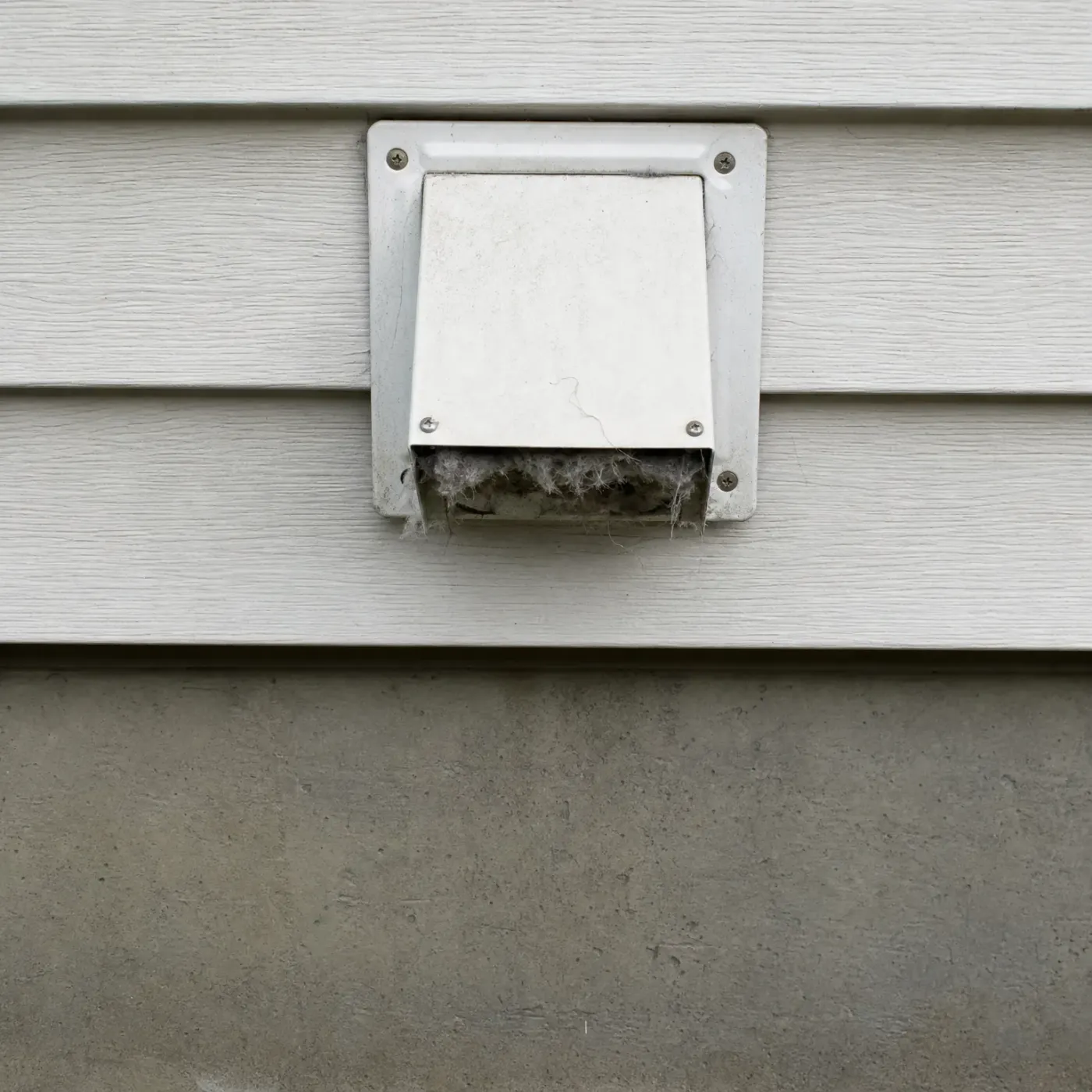
At 2.23 people, most Missoula County households are running two or three loads a week, not ten. That's less lint moving through the vent than a bigger family would see, but the duct still narrows a little with every load until someone clears it out.
ACS 2020-2024

The duct keeps narrowing. Each load pushes a little more lint into the spot already packed tight, and the heating element keeps firing next to it every time you start a cycle. Run time climbs. The motor works harder to push air through a smaller opening, and heat has fewer places to go but back toward the lint. Nothing about this gets better on its own between now and the next load.

A contractor runs a brush or a rod through the full length of the duct, from the back of the dryer to the cap outside, and pulls out what's built up along the way. Airflow goes back to pushing the cap open the way it did when the vent was new. Dry time drops back to one cycle. You stop checking the cap to see if it's moving air, because you already know it is.

Lint builds up in the duct, the heating element keeps firing next to it, and airflow that should carry heat straight outside instead backs up into the wall. That's true whether you run two loads a week or ten. The fix is getting the duct cleared, not just the trap.
You don't have to find the person to do it. That means no scrolling through listings trying to tell one contractor from another, no calling around Missoula and Missoula County to ask who even works on vents, no explaining the warm towels and the weak air at the cap over and over to each one, no sitting with a stack of quotes trying to guess which number is fair. Send the form once and that search is off your plate.





It's off your list after this
Answer a few questions about the dryer vent cleaning and skip the search.
