Why your AC vents are sweating in Montana

RepairCentral ACMontana
Step 1 of 2

What ZIP code is the job in?

Why are my AC vents sweating?

You walk by a vent and the metal around it is wet, maybe dripping onto the ceiling or wall. In a dry place like Montana, seeing water near your AC feels backward. You're not dealing with humidity in the air, so it's worth knowing what's actually causing it before a small drip turns into a stained ceiling.

Cold air hitting a warm vent is condensing, the same way a glass of ice water sweats

Your vents sweat when the metal around them gets colder than the air in the room, and the moisture in that air turns to water on contact. Montana summers run hot and dry, so this usually isn't humidity building up in your house. It's more likely a duct that isn't sealed or insulated well where it passes through an attic or crawlspace, or a filter so clogged the system is pulling too little air across the coil and running colder than it should. Left alone, that moisture soaks into drywall and insulation around the vent. A contractor can check the duct insulation and the airflow and tell you which one is doing it.

A dimly lit living room with a black pedestal fan on a wood floor beside a gray sofa with a patterned pillow, a wooden coffee table in the foreground, potted plants at left, and a curtained window with blinds behind.

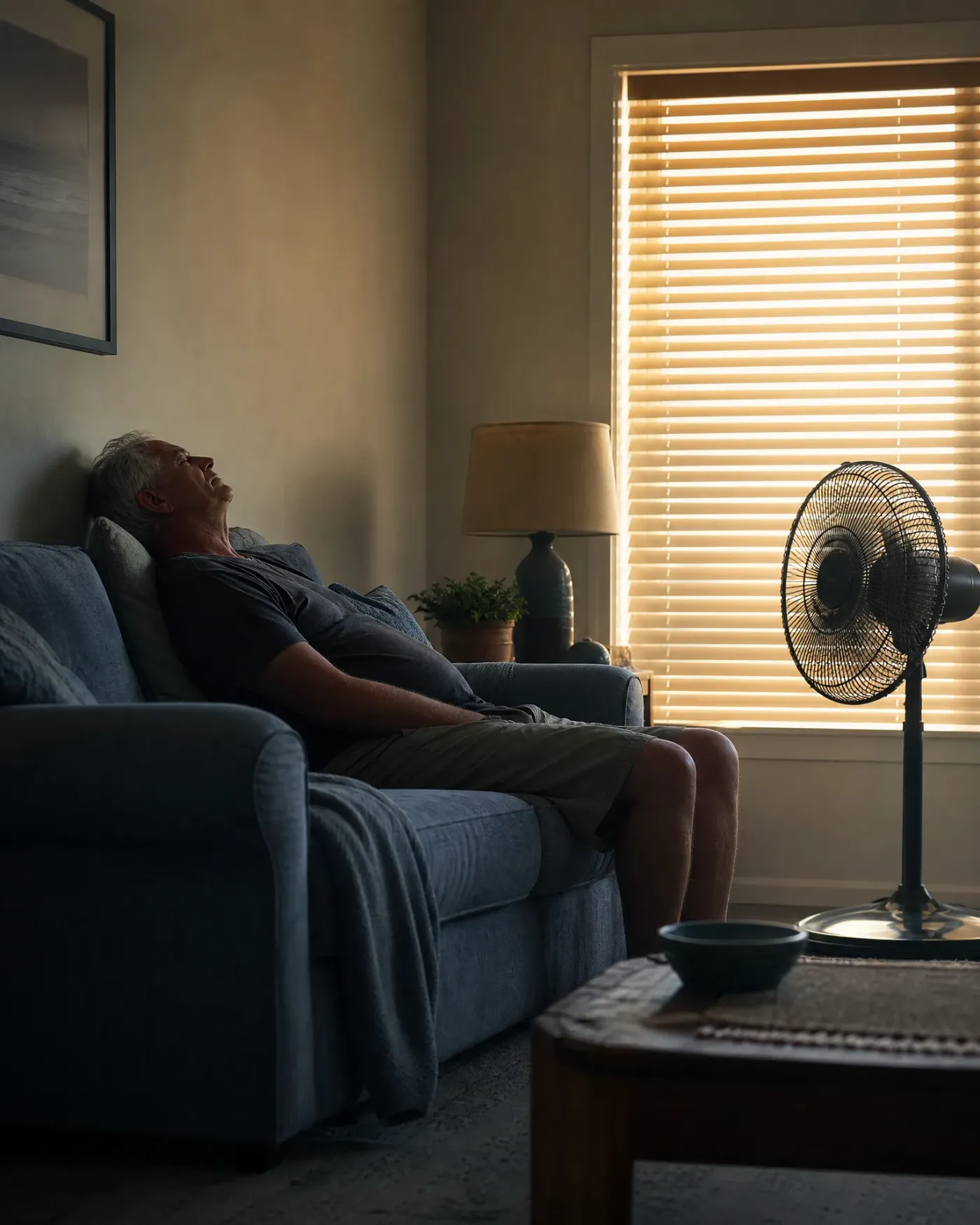
The blinds are drawn against the afternoon, and the fan beside the couch is doing what it can. You walk past the vent near the ceiling and catch it this time, a dark ring spreading into the drywall. The metal grille is cold to the touch, wet along the slats. Outside it's dry, the kind of dry Montana summers are known for, so the water doesn't make sense until you notice how hard the air coming out feels, almost too cold. A drop lands on the carpet below. You tip the blinds back down and go find a towel, glancing at the vent every time you walk by for the rest of the afternoon.

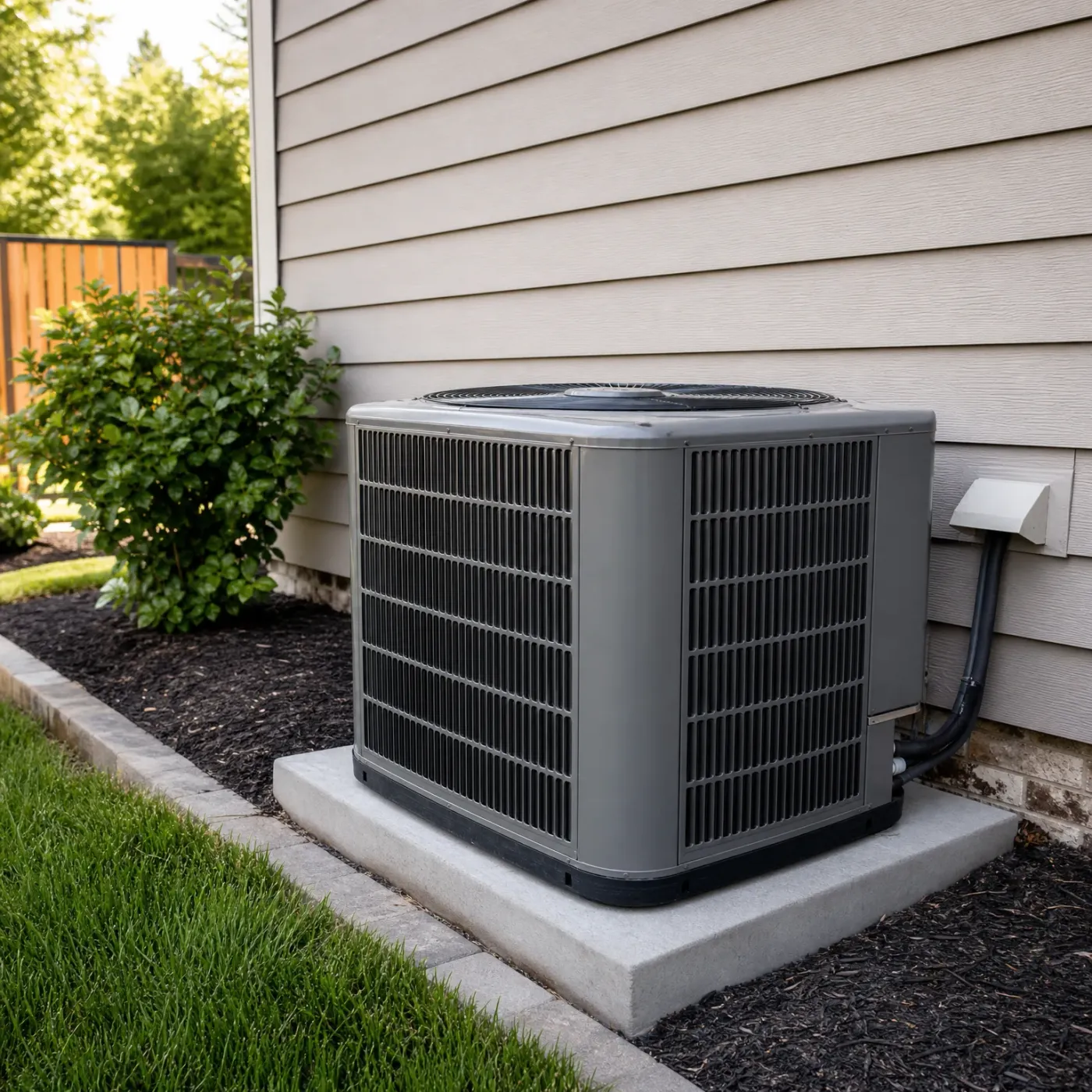
A gray outdoor air conditioning condenser unit on a concrete pad beside a house with horizontal siding and a stone veneer base, with a wall-mounted disconnect box and conduit, next to a shrub bed and a concrete patio.
Air moves freely through the grille, and the metal stays dry because warm air never meets a surface cold enough to sweat.
An outdoor air conditioner condenser unit on a concrete pad beside a house with light gray vinyl siding, with a gray electrical disconnect box and conduit on the wall, gravel beds and dried plants nearby, and a concrete sidewalk in the foreground.
Dust cakes the fins and weeds crowd the gravel bed, and the strain shows up as a cold, wet vent instead of a bill.

Cold air moving through a duct doesn't sweat the duct itself, not when the duct is sealed and wrapped the way it's supposed to be. The metal grille is a different story. It sits right at the boundary between the cold air inside and the room air around it, and if that room air is warm enough, moisture out of it will condense on the cold metal the same way it beads on a glass of ice water. That means the vent sweating isn't usually about the air conditioner making too much cold air. It's about airflow. A duct that's blocked, a filter packed with dust, or a blower losing strength will all drop the temperature of the metal lower than it should go, because less air is moving past it to keep things balanced. A contractor checking this will look at static pressure in the ducts and the temperature split between the supply and return before touching anything else, because that tells them whether the problem is the airflow or the cooling itself.

Power costs 12.99 cents per kilowatt-hour statewide

At under 13 cents a kilowatt-hour, running your AC harder to chase a sweating vent won't hit your wallet the way it might elsewhere. That's not a reason to leave it. The moisture is still landing on your drywall or ceiling whether the power bill notices or not.

EIA-861 2025 statewide residential average

A sealed, insulated duct runs cold air for years without a single drop forming on the outside of it. The grille is what breaks that pattern, because it's metal, it's exposed, and nothing wraps it the way insulation wraps the duct behind it.

Wrap or insulate that one grille and the sweating stops, because you've removed the only uninsulated cold surface in the run. The duct was never the problem. The bare metal at the end of it was.

A woman in a knitted shawl sits in a living room with a fireplace, shelves, a sofa with cushions, and a lamp by a bright window, looking off to the side.
A woman with long brown wavy hair in a green shirt over a white top stands in a living room with built-in white shelves, a ceiling fan, a potted plant and a sliding glass door.
A woman with shoulder-length gray-streaked hair in a light gray knit sweater stands smiling and looking off to the side in a living room with a sofa, houseplant, framed picture, and sunlit sliding glass door.
A woman with shoulder-length curly gray hair wearing a gray knit sweater stands near a window with a sheer curtain, looking to the side, with a blurred interior room behind her.
A gray outdoor air conditioning condenser unit on a concrete pad beside a house with horizontal vinyl siding, with mulch, a shrub, and lawn nearby.

Hand off the air conditioner problem

Your request stays with one local pro.

Send the request today and let an air conditioner pro reach out to you.

Send it today

No fee to send it, and nothing to sign.

What are you seeing around your own vents

Look at the grilles closest to where you sit in the evening, the living room or wherever the family gathers. The metal is cold enough that you'd rather not rest a hand on it. Below it, the wall or ceiling has a stain that wasn't there before, maybe just a shadow of discoloration, maybe a soft spot if it's been going on a while. You might notice a musty smell near that spot before you notice the water itself. None of this is about the air in the room feeling damp. It's water sitting on paint and drywall around people who are in that room every day, and left alone it turns into peeling paint, soft drywall, or mold behind the wall where nobody sees it until it's a bigger job.

A gray outdoor air conditioning condenser unit on a concrete pad beside a house with horizontal lap siding, with a conduit and electrical disconnect box on the wall and a green shrub in mulch to the right.

A unit that's breathing fine

The grille is clean and the air moves through it without working around anything. The line set runs straight up the wall to the disconnect, and the pad underneath is clear. Nothing here is forcing the system to run longer than it should.

A weathered outdoor air conditioner condenser unit on a concrete pad beside a house with horizontal vinyl siding, with a conduit and disconnect box on the wall to the right.

A unit that's choking on itself

Leaves and grit have packed into the grille, and weeds have moved into the pad around it. The unit still runs, but it's pulling harder to move the same air, and that strain is what shows up as a cold, sweating vent somewhere inside the house.

A woman and a child wrapped together in a knitted gray blanket on a couch, with the child's head resting on her shoulder and a lit table lamp and houseplant in the background.
An older woman with short gray hair in a cream cable-knit turtleneck sweater smiles while looking to the side in a wooden kitchen, with a round loaf of bread on a board in the foreground and a lit candle by a dark window.

Vent stays dry

Air moves through sealed, insulated duct and the grille never meets cold air directly. No wet ring forms on the ceiling or wall around it.

Find a licensed air conditioner pro

Vent sweats and drips

A gap in the insulation or a grille running colder than the room lets moisture land on your drywall, slow and steady, until someone notices the stain.

Find a licensed air conditioner pro
An outdoor air conditioner condenser unit on a concrete pad beside a house with horizontal lap siding, with a conduit running to a gray electrical disconnect box on the wall.
Before you get your air conditioner repair
A gray outdoor air conditioner condenser unit on a concrete pad beside a house with horizontal lap siding, with a wall-mounted disconnect box and conduit at left and a green shrub and mulch bed at right.
After you get your air conditioner repair

What the sweating vent tells you

  • A sweating vent means a gap in insulation or a grille running colder than the room air around it, not humidity.
  • Montana's dry summer air makes that condensation obvious fast, usually as a ring on the ceiling or wall before you see it on the grille itself.
  • The fix is mechanical: seal the gap, wrap the duct, or clear whatever is making the system work harder than it should.
  • A local contractor who services AC systems through Montana summers has seen this pattern before and knows where the insulation usually fails.
  • One contractor means one visit to diagnose it, not a string of calls from companies bidding on a job you've already explained twice.
  • Left alone, the moisture keeps landing on the same spot in the drywall whether or not the system itself is at risk.

A wet vent isn't a mystery once you know what to look for. It's a grille running colder than the air around it, or a gap somewhere behind it letting that cold meet room air it was never supposed to touch. Montana's dry air actually helps you here. It shows the problem fast, as a ring on the ceiling or a dark patch on the wall, long before the damage spreads further than that one spot. The fix isn't complicated. Whatever is letting cold air reach that metal directly needs to be sealed, wrapped, or cleared, depending on what's actually wrong behind the wall.

Finding the gap is the part that takes someone who's done it before. A contractor who works on AC systems across Montana summers has seen this exact pattern enough times to know where insulation tends to fail first, and what usually causes a grille to run colder than it should. That's not guesswork for someone who's local and doing this kind of repair every season.

Once you send the request, you're matched with one contractor, not several. That means one visit, one person looking at your actual vent and your actual duct, instead of explaining the same problem to three different companies before any of them show up. The wet ring on your wall stays there until someone deals with what's behind it. Nothing about it gets better on its own, and nothing about it is urgent in a way that should cost you more sleep than it already has.

Sunlit corner of a room with a wooden sideboard holding a ceramic vase of olive branches and a dark wooden bowl, beside a white-framed window, a hardwood floor and woven rug.
A wooden cabinet holding a pale ceramic vase with leafy branches stands beside a beige wall in a sunlit room with hardwood floors, a jute rug, and a window showing green foliage outside.
Sunlit room corner with a beige upholstered sofa holding a rust-brown cushion, beside floor-length linen curtains at a window, over a wood floor with a woven rug.
Corner of a room with beige walls, a framed photograph, a floor-length linen curtain beside a window, an upholstered armchair with a knit pillow, white baseboards and trim, wood flooring and a pale rug.
Sunlit living room corner with a beige upholstered armchair with a cushion, linen curtains beside a wooden-framed window, green vertical panelled wall with a framed print, and a wooden table edge over a woven rug.

Send one request and you're done looking

The pro who reaches out is licensed in Montana.

Get one local pro

You're not committing to anything by asking.