Side profile of a bearded man wearing a faded dark blue baseball cap and a matching dark T-shirt against a plain light gray background.

Signs of leaky ductwork in Bozeman, MT

Duct and vent cleaningDucts or ventsGallatin County, MT
Step 1 of 2

What ZIP code is the job in?

A room that won't hold its temperature, a utility bill that keeps climbing, and dust collecting faster than it should are the usual signs your ducts are leaking. Air you paid to heat or cool is escaping into the attic, the crawlspace, or the walls before it reaches the room. Some rooms run warmer or colder than others for no clear reason. You might hear a hiss near a joint when the system kicks on, or see insulation around the ducts that looks disturbed. Winters here are hard, and a furnace fighting lost heat through a torn seam runs longer to make up for it, which shows up on the gas bill. In summer, the same leaks let in hot attic air and pull cooled air out before it circulates. Loose connections, gaps at the joints, and crushed or disconnected sections are the usual culprits. None of this fixes itself, and it tends to get worse as the ducts age and shift.

Empty basement with bare concrete walls and floor beneath an exposed wood-joist ceiling carrying galvanized sheet-metal ductwork, round ducts and pipes.
Before you get your ductwork cleaning
Unfinished basement with bare concrete floor and walls, exposed wood joists, metal ductwork, a furnace unit, steel support posts, and a small window.
After you get your ductwork cleaning

Why does a duct leak cost more to ignore here?

  • Half the homes here were built by 1998

    Half the homes in Gallatin County were built in 1998 or earlier, so a lot of duct runs are old enough that the joints have had years to work loose.

  • Heat runs September through June

    Heat runs here from September through June. A leak in that ductwork is losing you warmed air for ten months out of every year, not just a few.

  • Power here costs 13.59 cents per kilowatt-hour

    Power here runs 13.59 cents per kilowatt-hour, which is cheap by national standards. Even so, air leaking out before it reaches a vent is money spent for nothing.

ACS 2020-2024 · NOAA nClimDiv 1991-2020 · EIA-861 2025

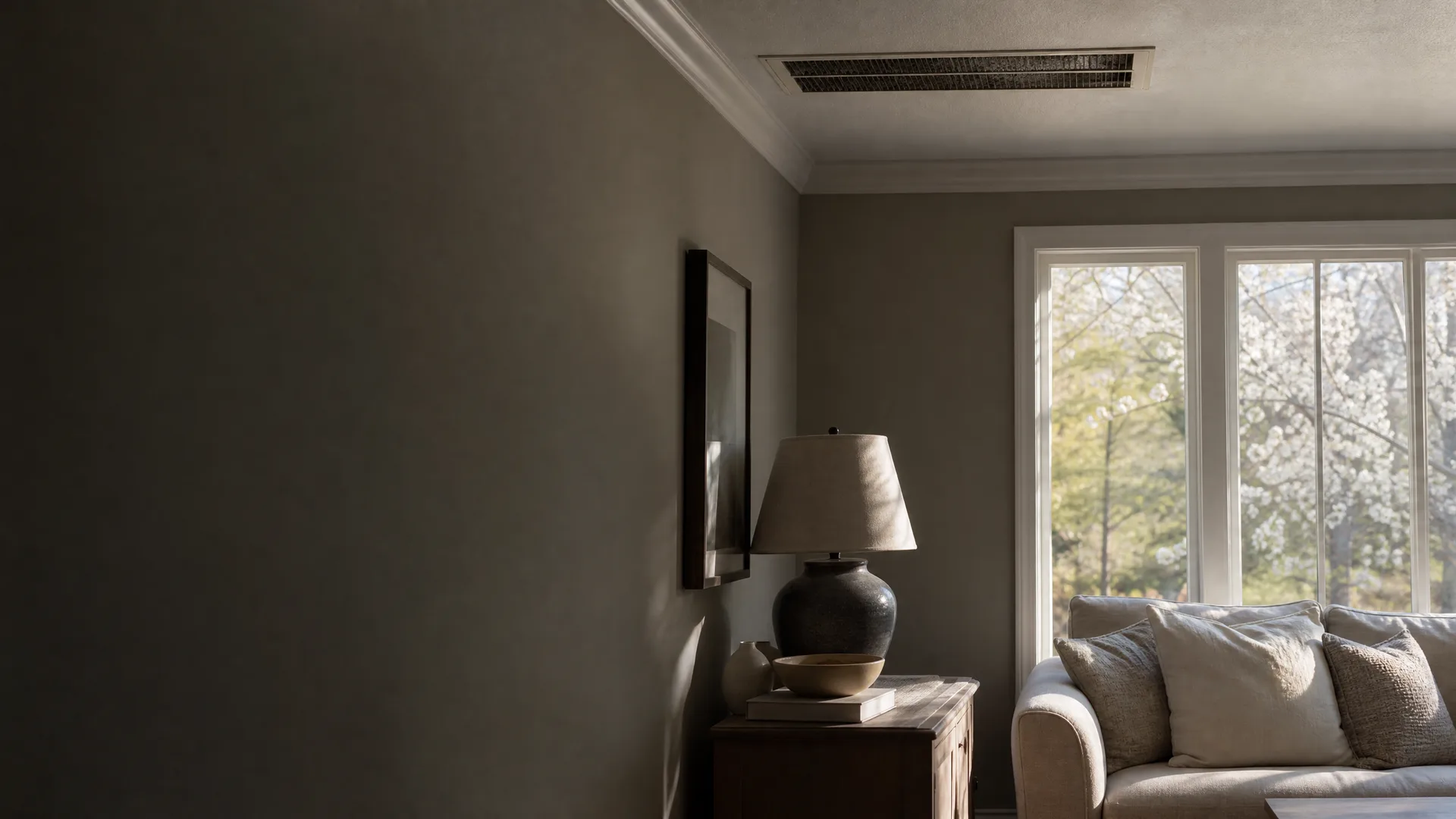
A dimly lit living room corner with a gray wall, framed picture, a table lamp on a wooden side table, a beige sofa with pillows, a ceiling vent, and windows showing flowering trees outside.

The sun's been up a few hours and it's warming the living room through the window. You're on the couch with coffee, and you notice the ceiling vent grille has a gray line of dust along its slats, the kind that wasn't there when you dusted last month. On the end table below it, a thin film has settled across the wood, enough that you can see where your mug sat yesterday. Outside, Gallatin County is finally dry and warm after a long winter of the furnace running. You run a finger along the grille and it comes away dark. The couch cushions nearby have the same film if you look close. It's just dust, but it's a lot of it, and it's always this vent.


Why does one room never feel right?

Walk through the house and one room runs warmer or colder than the rest, no matter where you set the thermostat. That's usually a duct losing air before it reaches the vent. You might feel a draft near a floor register that should be blowing warm, or notice the furnace or AC running longer than it used to just to get the house close to the set temperature. Check the supply vents for a buildup of dust around the edges, since a leaking duct pulls in attic or crawlspace air along with whatever's settled there. Left alone, the system keeps working harder than it needs to, and the parts carrying that extra load wear down faster than they should.

  1. Air leaves the furnace or air handler under pressure.

  2. It travels through sheet metal or flex duct joints.

  3. A gap or loose joint lets air escape before the vent.

  4. The room it was headed to runs short.

Gas furnace vs. central air leaks

Gas furnace

  • A leak on the supply side pulls heated air into the attic or crawlspace before it reaches a single vent.
  • The furnace runs longer to make up the loss, and with heat running September through June, that adds up fast.
  • A leak on the return side can pull attic or crawlspace air into the system, along with whatever dust is sitting up there.
  • Flex duct joints in an unconditioned attic lose their seal faster than metal duct runs inside the house.
  • You can often hear it: a faint hiss near a joint when the furnace kicks on is air escaping, not normal operation.

Central air

  • Supply leaks dump cooled air into the attic during the hottest part of the day, when the system is already working hardest.
  • Bozeman summers are hot and dry, so a leaking return can draw in hot attic air and strain the compressor.
  • Rooms far from the air handler lose cooling first, since leaks closer to the unit bleed off air before it travels the full run.
  • A duct run that sags or separates at a joint from summer heat will leak worse by the time winter heat starts again.
  • Dust pulled in through a return leak settles on coils and vents faster, which is part of why vents dirty up sooner than expected.
Unfinished basement with bare concrete walls and floor, exposed wood joists, and galvanized sheet-metal HVAC ductwork and pipes running across the ceiling.

Ductwork sealed and tight

This is what a duct run should look like: metal joints fitted close, each branch holding its shape from the furnace to the floor above. Air moving through here stays inside the duct the whole way. Nothing leaks into the basement before it reaches the room it was sent to.

Basement ceiling with galvanized sheet-metal ductwork, wooden joists and subfloor, black and white pipes, above a concrete wall and floor.

Ductwork losing air

At this junction, the branch lines split off under a loose seam. Air pushed through here can slip out at the joint instead of continuing to the vent above. You won't see it happen, but a basement that runs warmer than the rooms it's supposed to heat is often why.

An older man with gray hair and a beard, wearing a dark snow-dusted jacket and scarf, stands smiling in a warmly lit interior hallway with a lit table lamp, a vase of dried branches, and a framed picture in the background.
An older man in a dark snow-flecked overcoat and scarf stands smiling in a warmly lit home entryway, with a glass-paned door showing darkness outside and a lamp-lit room visible through a doorway behind him.
An older man with grey hair and a beard, wearing a dark coat dusted with snow, stands in a dimly lit entryway with a ceiling lamp, a side table with two shaded lamps, and a lit fireplace visible in a room beyond.
An older man with gray hair and a beard, wearing a dark coat dusted with snow, stands smiling in a doorway of a warmly lit home with a sofa, lamp and window visible behind him.

Find a duct system cleaning pro in Gallatin County

A duct leak doesn't fix itself. It gets found by someone who's crawled through a lot of attics and crawlspaces around Gallatin County and knows where a joint in a house like yours tends to pull apart first. That's different from a crew showing up with a general checklist. A local contractor who does this work every heating season has a sense for which runs fail in homes built the way yours was, and that sense is worth more than a guess once you're paying to heat air that's leaking into the attic. Submit your address and your request goes to one contractor suited to your situation, not a handful competing for your callback. They'll reach out to look at what's actually happening in your ducts, the room that won't hold its temperature, the bill that keeps climbing, and tell you what it would take to seal it. The sooner that happens, the fewer months you spend paying to heat the crawlspace.

Empty unfinished basement with bare concrete floor, insulated walls with vapor barrier between wood studs, exposed wood joists, galvanized sheet-metal ductwork, a recessed light, and a steel support column.
Ducts routed tight against the joists, each run wrapped and supported, insulation filling the wall cavities around them.
Empty basement room with bare concrete walls and floor, exposed wooden floor joists overhead, large galvanized sheet-metal ducts with a vent grille, colored pipes, and a single lit bulb.
Ducts hanging loose along bare concrete, joints exposed with nothing sealing them or backing them up.

How a duct leak actually starts

  • Mastic sealant and foil tape hold up over time, but cloth duct tape dries out and peels off the joint within a few years.
  • A return leak pulls air from the attic or crawlspace into the system, so dust and insulation fibers end up circulating through the house.
  • Flex duct that sags between the joists creates a low spot where air pools and pressure drops before it reaches the vent.
  • A sheet metal elbow joined with screws alone, no mastic, is one of the first spots a leak tends to start.
  • Static pressure builds when air escapes early, which is part of why the blower motor can end up running longer than it should.
  • A duct leak on the supply side gets backed up right behind the register, in the attic or crawlspace it actually feeds.

Most leaks don't start as a hole in the metal. They start at a joint. Sheet metal sections get joined with screws, and a screw alone doesn't seal anything, it just holds the two pieces together. The gap between them needs mastic or foil tape over it to actually stop air. A lot of older runs around Gallatin County were sealed with cloth duct tape instead, and cloth tape dries out. The adhesive gives up within a few years and the tape peels back, leaving the same gap it was supposed to cover.

Flex duct fails a different way. It's meant to run fairly straight and supported between the joists. When it sags, the low point becomes a spot where air pools instead of moving forward, and pressure drops right there before the air ever reaches the room it's headed to.

Wherever the leak sits matters too. On the supply side, the warm or cool air backs up right behind the register, leaking out into the attic or crawlspace the duct is running through. On the return side, it works backward: the system pulls air from wherever the leak is, attic dust, crawlspace air, insulation fibers, and that gets drawn into the blower and circulated through the house. Either way, the furnace is pushing air into a system that's losing pressure before it finishes the job, which is part of why a blower can end up running longer than it was built to.

Half the homes here were built by 1998

If your house went up around 1998 or before, the ducts running through the attic or crawlspace have had a couple of decades of heat and cold working the joints loose. That's plenty of time for mastic to crack or tape to give way at a seam.

ACS 2020-2024

Ducts you can check yourself

Hold your hand near the supply vents when the furnace is running. If one room blows weak air while the rest of the house feels normal, that run is losing pressure somewhere between the furnace and the floor. You can also look at any exposed duct in the attic or crawlspace. A joint with tape peeling back, or a seam you can see daylight through, is leaking. These are the checks you can do with a flashlight on a Saturday, and they tell you something is wrong even if they don't tell you how bad.

Leaks you can't see from here

Most of the duct run is behind drywall, above a ceiling, or buried under insulation in the attic, and a leak there won't show up as a draft you can feel. It shows up instead as a furnace that runs longer than it should, or a bill that climbs without a reason you can point to. Finding that kind of leak usually means pressure testing the system or getting into spaces you can't get into from a hallway. That's work for someone who's done it in other Gallatin County homes and knows where these joints tend to let go.

A woman wrapped in a thick cream knit blanket sits in a chair with an open book on her lap, beside a lit table lamp and a frost-covered window at night.
An older woman with grey-blonde hair in an updo and a beige turtleneck sweater smiles while looking to the side in a warmly lit kitchen, with a round loaf of bread on the counter in front of her and a dark window showing snow outside.
A man with a duffel bag walks up a concrete path toward a white board-and-batten house where a woman stands in the open wooden front door, flanked by potted plants and black lanterns.

A leak doesn't announce itself. It shows up in the bill.

A room that won't hold its temperature, dust along the vent grille, a bill that climbs without a reason you can see. Any one of those points to the same thing: a duct losing air somewhere between the furnace and the floor. You've seen what that costs you through a Gallatin County winter, and what it can mean for the air moving through the house the rest of the year.

Finding the leak itself means getting into the attic or the crawlspace, tracing a run joint by joint, and knowing which ones tend to give out first in a house built when yours was. A local contractor who works on duct systems around here every season has usually seen that exact joint fail before. Once you put in a request, one contractor who covers Bozeman and the surrounding area will reach out to you directly, not a handful of companies competing for the job.

A living room with a cream sofa and knit throw beside a window, with a wooden coffee table in the foreground holding a round woven tray, a small bowl, and a speckled vase of green leafy branches.
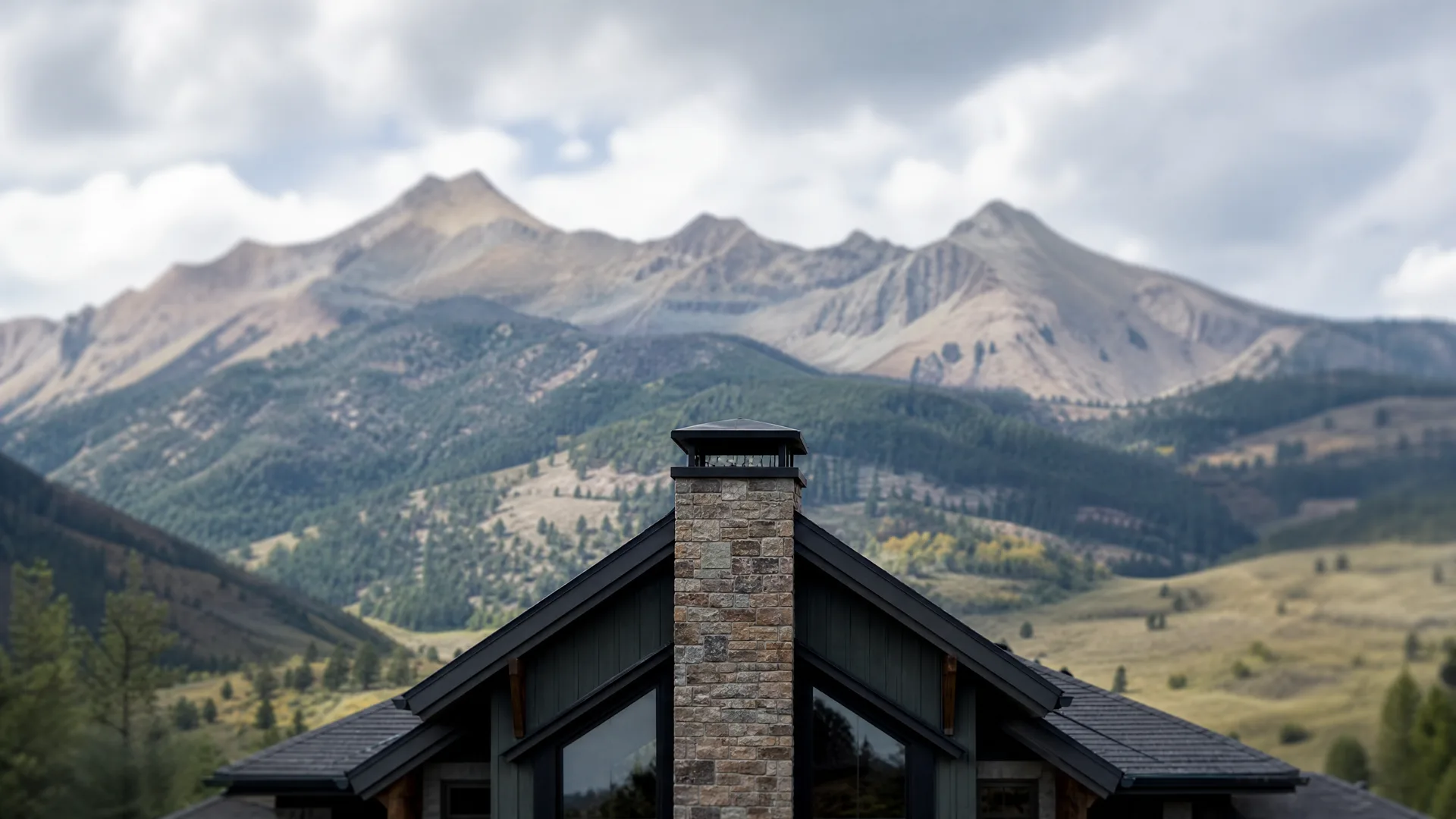
The gabled roof peak of a house with a stone chimney, dark siding and wood brackets, framed against forested hills and a rocky mountain ridge under a cloudy sky.

The right pro for this job

Reach a local pro

There's no charge for the request.

A furnace working to cover a leak runs longer than it should, every day from September through June. Getting the ducts looked at now, before the cold months pile up, is a smaller ask than paying for that loss all winter. A local contractor can tell you in one visit whether that's what's happening in your house.