









Does closing vents help your AC in Montana

Send the form, and lining up the air conditioner tune-up stops being yours to chase.

Hand it off

Does closing vents help your AC in Montana

You keep a few rooms shut off in summer and figure closing those vents should push more cold air where you actually want it, maybe into the bedrooms at night or away from a sunroom nobody sits in during the day. It seems like simple math: less space to cool, more air for the rest of the house. Before you start shutting vents all over the house, it's worth knowing whether your system actually works that way.

No, closing vents doesn't help, and it can hurt your AC

Your air conditioner is built to push a set amount of air through the whole duct system. Closing vents doesn't send that air somewhere else. It just gives the air fewer places to go, so pressure builds up inside the ducts. That extra pressure can force cold air out through seams and joints before it ever reaches a room, and it makes the blower work harder than it's supposed to. In a Montana summer, where the AC is already working against dry outside heat, that strain matters. Close enough vents and you can ice up the coil or shorten the life of the blower motor. If certain rooms run warm, the fix is usually in the ductwork or the airflow balance, not in which vents are open or shut.

A smiling man in a gray long-sleeved shirt stands in a kitchen looking to the side, with open shelves of dishes, a white mug on the counter, a potted plant, and a view through a doorway into a living room.
A smiling bearded man in a green sweater sits at a white marble kitchen island with a mug, potted plant and bowl of fruit, in a bright white interior with open shelving and an arched doorway.
A smiling man with dark curly hair and a beard, wearing a dark green knit sweater, stands at a white marble kitchen counter with a dark blue mug, with open shelving, pendant lights and a houseplant behind him.
A smiling man in a green ribbed sweater stands behind a wooden table holding a ceramic mug of coffee in a kitchen with white subway tile, shelves of potted plants, and a bowl of fruit.

Why Closed Vents Backfire

  • Your AC moves a fixed amount of air no matter how many vents are open, because the blower runs at one speed set at install.
  • Closing vents doesn't reduce the air moving through the system, it just blocks where that air was supposed to go.
  • The pressure has to go somewhere, so it pushes back through the ductwork and strains the seams and joints.
  • That extra pressure also builds up around the evaporator coil, which can cause it to ice over in the middle of summer.
  • A coil running too cold can freeze solid and stop cooling your home entirely until it thaws.
  • Closed vents starve the return side of the system, so the compressor works harder to move the same amount of air.

Your blower was set to move a certain amount of air when it was installed, and that doesn't change based on how many vents you've got open. Shut three or four of them and the air that would have gone there has to go somewhere else, or nowhere at all. It backs up into the ductwork instead, pushing against seams and joints that were sealed for normal pressure, not extra. Over time that pressure can work those joints loose.

The bigger problem is what happens at the evaporator coil. That coil needs a steady flow of warm air moving across it to stay at the right temperature. Restrict the airflow and the coil runs colder than it should, and in dry Montana heat it doesn't take long for moisture in the air to freeze onto the coil's surface. Once ice builds up, airflow drops even further, which makes more ice. It's a cycle that ends with a solid block of ice on the coil and a system blowing room-temperature air, right in the middle of August.

The compressor feels it too. With the return side restricted, it has to work harder to pull the same volume of air through the system. That's extra strain on a part that's expensive to replace and not designed to run against that kind of resistance. Leaving the vents open, even in rooms you don't use, keeps the airflow the system was built around.

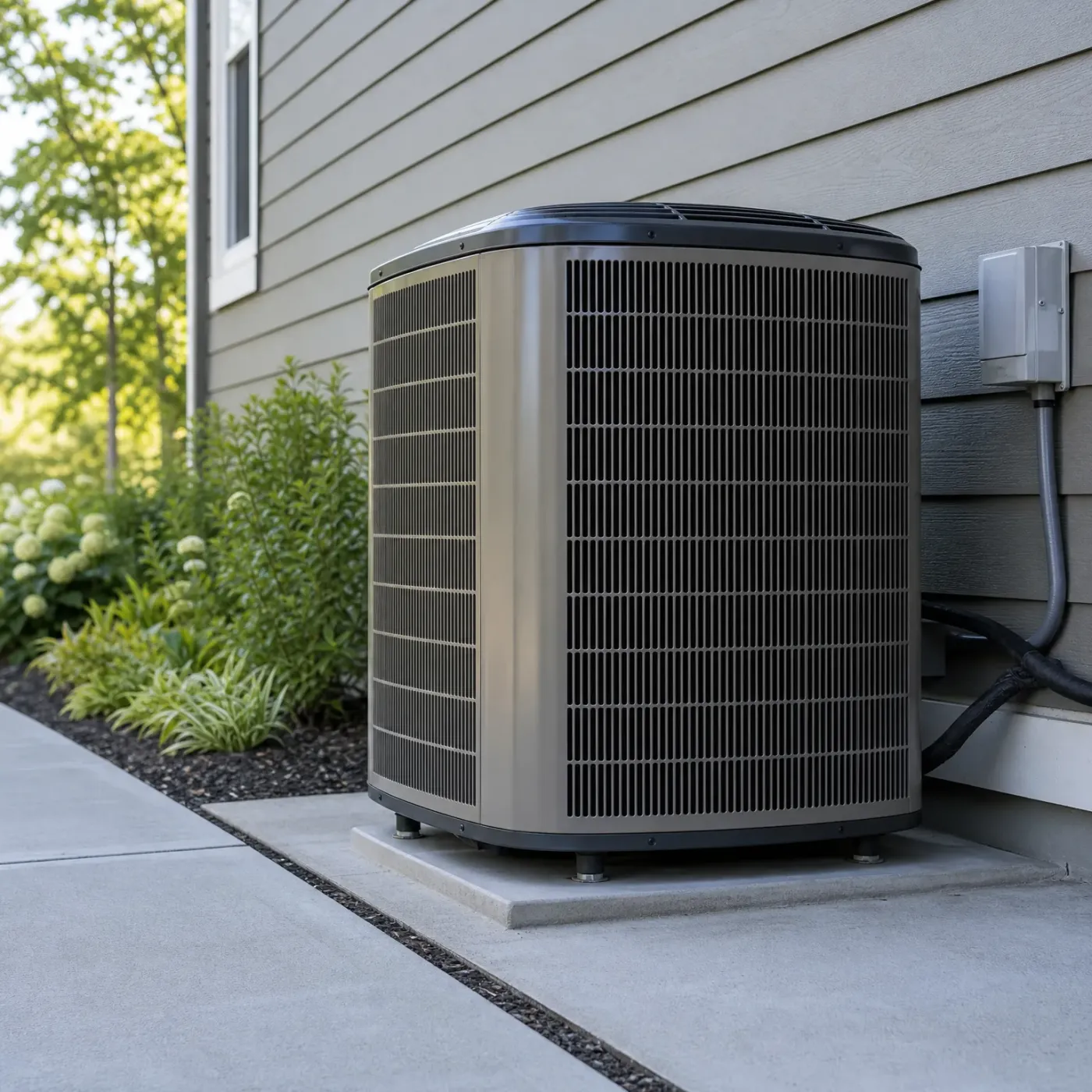
An outdoor air conditioning condenser unit on a concrete pad beside a house with horizontal lap siding, with a gray electrical disconnect box and conduit on the wall, mulch bed and shrub to the right, and mown grass in the foreground.
Vents open, airflow moving the way the system was set up to move it, pressure staying where the duct design expects it.
An outdoor air conditioning condenser unit on a concrete pad beside a house with light blue horizontal siding, with a shrub to the left and a conduit and disconnect box on the wall to the right.
Coil guards caked with dust, a sign of the strain closed vents and poor airflow put on that compressor over time.

Shutting vents in a couple of rooms feels like a free fix, but the system doesn't know those rooms are closed off. It keeps pushing the same volume of air, and that air has to go somewhere. Pressure builds inside ducts that weren't designed to hold it, and over a summer or two it works on the seams and joints until one gives. When that happens, cooled air leaks into the attic or crawlspace instead of reaching a single room in your house. Meanwhile the compressor outside keeps running the same long cycles it always did, because restricting airflow doesn't make the job easier, it makes the coil work against itself. Montana's dry heat already asks a lot of that compressor through summer. Add a coil icing up from blocked airflow and you won't get a slow warning, you'll get a hot afternoon with no cold air at all. The room you shut off to save energy ends up costing you in leaked air and strain you can't see until it shows up on the bill or breaks down outside.

What Closed Vents Cost You

  • A closed vent in a back bedroom can still mean a cracked, dry-feeling room while the compressor outside works just as hard as it did with the vent open.
  • The extra pressure in the ducts has to go somewhere, and over months it tends to find the weak spots, the seams and joints that weren't built to hold it.
  • A system straining against closed vents in dry Montana summer heat runs its compressor longer to reach the same temperature, and that shows up on your power bill even with cheap rates.
  • If a coil starts icing up from restricted airflow, you may notice weak cooling or no cooling at all on the hottest afternoon, not a gradual change you'd catch early.
  • Closing two or three vents to try to cool one room faster often leaves that room no cooler, since the air just backs up elsewhere in the system.
  • A leaking duct joint from months of extra pressure wastes conditioned air into your attic or crawlspace, air you paid to cool and never felt.
An outdoor air conditioner condenser unit on a concrete pad beside a house with light gray horizontal siding, with mulch and green shrubs on either side and a concrete walkway in the foreground.
Before you get your air conditioner maintenance
A gray outdoor air conditioning condenser unit on a concrete pad beside a house with horizontal siding and a stone veneer base, with refrigerant line and electrical disconnect box on the wall and flowering shrubs to the left.
After you get your air conditioner maintenance
An outdoor air conditioning condenser unit on a concrete pad beside a house with horizontal lap siding, with a gray electrical disconnect box and conduit on the wall and green shrubs and trees to the left.

Send one request and you're done looking

Explain the job once and skip repeating it on every call.

Send the request and finding a pro stops being your problem.

Hand off the search

Sending the form costs nothing.

Power costs 12.99 cents per kilowatt-hour statewide

At 12.99 cents a kilowatt-hour, running your compressor longer than it needs to shows up on the bill fast. Closing vents doesn't cut that runtime, it just makes the compressor push against more resistance to deliver the same cooling, so you pay for strain instead of comfort.

EIA-861 2025 statewide residential average

A gray outdoor air conditioner condenser unit on a concrete pad beside a house with horizontal vinyl siding, surrounded by mulch, flowering shrubs, and lawn.

Running clean

This is what the outside unit looks like when air moves through it the way it was designed to. The coil fins are open, the cage is clear, and the compressor inside is only working against the load Montana's dry heat actually puts on it.


A weathered outdoor air conditioning condenser unit on a concrete pad beside a house with light horizontal siding, an electrical disconnect box and conduit on the wall, and mulched soil on either side.

Running against itself

Dirt and grime have built up across the coil fins and cage, choking off the airflow this unit needs to shed heat. Add closed vents upstream and the compressor is fighting resistance on both ends, running longer to do the same job.

Vents Open or Closed This Summer

Vents open

  • Every room gets the airflow the duct system was sized for, including the ones you'd rather close off.
  • The compressor outside runs against the resistance it was designed for, nothing extra.
  • Static pressure in the ducts stays in the range the system was built to handle.
  • A room that runs warmer than the rest usually points to a duct or insulation issue you can actually find and fix.
  • The blower moves the same volume of air it always does, so nothing in the system is working harder than it should.

Vents closed

  • The rooms you shut off stay dry and stuffy instead of cooling down, since the air has nowhere to go but back into the ducts.
  • The compressor pushes the same amount of air through a smaller opening, so it works harder for the same result.
  • Pressure builds in the ducts and tends to escape through the loosest joint or the thinnest seam it can find.
  • A coil already dusty from the dry Montana air has to work against that added strain too.
  • Closing a vent doesn't lower your electric bill, since the compressor still runs the same amount of time to hit the thermostat setting.
A gray outdoor air conditioner condenser unit on a concrete pad beside a house with horizontal lap siding, with a wall-mounted disconnect box and conduit to its right and shrubs to the left.

Working as it should

This is a condenser doing a normal job, set on its pad against the house with the disconnect box wired in clean. Dry Montana heat is hard enough on a compressor without extra resistance from closed vents pushing back through the ducts.

An outdoor air conditioning condenser unit on a concrete pad beside a house with horizontal lap siding, with a conduit and electrical disconnect box on the wall at right.

Carrying extra strain

Dust has built up across this coil guard, and that cuts the airflow the compressor depends on to shed heat. Closed vents raise duct pressure the same way, and a unit already working against dirty coils has less room left to absorb it.

A smiling man with dark curly hair in a navy t-shirt sits on a gray couch indoors, with a large-leafed plant and a window in the background.
A bearded man in a plaid flannel shirt stands in a kitchen looking out a window toward snow-covered shrubs, with a steaming mug on the windowsill and potted plants on a shelf behind him.

What are you noticing in the rooms you've shut off

Walk into that closed-off bedroom or the sunroom you shut the vent on, and the air feels flat, almost stale, even though the AC has been running all afternoon. You might notice the room next door runs colder than it used to, while the rest of the house feels about the same as always, maybe worse. Check the vents you left open elsewhere and you may hear more air hissing through them than you remember. Outside, the compressor cycles on just as often as before. None of this means the unit is cooling your house better. It means the air has to go somewhere, and it's finding its way through gaps around ducts, door frames, and places that were never meant to carry it.

Single-story house with tan horizontal siding and a dark shingled hip roof, fronted by a patchy green and brown lawn and a concrete walkway leading to the covered entry.

Montana summers don't feel as heavy as the thermometer suggests, because the dew point across June, July and August averages just 44°F. Dry air like that gives up its heat fast once your AC pulls it through the coil, so the system should be reaching its set temperature without much trouble. That's exactly why closed vents stand out here. Air this dry would cool a room quickly if it reached it, which means a bedroom that still feels warm and stale isn't fighting humidity. It's fighting blocked airflow, and the pressure that vent is holding back is working against the compressor the whole time.

NASA POWER T2MDEW county cells weighted by homes

A closed silver laptop and a ceramic mug of dark coffee sit on a wooden table in front of two chair backs, with a kitchen counter, tiled backsplash, wooden cutting boards, a vase of greenery and a potted plant by a window behind.

Leave the vents open

Closing vents doesn't help your AC in Montana. It just shifts pressure around a duct system that was sized to run with every vent open, and the compressor outside pays for that shift all summer, dry heat or not.

Instead of working out which rooms to shut off and why the cooling still feels uneven, you can hand the whole question to someone who checks the system itself. That skips the part where you'd be calling around Montana for someone available, telling each one the same story about the sunroom and the back bedroom, and weighing quotes against each other. Once you send the form, that search is off your plate, and a contractor takes the static pressure and airflow from there.

Interior corner of a room with a window and sheer curtain at left, a gray upholstered sofa with a cushion at right, and a round wooden table holding stacked books and a round vase with an olive branch.
At dusk, a dark board-and-batten house with a standing-seam metal roof and lit entry walkway of stone pavers, with two large outdoor heat pump units on a stone-walled pad at right and trees and hills in the background.

Air Conditioner Maintenance

Finding a pro stops being your job

Tune-up, service, or cleaningCentral ACMontana
Step 1 of 2

What ZIP code is the job in?

  • A ceramic vase holding leafy green branches and a shallow wooden bowl sit on a wooden window ledge beside a sunlit window, with a cream upholstered chair and knit throw in the foreground.
    • A local pro who services air conditioners gets in touch about the tune-up.
    • Describe your air conditioner job, and a local pro who handles it gets in touch.
  • Sunlit living room corner with a beige upholstered sofa, a round wooden side table holding a ceramic vase of olive branches, linen curtains at a window, a floor vent in the baseboard, and a woven jute rug on hardwood flooring.
    • One request and the search for a pro is handled.
    • Send it once and finding someone is no longer on you.
  • A wooden side table with a single drawer holds a shallow carved wood bowl and a white ceramic vase of green eucalyptus stems, beside a window and an upholstered chair draped with a cream knit throw.
    • One form replaces the calls you'd make to find an air conditioner pro.
    • Skip calling around to set up an air conditioner tune-up.
  • Corner of a house with horizontal siding, a white-framed window and stone veneer base, beside a covered entry with wooden steps, a potted plant, mulched beds of green shrubs and a flagstone path.
    • The pro who reaches out is licensed in Montana.
    • Only one pro gets your request, so you hear from one company.










