Signs your furnace is undersized for a Montana home

A local installer who puts in furnaces gets your project.

Get my match

A furnace that runs almost nonstop on a cold day, never quite reaching the number on the thermostat, is too small for the house. Montana winters push a furnace hard, and an undersized one keeps burning gas without catching up, so rooms far from the furnace stay cold while the one nearby overheats trying to compensate. You may also notice the blower rarely shuts off, or the system short cycles, kicking on and off in quick bursts as it struggles to satisfy a load it was never sized for. Ice or heavy frost on windows, and higher gas bills than a neighbor with a similar house, are other signs the furnace is working beyond its capacity. None of this means the furnace is broken. It means the BTU output doesn't match what your house needs to stay warm through a Montana winter, and running it harder won't fix that.

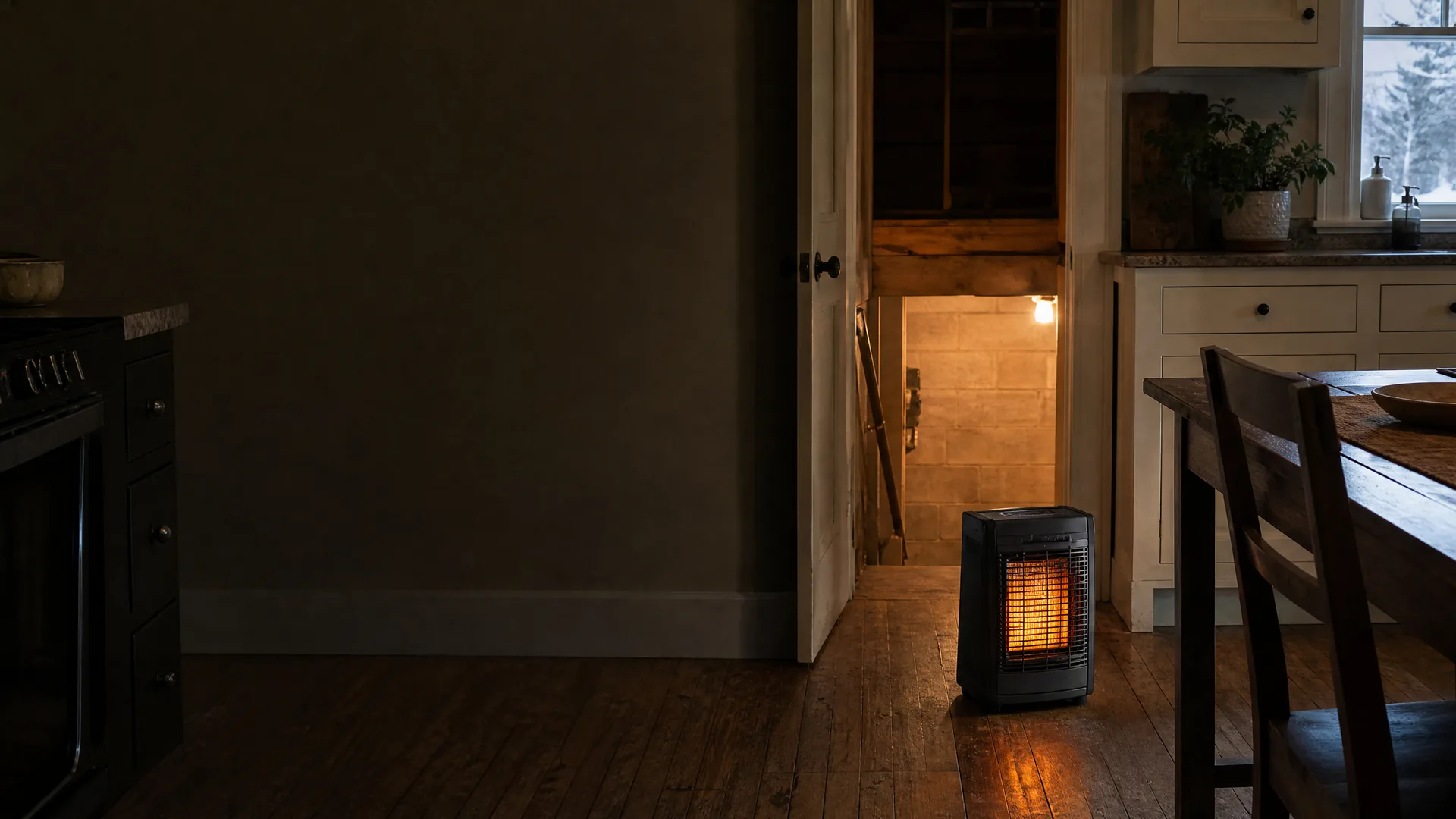
A dimly lit interior with wood plank flooring where a small portable heater with a glowing orange element sits near an open doorway, with a stove at left, kitchen cabinets and a potted plant at right, and a wooden table and chair in the foreground.

Six thirty, still dark outside. You're down to a sweatshirt and wool socks, standing at the counter waiting on coffee, and the space heater by the table is doing more work than it should this time of year. The basement door is open behind it, the furnace running down there since you got up, and the kitchen still hasn't shaken the overnight chill. You can hear it cycling through the floor vents. Outside it's maybe ten degrees, the kind of morning that used to be no trouble at all. Now you plug in the heater every morning before you can sit down with your coffee and not feel the cold coming up off the floor.

Undersized or Sized Right

Undersized

  • The furnace runs most of the day when it's below zero outside and still can't hold the thermostat setting.
  • Rooms at the far end of the house or upstairs stay noticeably colder than the room with the thermostat.
  • The blower runs long cycles that rarely shut off once temperatures drop into the single digits or below.
  • Frost or condensation builds up on windows because warm air isn't reaching every part of the house evenly.
  • Supplemental heat, like a space heater or the stove, gets used regularly just to keep one room comfortable.
  • The system was sized for a smaller house or an addition was built on after the furnace went in.

Properly sized

  • The furnace reaches the thermostat setting and then cycles off, even on a sub-zero night.
  • Every room, including ones farthest from the furnace, holds close to the same temperature.
  • Cycles run for a set stretch and then stop, with real gaps between them during the coldest stretches.
  • Windows stay mostly clear because the house is heating evenly instead of losing the fight in certain rooms.
  • The house doesn't need a space heater or extra blankets to make it through a cold snap.
  • The furnace was sized to match the home's current square footage, including any additions or finished basements.
A gas furnace with two gray access panels stands against a plain wall in a basement, connected to sheet-metal ductwork, white PVC vent pipes, and a yellow gas line.

Short cycles waste gas too

A furnace sized right for the house turns on, runs about ten to fifteen minutes, and shuts off. One that's too big for the house does the opposite of struggling: it blasts the air near the thermostat up to temperature fast, shuts off, and leaves the rest of the house to coast on leftover heat until it cools again and the furnace kicks back on.

A gray high-efficiency furnace in a basement corner with white PVC vent pipes, copper and black gas piping, and sheet-metal ductwork beside a plain white wall and wooden stair framing.

Check the nameplate rating

Every furnace has a data plate inside the access panel listing its input in BTUs. A contractor sizes that number against the square footage, the ceiling height, and how much glass faces outside. If nobody ran that math when your furnace went in, or the house gained a room since, the number on the plate may not match what the house actually needs on a January night.

A smiling man in a denim shirt and white t-shirt stands in an open dark doorway of a stucco house, facing a woman with long brown hair and a green jacket seen from behind in the foreground.

What the thermostat can't tell you

A thermostat reads one spot in the house. It calls for heat, the burner lights, and the blower pushes warm air through the ducts until that one spot hits temperature, then it shuts off. It has no idea what's happening in the bedroom over the garage. Furnaces are sized by a heat load calculation, a room by room count of how much heat a house loses on the coldest day, based on square footage, window area, insulation and ceiling height. Skip that step and guess instead, going by square footage alone or just matching the old unit, and the furnace you get has no real relationship to what the house needs on a January night.

If your current furnace came with the house, nobody necessarily checked that math against how the place is used now. An addition, a finished attic, a bigger window replaced over the kitchen sink, any of that changes the load without changing the furnace. Getting a straight answer means someone walking the house and running the numbers, not guessing over the phone. That's the kind of assessment a contractor matched to your house and your situation would actually do, instead of you calling around Montana trying to find one who will.

Interior corner with a beige sofa holding a dark green and a light cushion and a textured throw, a potted small-leaved tree beside a white-framed window, and a dark shallow bowl on a wooden coffee table in the foreground.
A beige high-efficiency furnace with white PVC vent pipes stands beside galvanized sheet-metal ductwork in a basement with a concrete floor, exposed wood studs, and metal piping along the wall.

Furnace sized right

On a cold morning the burner fires, the blower runs about ten to fifteen minutes, and the house holds the temperature you set until the next cycle. Rooms upstairs and down the hall feel the same as the room with the thermostat. It shuts off and stays off for a while.

An older beige furnace with a louvered vent panel stands on a concrete basement floor beside galvanized sheet-metal ductwork, a metal flue pipe and vertical pipes along a concrete wall.

Furnace running the house down

This one keeps firing most of the day once it drops below zero outside and still can't catch up to the thermostat. The flue runs almost constantly, the blower rarely rests, and rooms away from the furnace stay cold no matter how long it runs.

What you're probably seeing in your own house

You've got a thermostat set at 70 that reads 66 most of the day. The bedrooms down the hall or upstairs are colder than the rest of the house, so you've taken to shutting their doors or running a space heater. The furnace kicks on before dawn and you can still hear it running when you leave for work. Your gas bill has crept up each winter without anything else in the house changing. None of this means the furnace is broken. It means it's working the whole time, which wears the blower motor and heat exchanger faster than a furnace that gets to rest between cycles, and it leaves part of the house cold on the nights that matter most.

A gray-haired bearded man in a dark coat and scarf dusted with snow stands smiling in a dimly lit entryway with a white front door, a side table with a lit lamp, an oval mirror, and a patterned rug.
An older bearded man in a dark snow-dusted coat and gray scarf stands just inside a dimly lit home entry, with a framed picture, lit table lamp, and an adjoining room with a fireplace behind him, and snow visible through the open door.
A gray-haired, bearded man in a dark snow-dusted coat stands smiling in a dimly lit entry hall with a staircase, a lit table lamp, a framed picture, and a living room visible through a doorway.
An older man with gray hair and a beard, wearing a dark jacket dusted with snow, stands smiling in a dimly lit hallway with lamps and a living room visible behind him.

A local pro for your furnace installation

Skip collecting and comparing quotes for the new furnace.

It costs nothing to send, and you don't have to hire anyone.

Living with a furnace that's too small

You keep the thermostat at 70 and settle for 66. You close off the guest room, run a space heater in the office, tell yourself it's fine because the furnace is working, it's just not keeping up. Below zero, it runs almost the whole day and the house still feels cold in the corners. You layer up indoors in January the way you would waiting for the truck to warm up. None of this breaks anything right away, but it's the house losing a fight it shouldn't have to fight, and you paying a gas bill for a furnace that never gets to rest.

Living with a furnace sized for your house

The burner fires, the blower runs ten or fifteen minutes, and it shuts off because the house actually reached 70, not because the thermostat gave up waiting. The upstairs bedrooms feel the same as the room with the thermostat in it. On the coldest morning of the year, you're not thinking about the furnace at all, you're thinking about whether to shovel before or after breakfast. That's what a furnace matched to your house buys you. No space heaters, no closed-off rooms, no math about which parts of the house are worth heating.

Winter nights average 15°F statewide

That 15°F average covers the whole state, and it's an overnight average across all of December, January and February, so plenty of nights where you live drop well past it. A furnace sized right for your house should still hold 70 through those nights without running nonstop.

NOAA nClimDiv 1991-2020 county normals weighted by homes

A gray furnace cabinet in a basement, connected to galvanized sheet-metal ductwork and white PVC pipes, against a concrete wall with exposed metal piping and insulation overhead.
Before you get your furnace installation
A gray high-efficiency furnace with two PVC vent pipes stands in an unfinished basement beside sheet-metal ductwork, a framed and plastic-covered wall, and a bare concrete wall with vertical pipes.
After you get your furnace installation
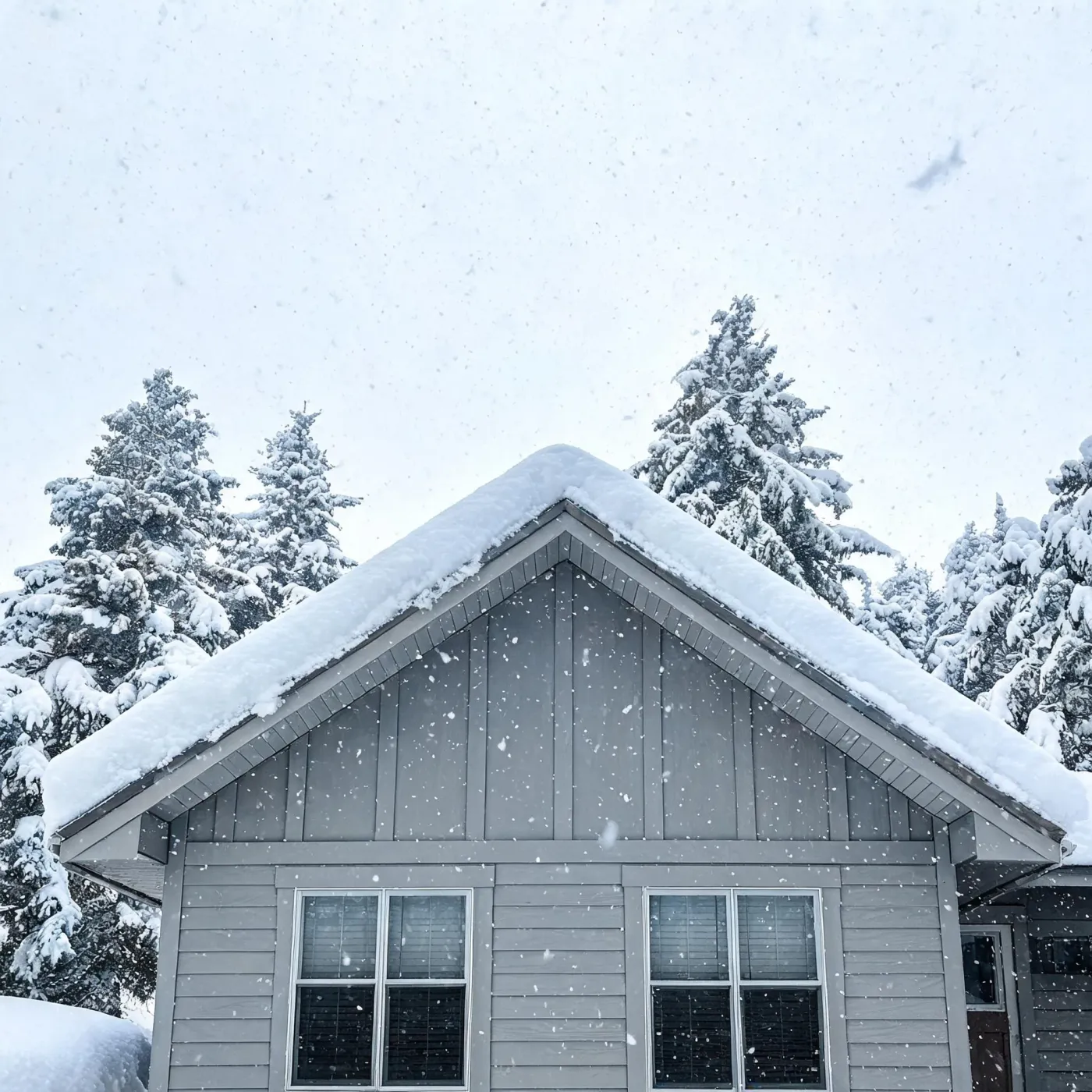
A gray-sided house with a steep gable roof covered in thick snow, framed by snow-laden conifers under a pale sky with falling snowflakes.

Statewide, winter nights average 15°F, and that's just the average, plenty fall well below it. A furnace sized for your house is built around nights like that. It fires up, runs its cycle, and brings the house back to 70 before the next one starts. An undersized furnace hits a wall around 15°F, maybe higher. It keeps running, the burner stays lit longer than it should, and the thermostat stalls a few degrees under where you set it. You feel it most overnight, when the temperature outside is at its lowest and the furnace has already been working for hours.

Source: NOAA climate normals

NOAA nClimDiv 1991-2020 county normals weighted by homes

A woman wrapped in a thick beige fleece blanket sits on a sofa with an open book on her lap, beside a lit table lamp, with a frost-covered window behind her.
An older woman with gray hair in a bun and glasses, wearing a beige knit sweater, smiles while looking to the side in a warmly lit kitchen, with a loaf of bread on the counter in the foreground and a snowy scene outside the window.

Where this leaves you

  • A furnace that can't hold 70 through a Montana winter night is undersized, no matter how often it runs.
  • Long burner cycles, cold rooms down the hall, and a thermostat that reads low all day are the same problem showing up three ways.
  • The fix is a furnace sized to your house and your coldest nights, not just the one that happened to be installed.
  • Instead of calling around and explaining your thermostat readings to every contractor in town, you get matched with one who already knows what undersized looks like.
  • Comparing quotes and sorting out who actually does installs in your area is the part that disappears once you ask for help.
  • You already know your house isn't holding heat right. What's left is getting the right furnace put in, not more guessing.

A furnace that runs long on cold nights, rooms that stay cold down the hall, a thermostat that never quite gets there: it's one problem, not three. The house is telling you the same thing every way it can. A furnace sized for your house and the nights it actually gets, not just the one that got installed years ago, is the fix. That's an installation decision, and it starts with knowing the size you've got isn't the size you need.

Getting there usually means calling a handful of contractors, explaining your thermostat readings and your cold bedrooms to each one, waiting on quotes, then trying to figure out who actually knows Montana winters from someone just guessing at a number. That part is work on top of the problem you already have. Asking for help skips it. You get matched with a contractor who already knows what an undersized furnace looks like in a house like yours, and they're the one who follows up with you, not the other way around.

None of this means the fix is quick or cheap. It means you stop doing the legwork of finding someone who can size it right. You already know what's wrong. You've felt it on the cold mornings, you've seen the thermostat sit below where you set it. What's left isn't more diagnosing. It's getting the right furnace into the house, sized for the nights that actually happen where you live.

A single-story stucco house at dusk with a lit paver walkway lined by low path lights, desert plants and boulders in front, and distant mountains under an orange and blue sky.

Furnace Installation

Get the right pro for your furnace

New system or replacementFurnace or heatingMontana
Step 1 of 2

What ZIP code is the job in?

  • A corner of a room with an upholstered wood-framed armchair holding a floral pillow, a round side table with a ceramic lamp, books and a vase of greenery, a framed landscape painting on the wall, a patterned rug, and a sunlit multi-pane window.
    • Say what's going on with your furnace, and a pro who works on them reaches out.
    • A local pro who knows furnaces gets your details and gets in touch.
  • Interior corner with a wood-framed window showing green foliage outside, a framed landscape print on a beige wall, and a rounded stone vase of leafy branches on a wooden cabinet.
    • Send the form and the search for an installer is over.
    • Send the form and stop researching installers for the new furnace.
  • A pale ceramic vase holding olive branches sits on a dark wooden countertop beside a carved wooden dough bowl, next to a wood-framed window and a light painted plank wall.
    • Describe the project once instead of to every installer.
    • One form replaces the calls you'd make to find a furnace pro.
  • A dark wood round side table holding a brass lamp with a cream shade, a blue-and-white patterned bowl, and a white textured pot of greenery, beside an upholstered chair with a gray patterned cushion and a white-framed window showing green trees and flowering shrubs.
    • One installer gets your project, so there's no bidding war over it.
    • Only one pro gets your request, so you hear from one company.