A broad dry valley with golden grass, scattered shrubs and a winding stream in the foreground, bordered by a brush-covered slope on the right and a snow-covered mountain range under a pale blue sky.Hand it off

Musty smell from vents in Bozeman, MT

Send the request and finding a pro stops being your problem.

You turn on the furnace or the AC and that musty smell hits the air, coming right out of the vents. In a house this dry most of the year, that smell usually means moisture got into the ductwork somewhere, and dust that's been sitting in there has started to hold onto it. Dry air doesn't cause mold, but a duct run near a humidifier, a bathroom vent tied in wrong, or just dust built up over a few winters can hold enough moisture to grow it.

A duct cleaning clears out what's built up and gets rid of the smell at the source instead of covering it with a filter change or a candle. It won't fix a leak or a moisture problem on its own, but it tells a local contractor what they're dealing with once they're in there, and whether something else needs attention.

Gallatin County has contractors who clean ducts in homes like yours all the time, in houses heated with gas furnaces running hard from October through winter, pushing air through the same ducts that cool the house come summer. Someone who works on this equipment every season around Bozeman knows what usually causes that smell here and what doesn't.

Send the request and you're done with the part that takes time. No need to call around or compare companies. You'll hear from one local contractor, not a handful, and from there the job is finding the source of the smell and clearing it out.

Why do my vents smell musty when I turn on the furnace or AC?

That musty smell hitting you the second the furnace or AC kicks on is unpleasant, and it makes sense to wonder if something is actually wrong with the system or if it's just old dust. Around Bozeman, where the air stays dry most of the year, a smell like that usually points to moisture that found its way into the ductwork, not a dry dust problem on its own.

Moisture sitting in the ducts, not the dust itself, is what's causing the smell

Dust alone doesn't smell musty. It needs moisture to start growing mold or mildew, and that moisture gets into ductwork through a condensate line that's draining slowly, a duct run near a cold exterior wall, or humidity that got trapped in there during a stretch of hot summer weather before the AC ran again. Once that moisture sits against the dust lining the duct walls, you get the smell every time air moves through. Gas furnaces push a lot of air fast, so the smell can seem worse right when it kicks on. The fix isn't drying out the air in the house. It's getting the ductwork itself cleaned out, since the moisture and the buildup it left behind are inside the system, not floating around your rooms.

  1. Dust sitting in the ducts all summer slowly draws in moisture.

  2. Humidity gets trapped and starts feeding mold and bacteria in the ductwork.

  3. The furnace or AC kicks on and pushes that air through the vents.

  4. Air moving past the growth carries the musty smell straight into your rooms.

Why does this smell keep coming back where you live?

  • Half the homes here were built by 1998

    Heat runs here from September through June, so your ductwork spends most of the year warm and barely gets a break where moisture and dust can settle.

  • Heat runs September through June

    Half the homes in Gallatin County were built in 1998 or earlier, old enough that ducts may never have been cleaned since the house went up.

  • Power here costs 13.59 cents per kilowatt-hour

    Power here runs 13.59 cents per kilowatt-hour, cheap enough that a lot of people leave the furnace fan running, which just moves more air past whatever is growing in there.

ACS 2020-2024 · NOAA nClimDiv 1991-2020 · EIA-861 2025

Smell fades after a few minutes

If the musty smell shows up right when the furnace or AC kicks on and then fades once the air's been moving a few minutes, that's usually just dust that sat in the ducts getting stirred up. It's worth keeping an eye on, since dust holding onto moisture is how mold gets started in the first place. But if it clears up on its own and doesn't come back until the next time the system cycles on after sitting idle, you're likely looking at a duct cleaning rather than anything growing in there.


Smell stays the whole time it runs

If the musty smell doesn't let up, and it's there the entire time the furnace or AC is running, that points to mold or bacteria actually growing somewhere in the ductwork rather than just old dust getting pushed around. Moisture that got trapped in there has had time to feed something, and moving air is carrying that smell through every vent in the house. This is the case where getting a contractor out to look at the ducts directly makes sense, since cleaning that won't address the moisture source won't fix it for long.

A smiling man in a green long-sleeve shirt stands at a dark kitchen counter with a ceramic mug, with wood cabinets, white tile backsplash, and a window and dining table behind him.
A smiling man with wavy dark hair and a beard, wearing a navy sweater, sits at a kitchen counter with a gray mug, with a dining table, potted plant and windows behind him.
A bearded man in a dark green sweater smiles and looks to his right while seated at a white kitchen counter with a gray mug, with windows and greenery behind him.
A smiling man in a dark navy sweater stands in a home interior beside a counter with a white mug, with a kitchen, hallway and potted plant in the background.

Once that smell sticks around longer than a few minutes, it's not just dust anymore. Mold or bacteria have found a place to grow in the ductwork, and the system is going to keep spreading it. Every time the furnace or AC kicks on, that air moves through the same ducts and out into every room on the system, not just the one where you notice the smell first. If anyone in the house has allergies or asthma, you may see it before you smell it: more sneezing, more coughing, congestion that shows up when the system runs and eases off when it doesn't. The growth itself can trap dust and debris around it, so the system starts working harder to push air through ducts that aren't moving it as freely as they should. None of this clears up by itself. The moisture that started it and the growth that followed both stay put until the ductwork gets cleaned, and with furnaces here running September through June, that's a long stretch of the same air getting pushed through a house, season after season.

What That Smell Means For Your House

  • A musty smell that lingers past the first few minutes usually means mold or bacteria have settled into the ductwork, not just dust stirred up.
  • Anyone in the house with allergies or asthma may notice more coughing, sneezing, or congestion when the system runs, even without seeing a single spot of mold.
  • Air pushed through moldy ducts carries that growth into every room the system serves, not just the one where the smell seems strongest.
  • A system left uncleaned keeps recirculating the same spores through the same air for months, since Gallatin County furnaces run from September through June.
  • Dust and debris built up around the growth can start to restrict airflow, making the system work harder to move air through the same ducts.
  • Left alone, the smell rarely goes away on its own since the moisture and growth causing it stay put until the ductwork is actually cleaned.
A bearded man in a dark blue T-shirt sits on a gray couch, smiling and looking down to his left, with a bookshelf and a bright window behind him.
A bearded man in a plaid flannel shirt looks out a window at snow-covered conifer trees, with a steaming ceramic mug on the sill and wooden shelves holding dishes and a plant behind him.
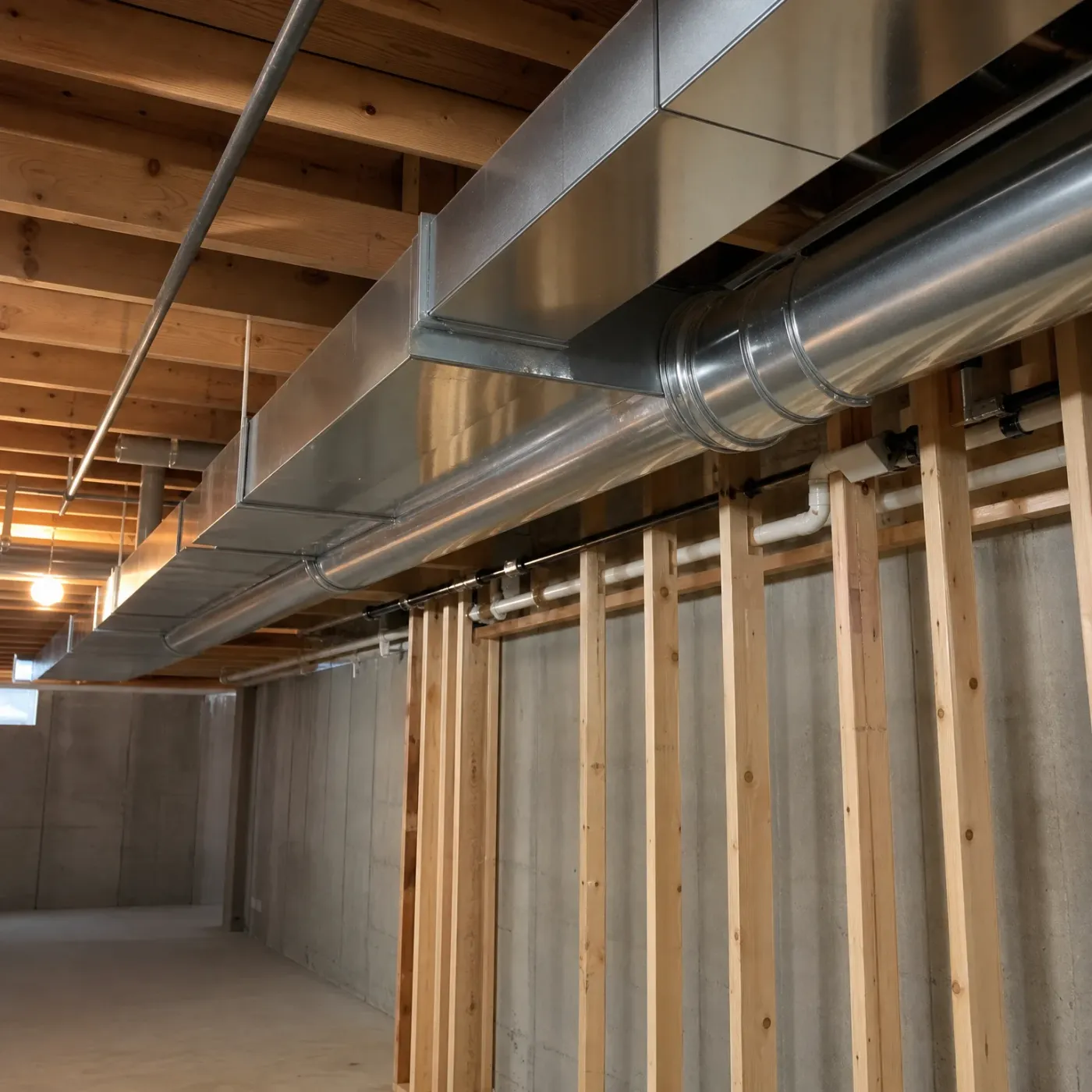
Unfinished basement with exposed wood joists, galvanized rectangular and round ductwork, piping, stud framing against concrete walls, and a bare hanging light bulb.

Send one request and you're done looking

The pro who gets in touch is licensed in Montana and works in Gallatin County.

After this form, you can stop searching for a duct system pro.

Get one local pro

No fee to send it, and nothing to sign.

What are you noticing when the air kicks on

You walk past a vent and catch it, a damp, closed-up smell, strongest near the registers and worse in rooms that don't get much airflow. Maybe you've noticed it more in the bathroom or a back bedroom than in the living room. Sometimes there's a thin layer of dust around the vent cover that looks darker than normal, almost damp-looking even when it's dry to the touch. If anyone in the house wakes up congested or starts sneezing within an hour of the furnace running, that's worth paying attention to. Left alone, the growth causing the smell doesn't go away on its own, and every heating or cooling cycle just pushes more of it through the rooms you spend the most time in.

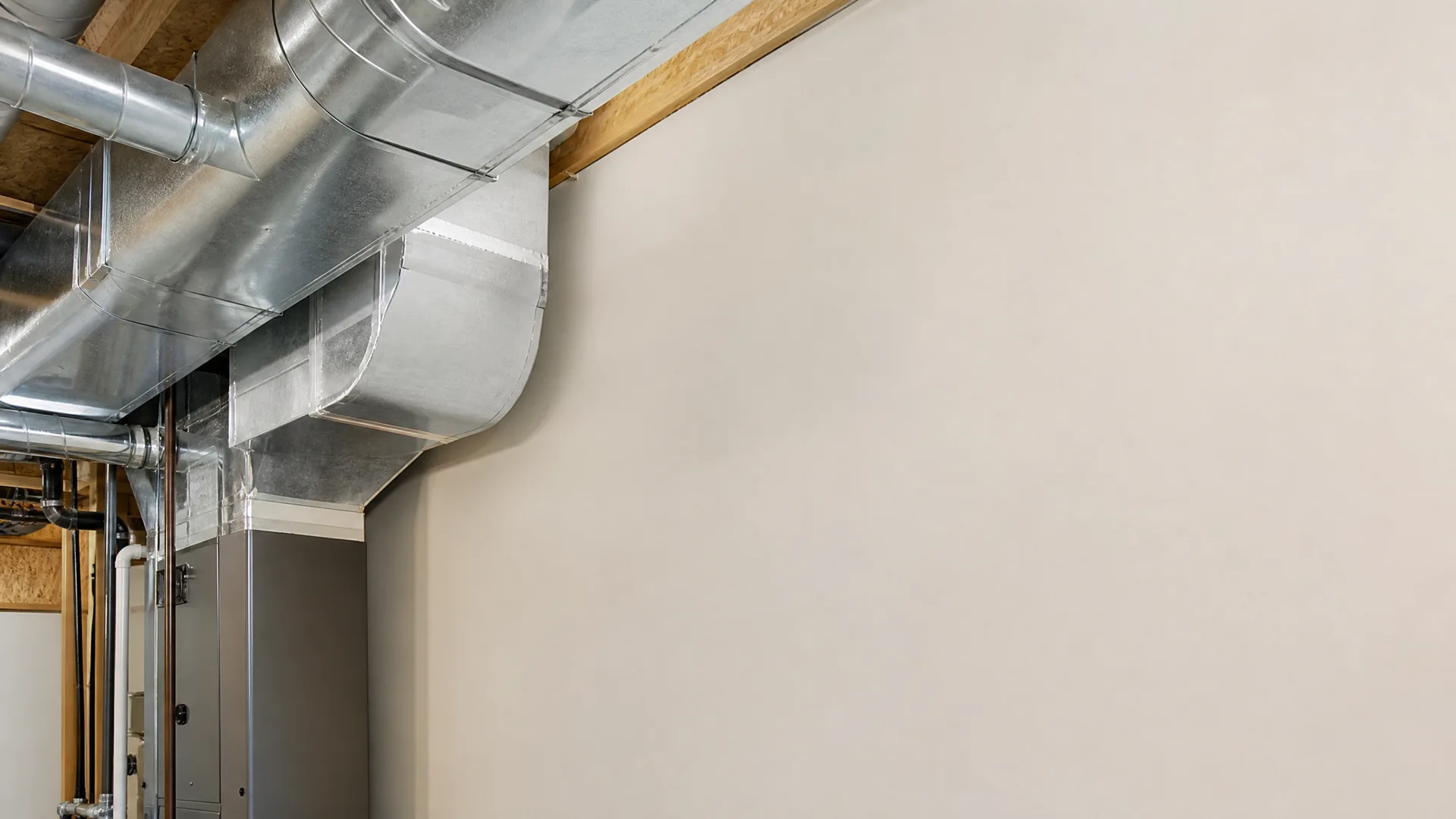
Galvanized sheet-metal ductwork and pipes running along an unfinished basement ceiling beside a plain beige wall, with a gray equipment cabinet below.

Why the dry climate doesn't stop it

Bozeman's dry air keeps most things from growing mold, but ductwork doesn't work like the rest of the house. Metal ducts run cold air in summer and warm air in winter, so they collect condensation on the inside even when the air outside is dry. That moisture sits in the dark with dust and insulation debris, and it doesn't evaporate the way a damp towel would in the open air. The duct system makes its own humid pocket no matter what's happening outside it.

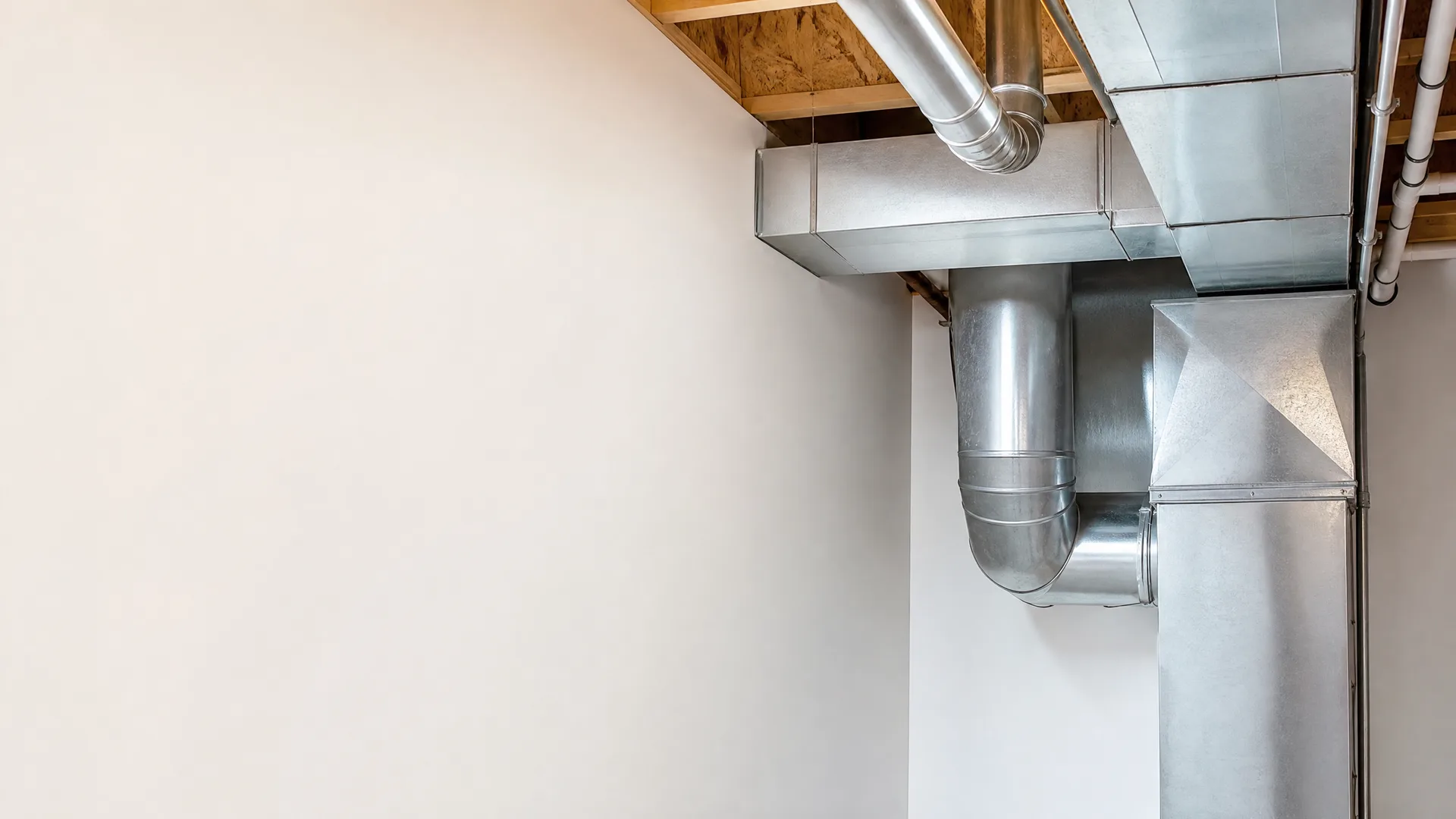
Galvanized sheet metal rectangular and round HVAC ducts running along a ceiling and down a white interior wall, with exposed wood joists and subfloor above.

What a cleaning actually removes

A duct cleaning pulls the dust, debris and growth off the inside walls of the ductwork with brushes and a vacuum system strong enough to catch what gets knocked loose. It reaches the sections you can't get to through a vent cover, including the plenum near the furnace where moisture collects first. It doesn't seal leaks or fix insulation, but it takes out the material that's actually producing the smell, which is why the smell is usually gone once the cleaning is done.

Clean the Ducts or Just Maintain Them

Duct Cleaning

  • A contractor runs a brush or air whip through the supply and return runs to knock loose dust, debris and any mold growth clinging to the metal.
  • It reaches the branch lines and the bends near registers where dust tends to pile up and stay damp longest.
  • Cleaning pulls out what's already built up, but it doesn't change how fast condensation forms on the duct walls again next winter.
  • If the smell comes from growth inside the ducts themselves, this is the only way to actually remove it rather than mask it.
  • Vents that run warm or cold air most of the year, like yours do here, will start collecting dust again, so this isn't a once-and-done fix.

Filter and Vent Care

  • Swapping the filter on schedule keeps new dust from building up inside the ducts in the first place.
  • Wiping down the registers and the first foot or two of visible duct handles the dust you can actually see and reach.
  • None of this touches mold or bacteria already growing deeper in the ductwork, out of reach of a rag or a new filter.
  • It's cheap and easy to keep up with, but it won't clear a smell that's already set in past the first few minutes of airflow.
  • A contractor who services ducts here every winter and summer can tell you quickly whether this is enough or whether the ducts need a real cleaning.
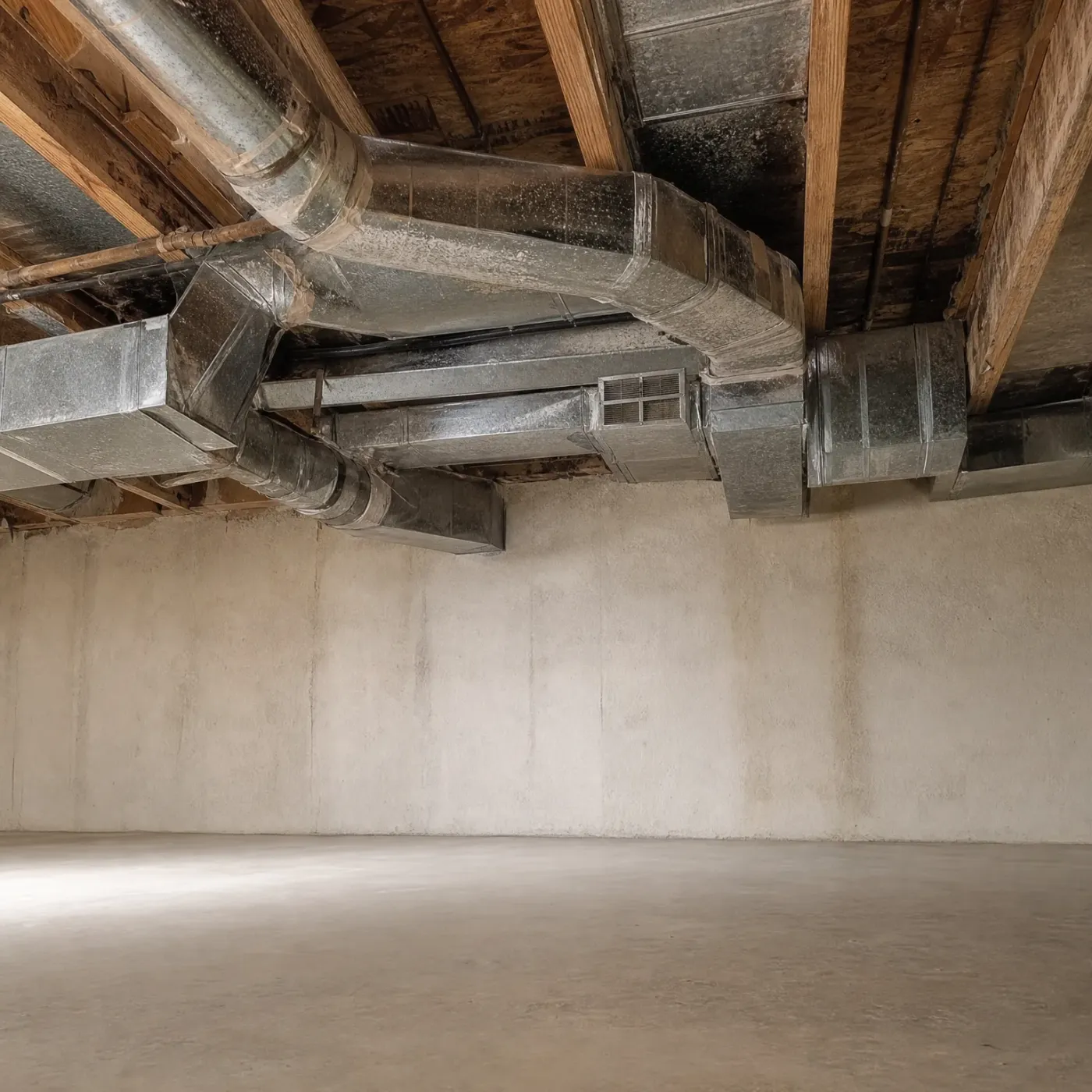
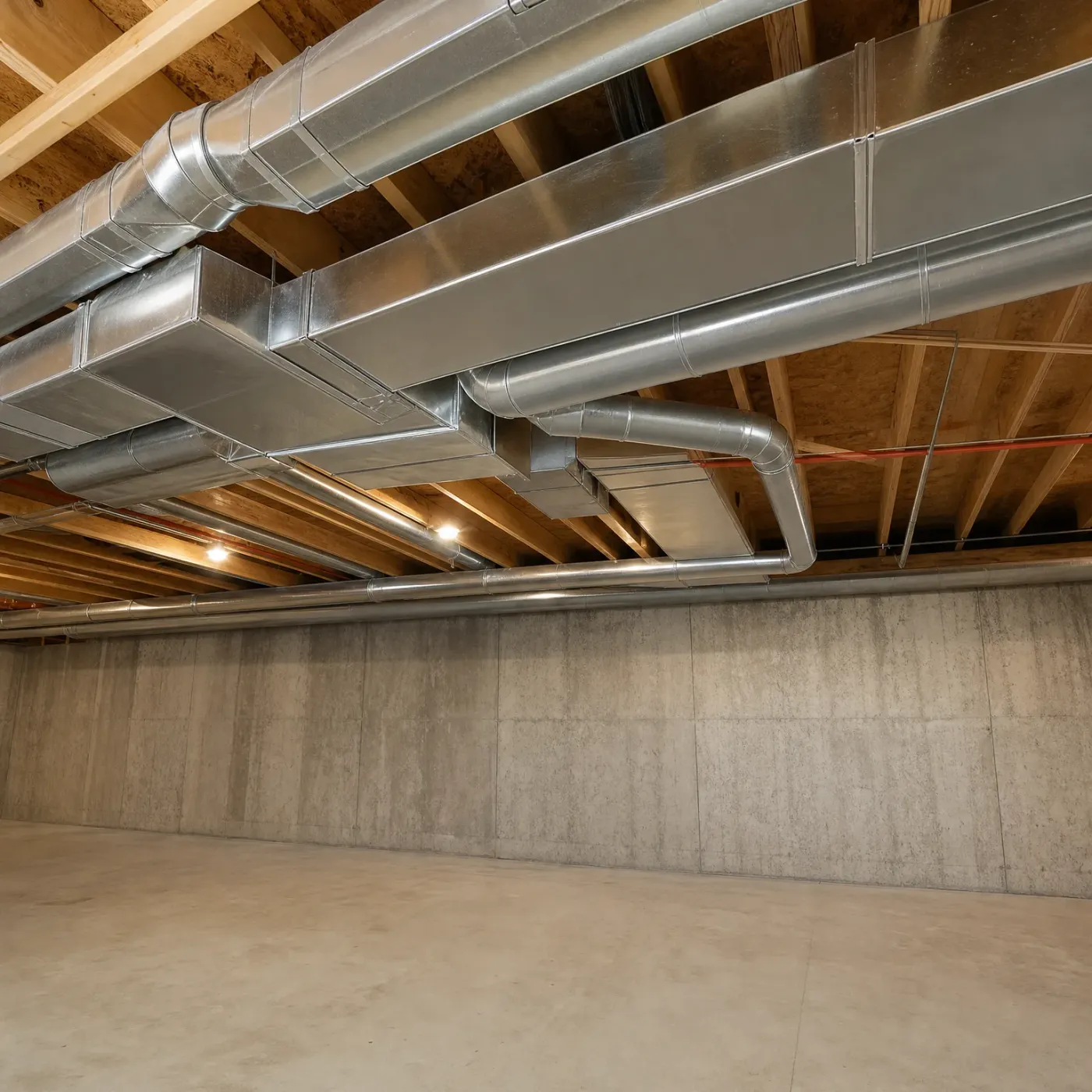
An empty basement room with bare concrete walls and floor, with galvanized sheet-metal HVAC ductwork and a vent grille running along the wooden joist ceiling.
Before you get your ductwork cleaning
Unfinished basement with bare concrete floor and walls, showing galvanized sheet-metal HVAC ducts, pipes and recessed lights beneath a wood-joist ceiling.
After you get your ductwork cleaning
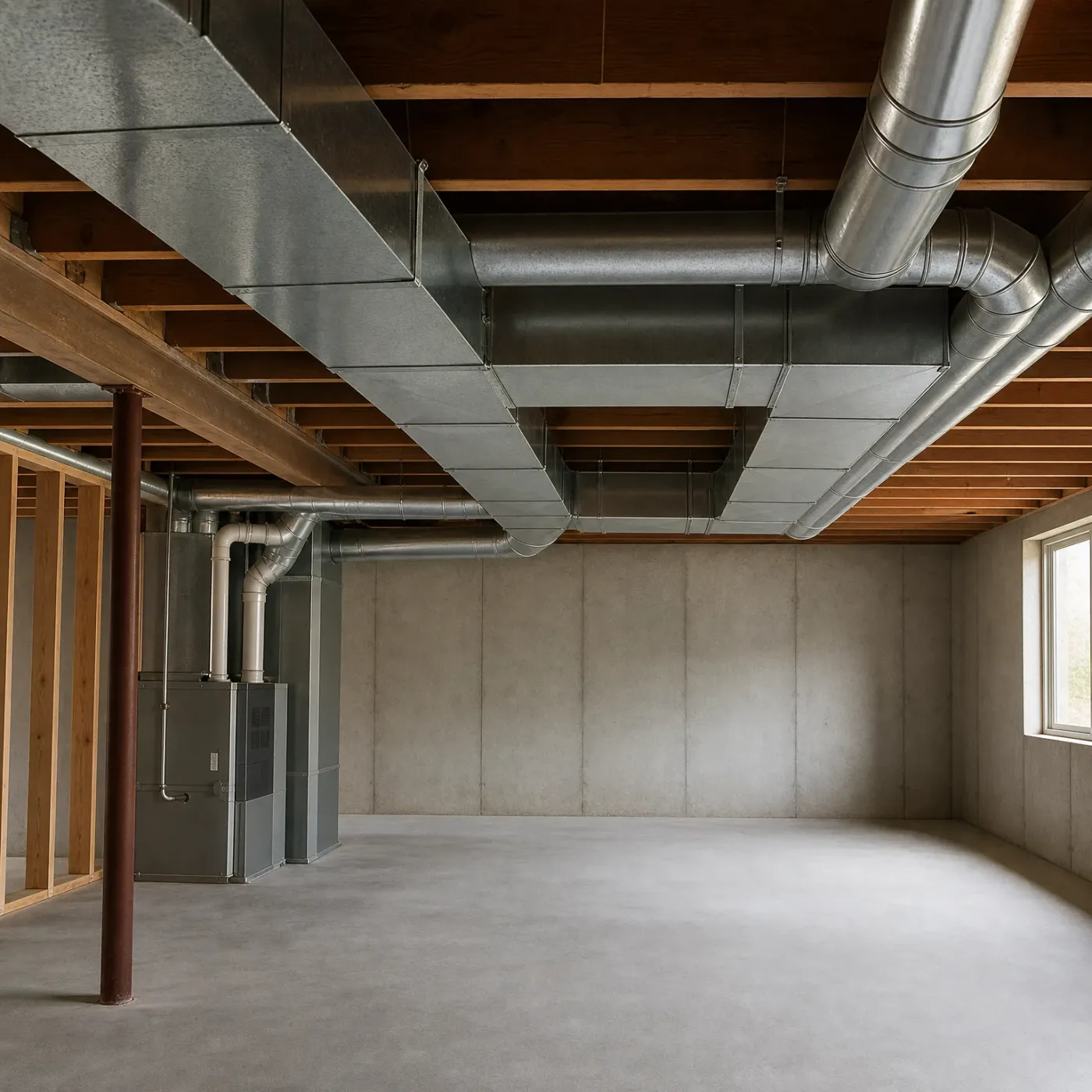
Unfinished basement with concrete floor and walls, exposed wood joists, galvanized sheet-metal ductwork, a furnace unit, a steel support column, and a small window.

Ductwork working the way it should

Sheet metal trunk lines and a spiral duct run clean along the joists, carrying air from the furnace without holding onto moisture or dust. Air moves through and out the vent, nothing sits long enough to grow.

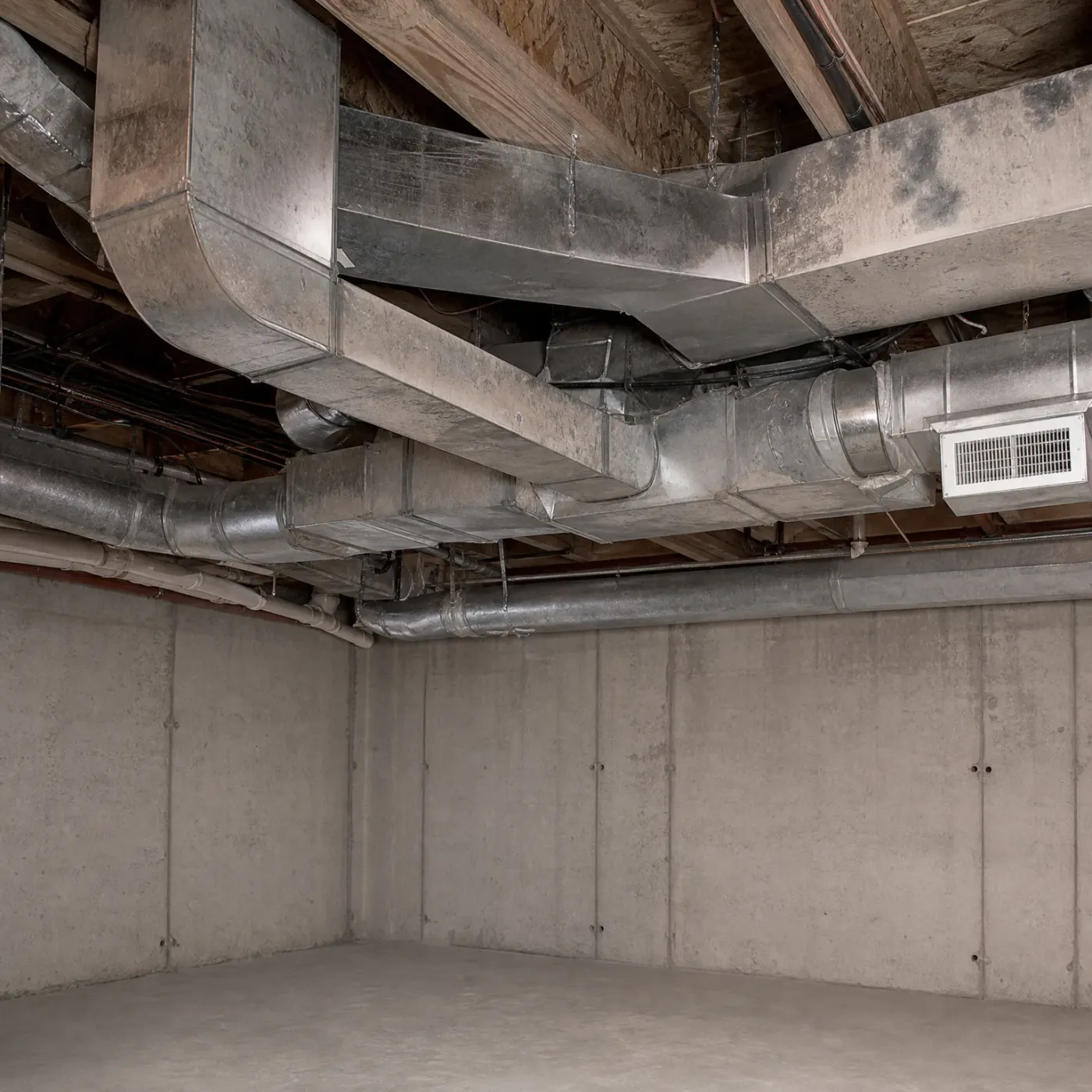
Empty unfinished basement with bare concrete walls and floor, showing exposed wooden joists, galvanized sheet-metal ductwork, pipes, and a white vent grille overhead.

Ductwork that's built up trouble

Flex duct and small pipes crowd the joists next to the metal trunk, more surface for dust to settle and condensation to cling to. That single vent at the end of the run is often where the smell shows up strongest.

Half the homes here were built by 1998

Half the houses in Gallatin County went up before 1998, and ductwork that old has had a couple decades of dust and moisture passing through it. If your system came with the house, nobody's cleaned it out yet unless you've already had it done.

ACS 2020-2024

A musty smell out of the vents means moisture and dust have been sitting in your ductwork long enough to grow something, and running the furnace or AC just pushes that air through the house. Cleaning the ducts out is what clears it. A contractor who works on duct systems around Bozoman and the rest of Gallatin County all year has seen this in homes built decades apart, from the older houses downtown to newer ones out past town, and knows where the dust and moisture tend to collect and what it takes to get a system back to moving clean air. Send in your request and it goes to one local contractor, not a handful of companies competing for the job, so you're not stuck fielding calls all afternoon trying to sort out who to call back. You'll know the ducts are clean when that smell doesn't come back the next time the system kicks on.

Dim interior with a dark gray wall, exposed wood joist ceiling, sheet-metal ductwork, conduit, pipes and a sprinkler head.

Finding a pro stops being your job

A licensed pro who works in Gallatin County gets your request.

Duct and vent cleaningDucts or ventsGallatin County, MT
Step 1 of 2

What ZIP code is the job in?