Mini Split Installation in Libby, MT
Tell us about the house, and a licensed contractor who covers Lincoln County will get in touch.
Tell us about the job
It takes about a minute.
Libby asks a mini-split to heat for ten months straight
Winter nights here average 19°F from December through February, and homes need heat from September through June. That is ten months of the year the system has to work, with only a short stretch in summer, averaging 74°F, when it does not.
A mini-split installed here has to be sized for that long heating stretch, not just the cold snaps. Any unit made since January 2023 has to meet 7.5 HSPF2 for heating and 14.3 SEER2 for cooling, but the sizing and setup for a ten-month heating load is what decides how it actually performs on a 19°F night.
- 10 months
- September through June, your system heats
- 19°F
- the average winter night it heats against
- 74°F
- the average summer afternoon it cools against
Montana requires HVAC contractors to hold a state license.
The state license comes from Montana's Department of Labor and Industry, and it belongs to the contractor, not to any single job. That means the person or business doing the work has been tested and is on record with the state. Montana carves out an exception for small jobs. Work under $2,500 does not need a licensed contractor. A mini-split installation is unlikely to fall under that line, so the license requirement applies here.
The license is what stands behind the contractor on this job. Most cities and counties also require a permit for this kind of installation, along with an inspection once the work is finished. That permit and inspection come from the local building office, not the state, and they are the part of the process that checks the work after the license has already told you who is doing it.
Source: Montana Legislature
- Is a mini split worth it?
- For most homes here, yes, especially if you're heating with electric baseboards or an old wall furnace. A mini split moves heat instead of generating it, so it pulls more heat into the house for the same amount of electricity than straight resistance heat does. With winter lows here averaging 19°F, look for a cold-climate model rated to keep producing heat at those temperatures, since not every heat pump is built for that. A contractor can size the right unit for your house and price the job.
- How many rooms can a mini split cover?
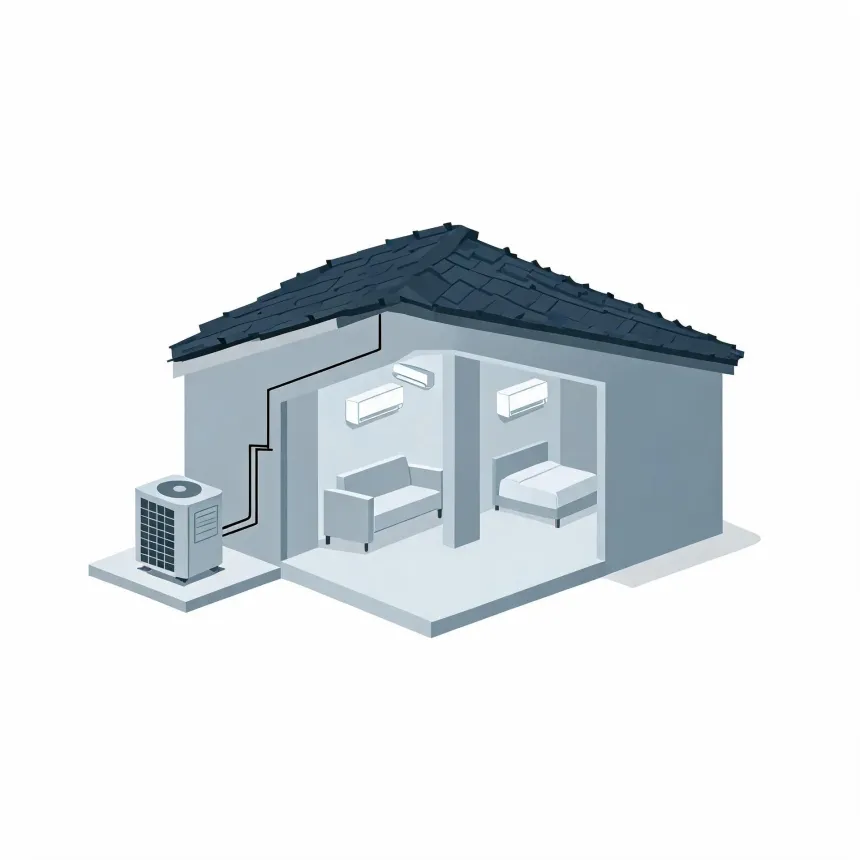
- A single indoor head heats and cools the room it's mounted in, plus maybe an open area next to it. If you need coverage in several rooms, a multi-zone system runs more than one indoor head off a single outdoor unit, with each head controlled on its own. How many zones you can run off one outdoor unit depends on the model, so a contractor will map the zones to your house before quoting anything.
- Can a mini split heat a whole house?
- It can, but only if it's sized and placed to do that job. A single head warms the room it's in well and the rooms further away less, since the heat has to travel through doorways and hallways to reach them. Whole-house coverage usually means a multi-zone system with a head in each main room, sized for winter lows near 19°F, and with homes here needing heat from September through June, that sizing matters more than it would somewhere milder. A contractor can walk your house and tell you what it would take to cover it fully.