
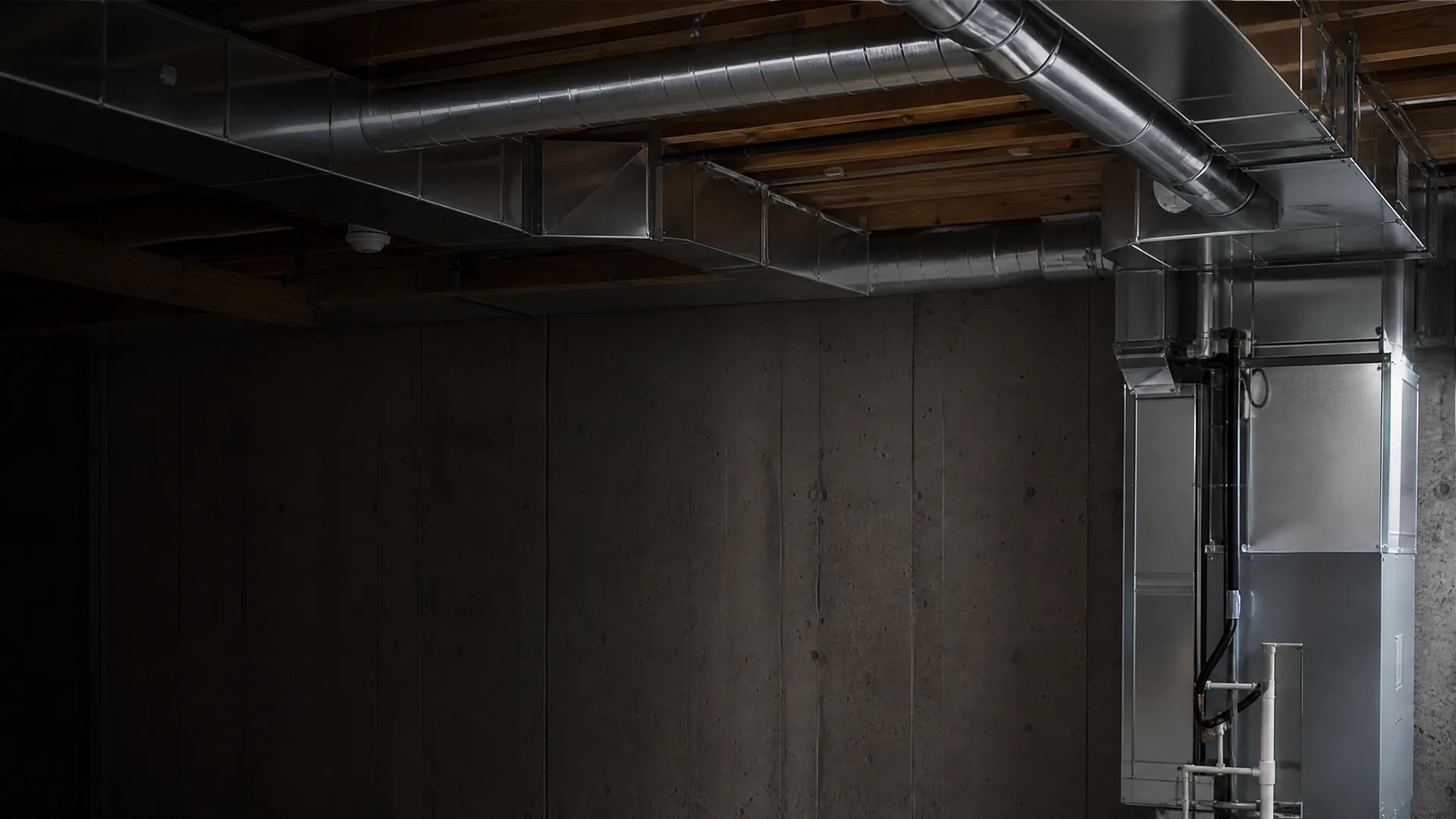
Ducts Doing Their Job
Air moves through clean metal and reaches the room carrying what the filter let through, nothing more. Dust settles where it always has, on the shelves and windowsills, at a pace that matches how the house is actually used.
Get matched with someone who does this kind of work in Missoula County.
Match me with a proYou dust the shelves, and a few days later the house looks like you never touched it. It's not your imagination, and it's not a sign you're falling behind on cleaning. Something is feeding more dust into the air here than you'd expect, and once you know what it is, you can tell whether it's your ducts, the dry air outside, or both working against you at once.
Summers in Missoula County are hot and dry, and dry air holds dust instead of letting it settle. That dust gets pulled into your return vents and pushed right back out through the supply side, so it keeps circulating instead of landing where you can wipe it up. If your ducts have gone a while without cleaning, they're likely holding a layer of dust and debris that the system stirs up every time it runs. The furnace fan moving air all winter and the AC doing the same all summer means that buildup gets worked loose and blown through the house on a near constant basis, which is why the dust comes back so fast no matter how often you clean.
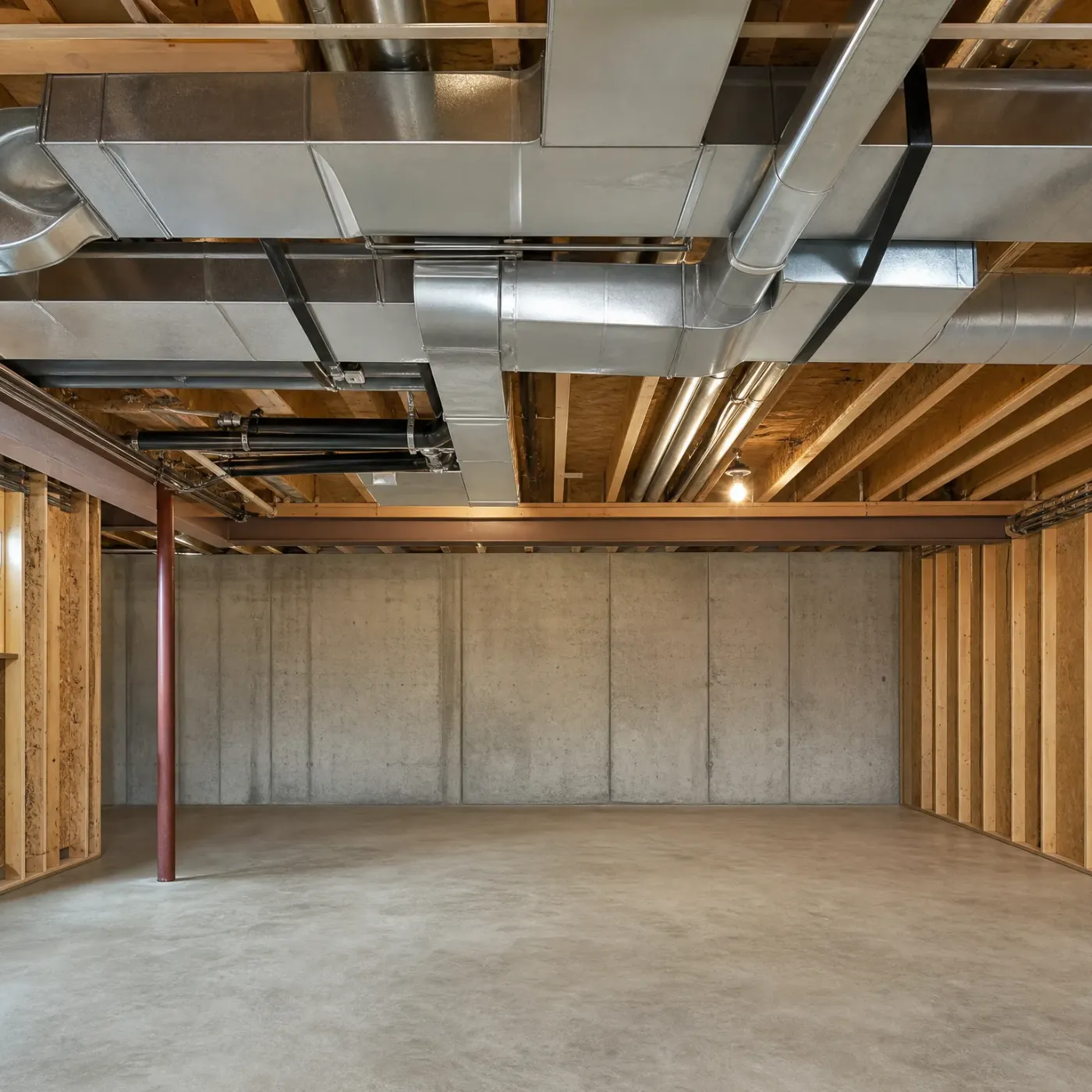
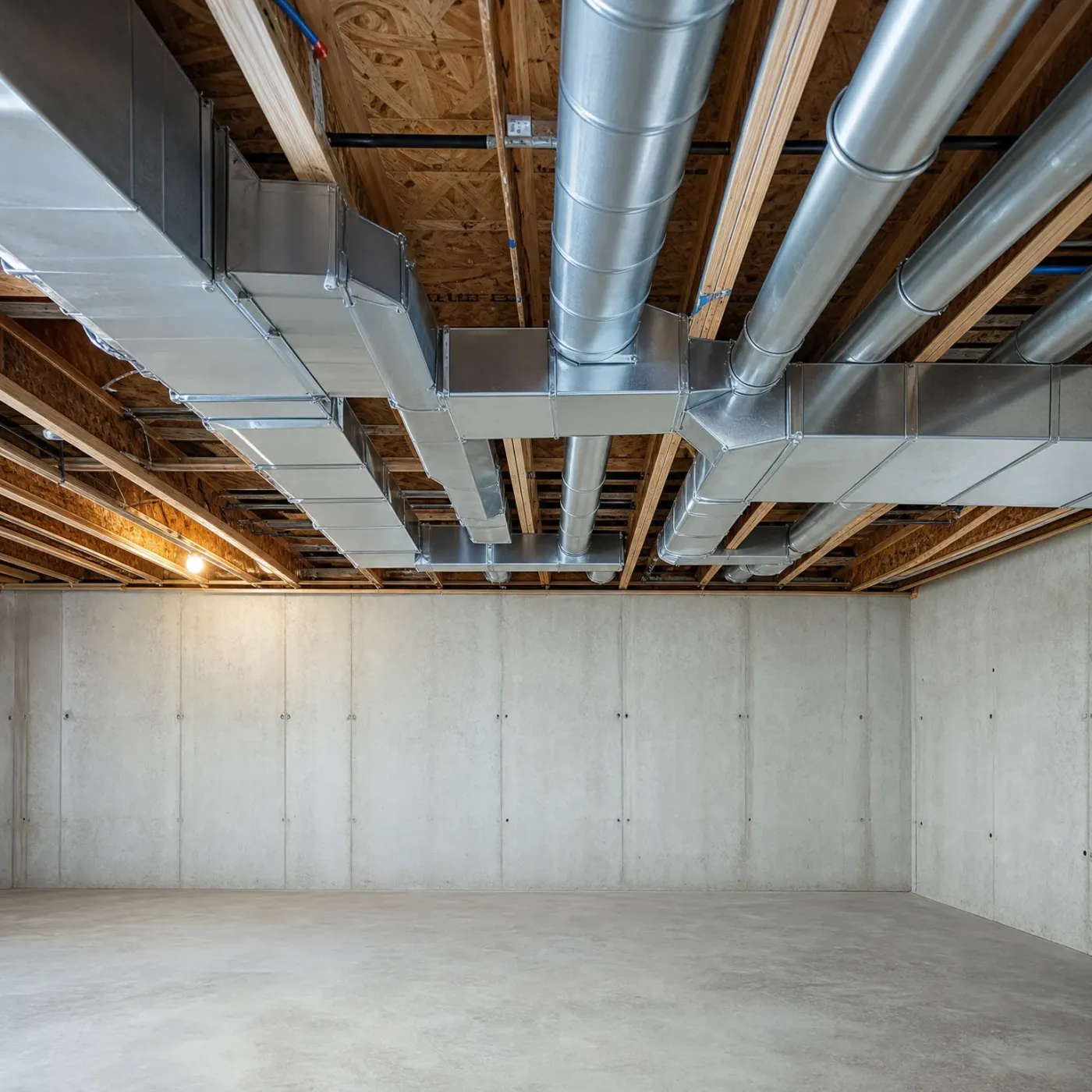
Air moves through clean metal and reaches the room carrying what the filter let through, nothing more. Dust settles where it always has, on the shelves and windowsills, at a pace that matches how the house is actually used.
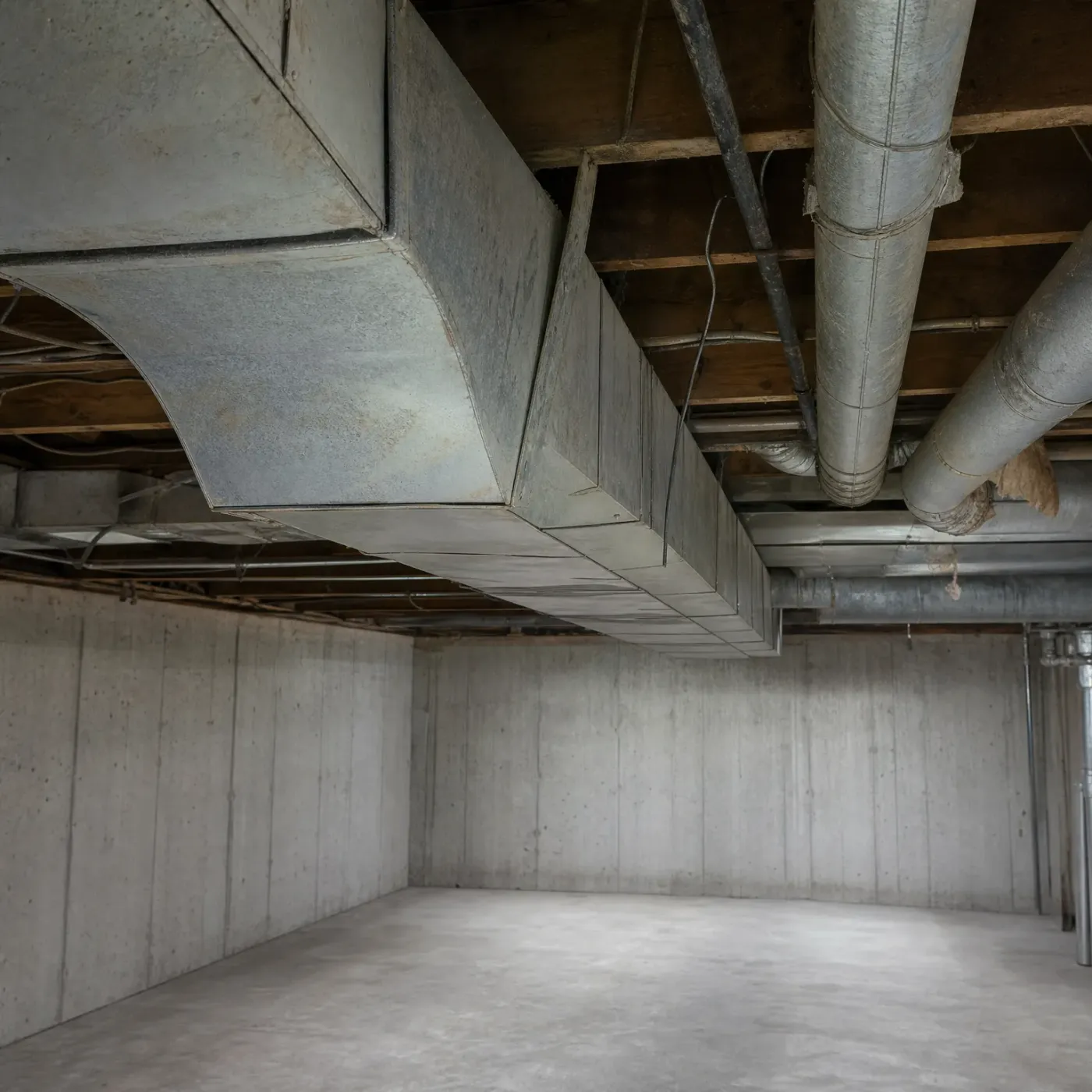
Dust built up inside the duct walls gets picked up by the moving air and pushed back into the house every time the system runs. The same rooms get dusty again within days, no matter how often you wipe them down.
Half the homes here were built by 1985
Half the homes in Missoula County date to 1985 or earlier, old enough that the ducts have had decades to collect what runs through them.
Heat runs September through June
Heat runs September through June here, close to ten months straight, which means the blower is pushing air through those ducts nearly all year.
Power here costs 13.05 cents per kilowatt-hour
At 13.05 cents a kilowatt-hour, running a system that long stays affordable, so there's little reason the blower would sit idle and let dust settle undisturbed.
ACS 2020-2024 · NOAA nClimDiv 1991-2020 · EIA-861 2025
Missoula's dry summer air carries fine grit that slips past window seals and settles into the ductwork. Every time the blower kicks on, it stirs that grit back into the rooms you're trying to keep clean.
A duct system can only recirculate what's already inside it. Clearing out the buildup means less gets carried back to the shelves and windowsills every time the furnace or AC cycles on.




Furnace season here runs September through June. Every one of those months, the blower pushes air through the same ducts, and whatever grit sits in them rides along into your rooms.
Cleared ducts move air without adding to what's already in the room. Shelves and sills collect dust at a normal pace again, not one that outruns your cleaning.
You run a cloth over the TV stand on Saturday, and by Wednesday there's a film on it again. Check the supply vents and you'll likely find a gray ring of buildup around the grille, or a puff of it when the blower kicks on. Look at the return vent cover and the dust there looks thicker than what's settling on the furniture. You might notice it in your throat or nose more in the mornings, before the house has been aired out. None of that is about how often you clean. It's about what's riding through the ducts every time the furnace runs, and in a house that heats most of the year, that's a lot of passes.
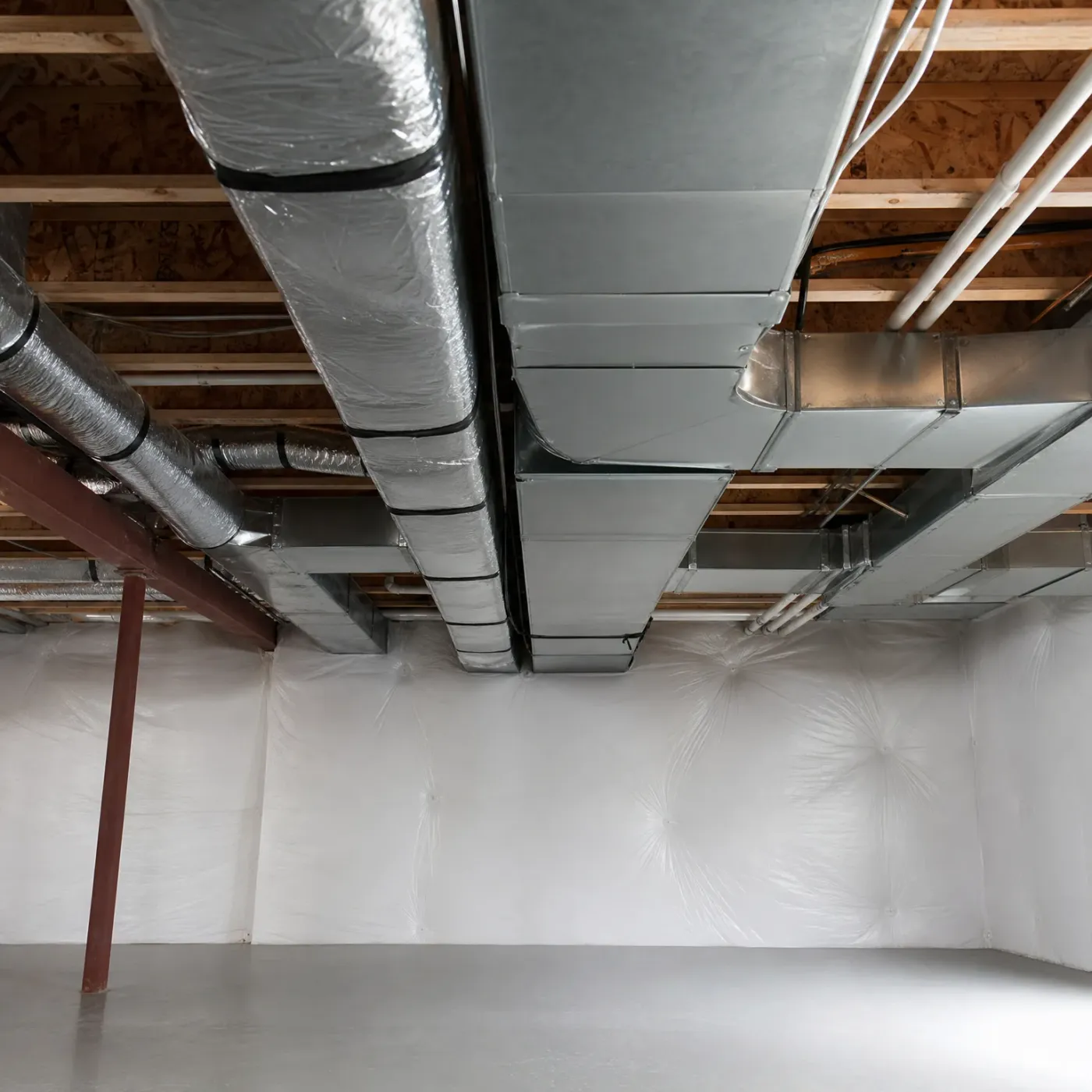
This is what you want under the floor. The metal trunk lines and flex runs are open, the joists around them are clear, and air has a straight path from the furnace to the room. Nothing in that path is adding dust to what the filter already let through.
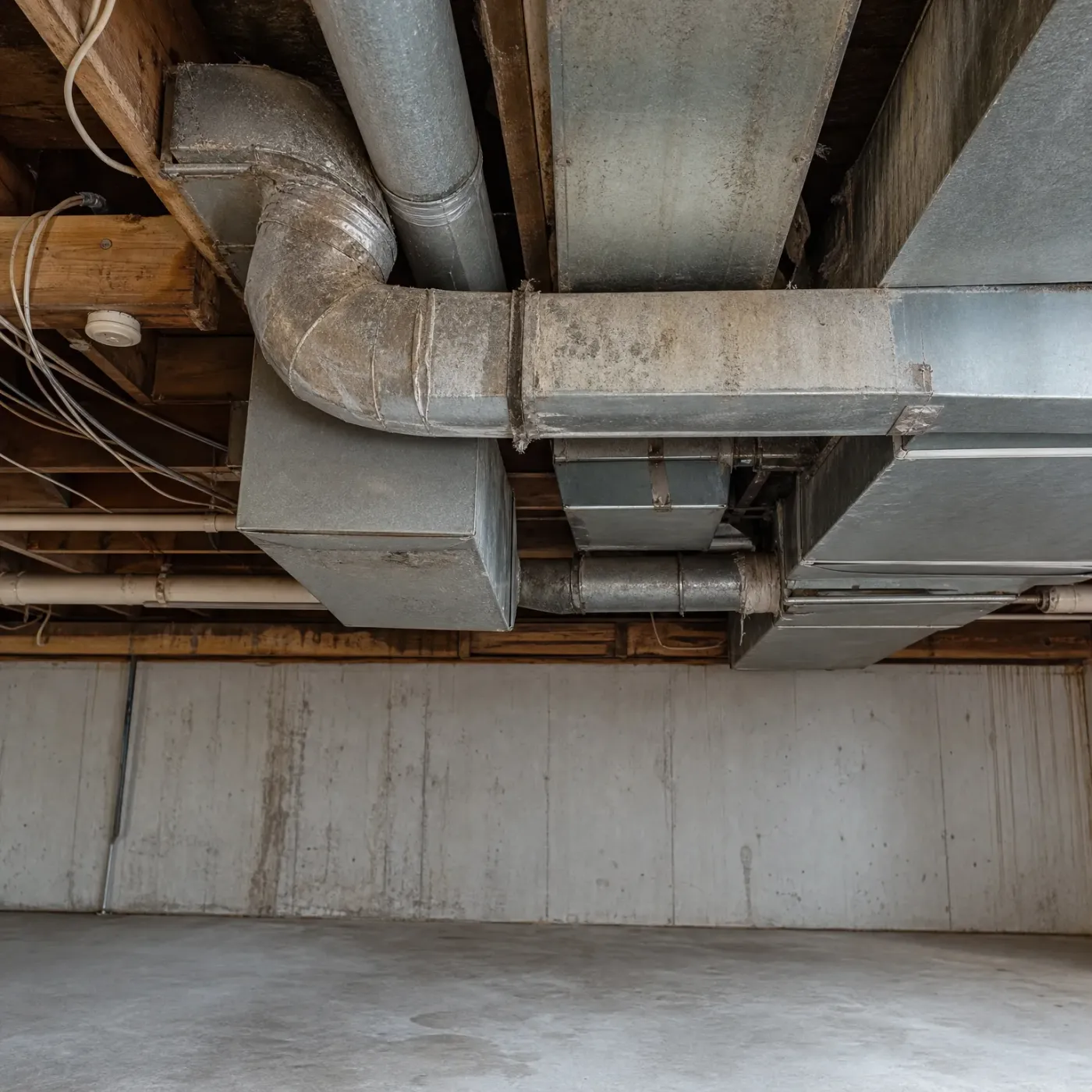
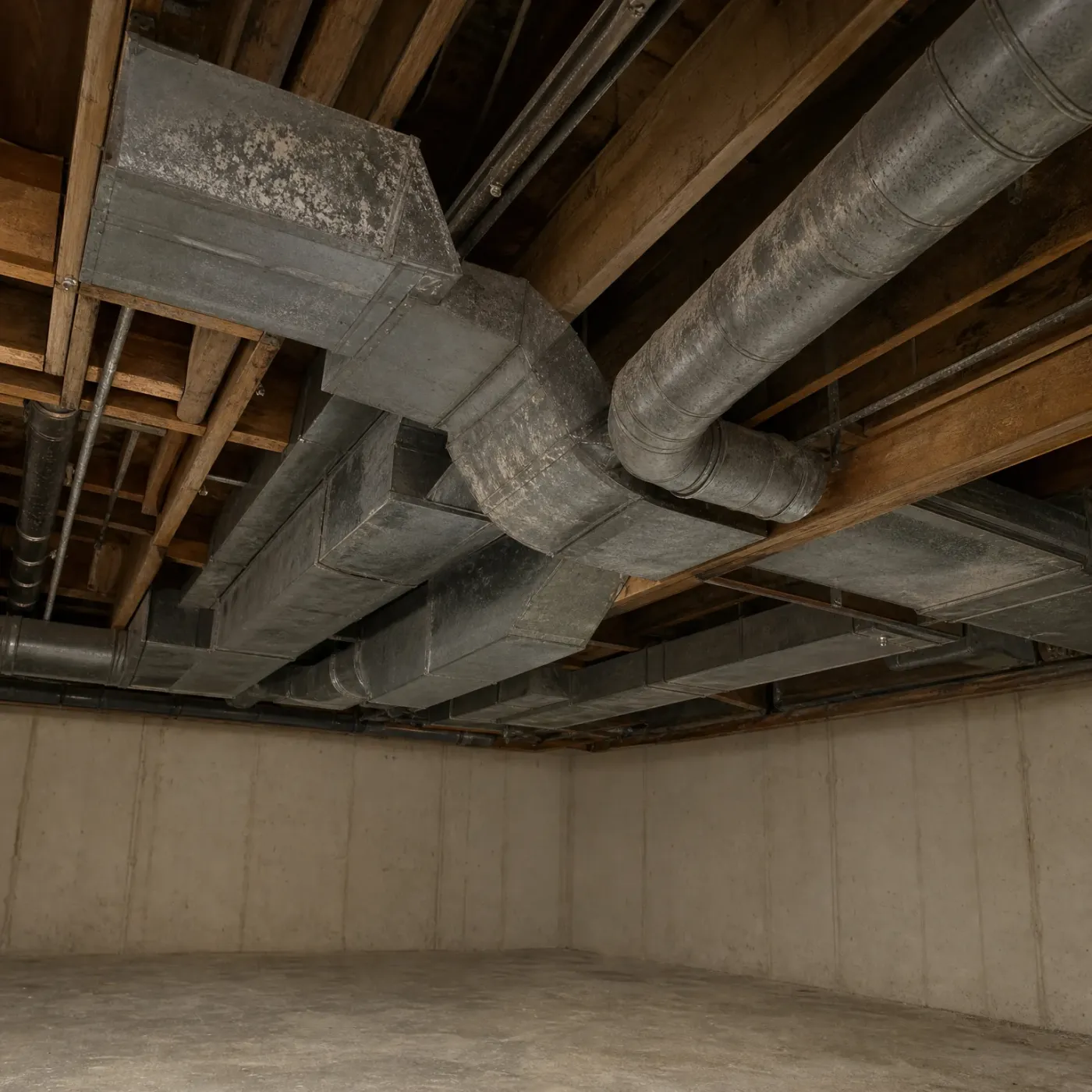
Here the same kind of trunk line and elbow connector sit coated with the fine grit that blows through Missoula County all summer. Every time the blower starts, that layer gets disturbed and some of it rides the airflow straight into your rooms.


Send the form and finding a duct cleaner is handled.
It costs nothing to send, and you don't have to hire anyone.
A forced air system works by pulling return air back to the furnace, pushing it across the blower wheel, and sending it back out through the supply ducts. That blower wheel has curved blades, and dust sticks to them the same way it sticks to a ceiling fan, except here the buildup is inside a sealed housing where nobody looks. As the blades load up with grit, they move less air for the same amount of work, so the blower runs longer to push the same volume through the house. A longer run time means more passes of air through ducts that already have dust sitting in the seams and the turns, so more of it gets picked up and carried into the rooms. The flex duct runs under the floor make this worse than hard metal pipe would, because the ribbed interior gives dust more surface to cling to instead of sliding through. None of this shows up until someone opens the furnace cabinet.
A blower wheel caked with dust can't move air the way it did new, so the furnace makes up for it by running longer. Longer run times mean more air getting pulled across a wheel and ducts that already have buildup on them, which is how a small problem feeds itself. The filter only works on air that actually passes through it. A gap at a return duct joint gives air a shortcut straight from the crawlspace or attic, and whatever rides in on that air skips the filter entirely. The furnace's on off pattern matters too. One that short cycles, kicking on and off in short bursts, jostles settled dust in the ducts more than one that runs in long, even stretches. Flex duct adds its own version of the problem. Where it sags between the joists or kinks at a turn, dust settles in the low spot and gets swept back into the airflow the next time the blower starts.
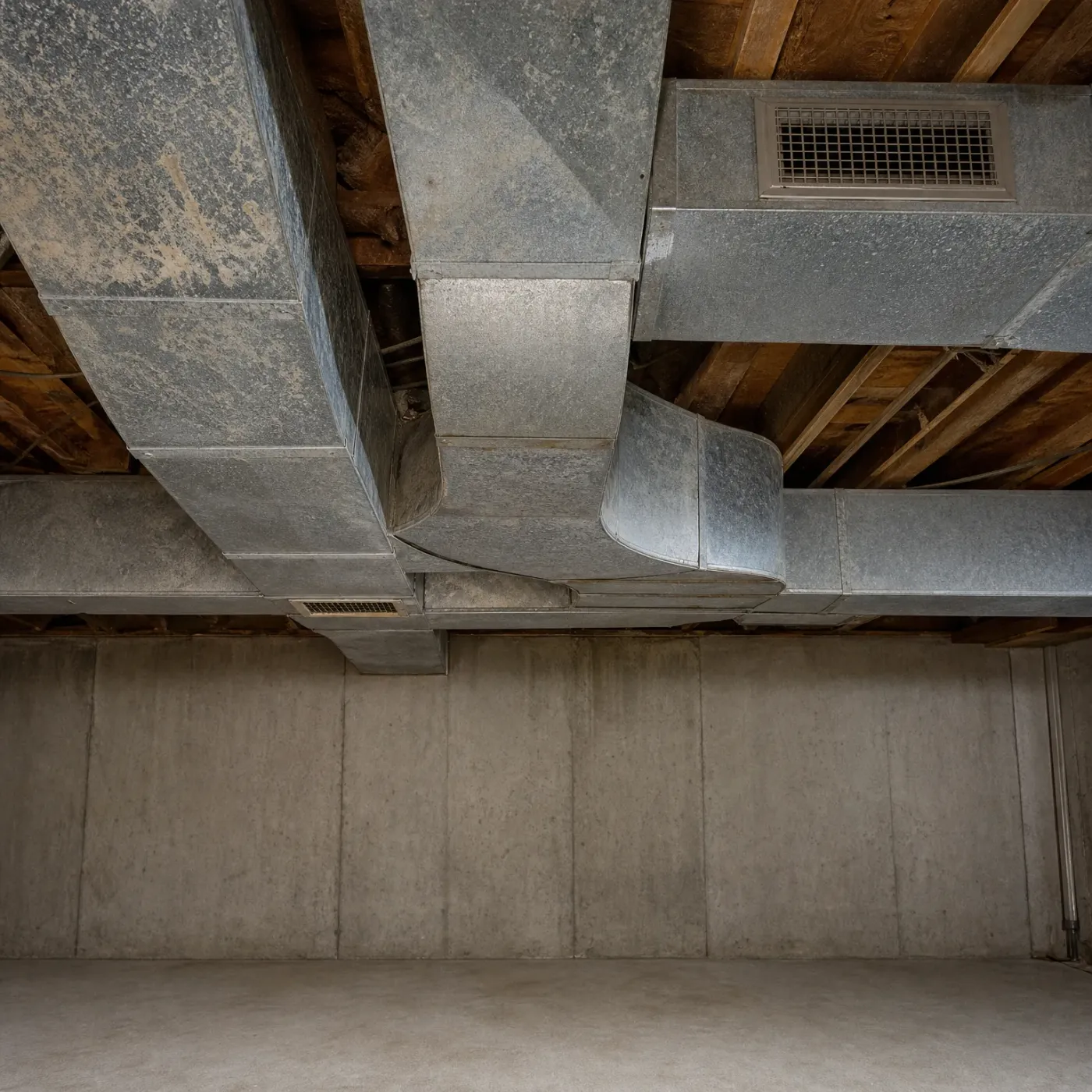
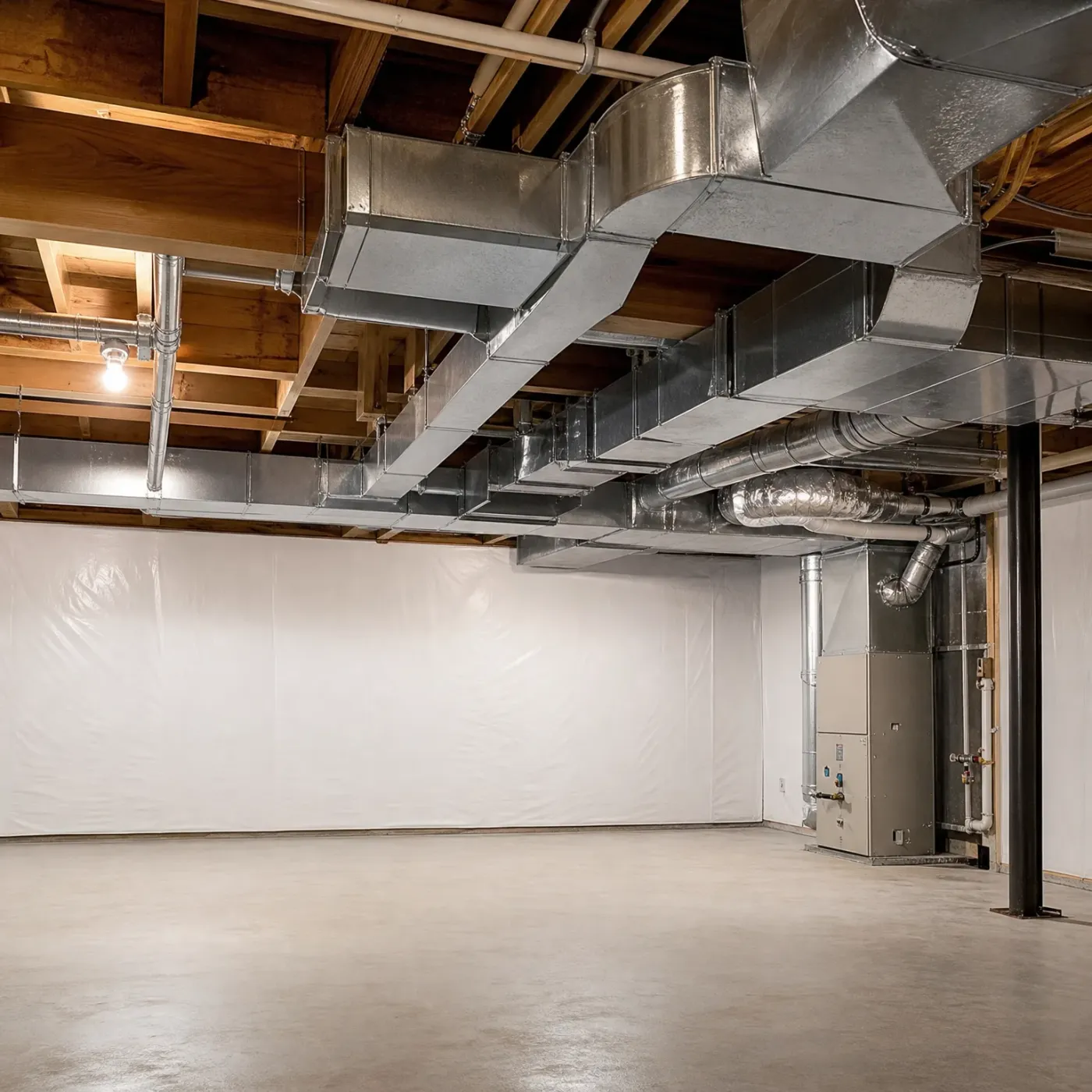
Wiping vents and swapping the filter catches what you can reach and see. It cuts down on the surface dust for a week or two, since the filter is doing a better job of stopping what comes through. But the trunk lines and branch runs under the floor stay untouched. Whatever coating sits in those ducts keeps riding the air every time the blower kicks on. You end up re-cleaning the same shelves on the same schedule, because the source was never part of the job. It treats what lands, not what keeps arriving.
A contractor runs equipment through the full system, the trunk lines, the branch runs, the return, and the blower wheel itself, pulling out what years of airflow have packed into the metal. Once that's done, the same filter and the same furnace are moving air through a system that isn't adding anything back. Shelves still collect some dust, houses always do, but the pace slows down because the source got addressed instead of just the surface. It's the difference between managing dust and stopping where most of it was coming from.
Half the homes in Missoula County were already standing by 1985, and houses that age usually have the original ductwork under the floor. Metal lasts, but it doesn't clean itself, so decades of dust have had nowhere to go but back into your rooms.
ACS 2020-2024

So that's the dust. Dry air outside, a blower that runs most of the year, and ducts that have been collecting what passes through them since before you lived there. None of that is something a cloth and a vacuum can reach.
You don't have to track down who handles duct cleaning in Missoula County or sort through who actually knows the local systems. Send the form and that search is off your plate. A contractor who covers your area gets your details and follows up with you directly, so the next call you make isn't another search, it's answering the phone.

One request and the duct cleaning stops waiting on you.
