





Signs your ducts need cleaning in Missoula, MT

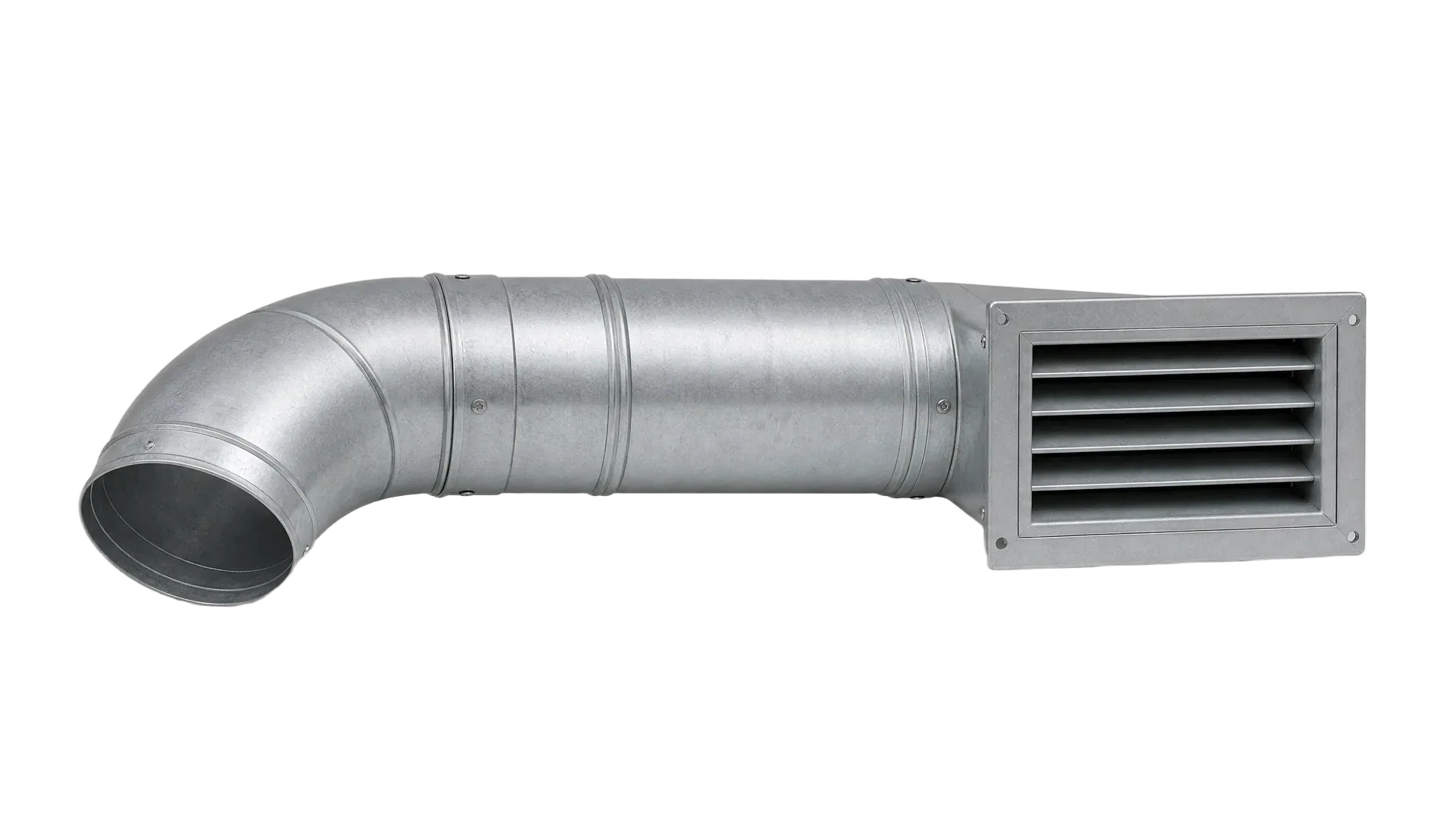
A galvanized metal round duct with a 90-degree elbow connected to a rectangular louvered vent grille, shown against a plain gray background.
Find a pro near me

Dust building up fast on furniture, musty air when the furnace or AC kicks on, and rooms that stay dusty no matter how often you clean are the usual signs your ducts need attention. Missoula's dry summers pull dust and pollen into the system through gaps and returns, and that debris settles in the ductwork until the blower stirs it up again. Winter makes it worse in a different way. Gas furnaces here run for months straight, October through April some years, and that constant airflow pushes whatever is sitting in the ducts through the whole house. If you're seeing dust on registers themselves, or a musty smell right when the heat or AC first turns on, that's debris in the line, not just a dirty filter. A filter only catches what passes through it. It does nothing for what's already settled in the ducts upstream and downstream of it.

Why does Missoula dust come back so fast?

  • Half the homes here were built by 1985

    Half the houses in Missoula County date to 1985 or earlier, and ductwork that old has had decades to gather dust, gaps and settled debris nobody ever saw.

  • Heat runs September through June

    Heat runs here from September clear through June, about ten months, so dusty air moves through the same ducts almost every day of the year.

  • Power here costs 13.05 cents per kilowatt-hour

    Power costs 13.05 cents per kilowatt-hour here, cheap enough that most people run the blower often, pushing more air, and more dust, past every gap in the ducts.

ACS 2020-2024 · NOAA nClimDiv 1991-2020 · EIA-861 2025

Where duct buildup actually happens

  • Dust and debris sit in the slow-moving air near the duct walls and build up thickest right at the bends and the joints.
  • A whistle or a rattle at the vent register often means a loose damper or a seam that's come apart somewhere back in the run.
  • The return duct pulls air from the whole house before it reaches the furnace, so anything it picks up gets pushed right back into every room.
  • Rodent droppings or a dead insect near a supply register usually means something got into the ductwork through a gap outside or in the attic.
  • A film of dust on the inside of the register cover, not just the floor below it, points to buildup further back in the duct run.
  • Running the fan alone, without heat or cooling, stirs up loose debris near the registers and makes it easier to spot what's settled.

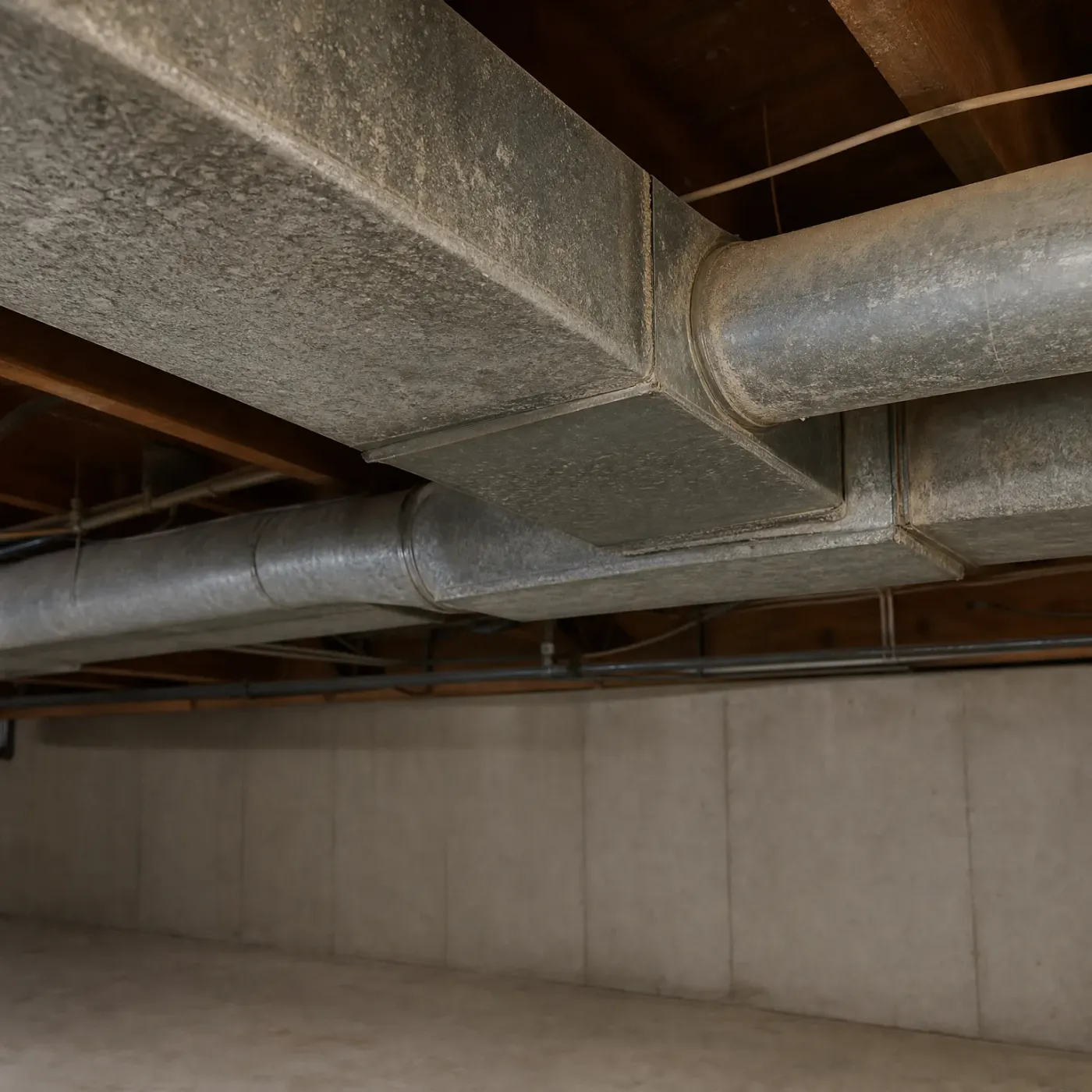
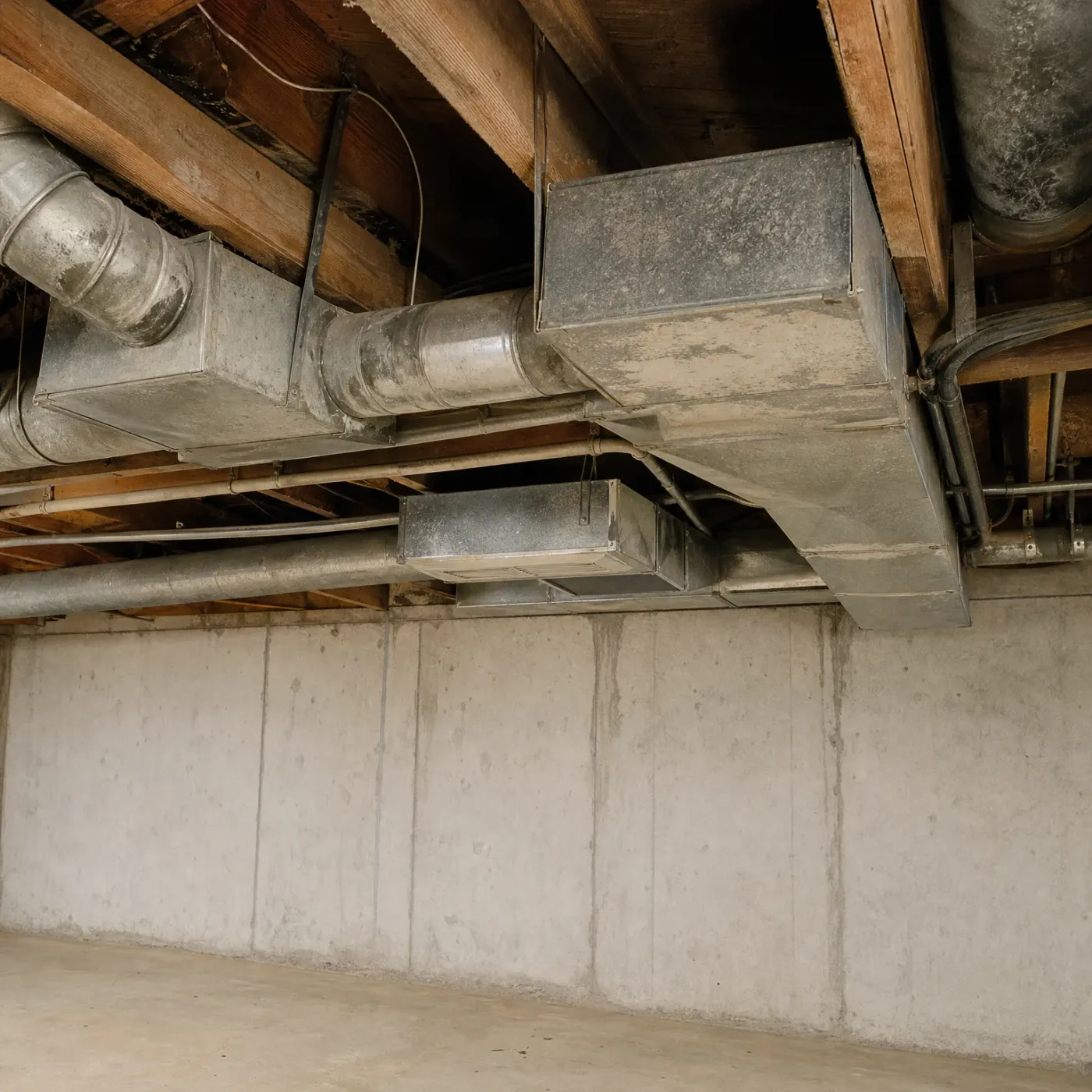
Air moving through a duct doesn't move at the same speed everywhere. It slows down near the walls and at every bend, and that's where dust settles first. Straight runs stay cleaner longer. Elbows, joints and the seams where one section of duct meets the next collect debris because the airflow drags across them instead of through them. This is why a whistle or a rattle at a register matters. It usually means a damper has come loose or a seam has pulled apart somewhere upstream, and that same gap is a place for debris to gather and for outside air to leak in. The return duct deserves attention too. It's the duct that pulls air out of every room in the house before sending it to the furnace, so whatever gets picked up there, dust, pet hair, anything fine enough to move with the air, gets pushed right back out through every supply register. A gap in the ductwork outside or up in the attic can let more than dust in. Rodent droppings or a dead insect near a register is a sign something found its way into the system through an opening that needs sealing, not just cleaning. Look at the register cover itself, not just the floor under it. Dust on the inside of the cover means buildup further back in the run. Running the blower fan on its own, with no heat or cooling calling for it, stirs up what's settled near the registers and makes it easier to see.

An older man with gray hair and a beard, wearing a dark jacket dusted with snow, stands smiling in a dimly lit hallway with lamps and a living room visible behind him.
A gray-haired, bearded man in a dark snow-dusted coat stands smiling in a dimly lit entry hall with a staircase, a lit table lamp, a framed picture, and a living room visible through a doorway.
An older man with white hair and a beard, wearing a dark snow-dusted coat and scarf, stands in a warmly lit interior hallway with a framed landscape picture, a table lamp and a potted plant behind him, and a snowy view through a window at left.
A gray-haired, bearded man in a dark coat dusted with snow stands smiling in a dimly lit room with a lamp, mirror, framed art, and a sofa in the background.

Dusty rooms versus a dirty filter

A filter that's gone gray and clogged will send dust through the house on its own, and swapping it is the first thing to try before anything else. If a fresh filter goes in and the dust keeps settling on the furniture within a day or two, the filter was never the problem. That points to debris already loose inside the ducts, getting pushed out into the rooms every time the blower runs. The difference matters because one costs you a few dollars at the hardware store and the other doesn't resolve until the ducts themselves get cleaned out.

One dusty room or all of them

Ducts split off to every room from the same trunk line, so dirt sitting in that main run shows up as dust in every room the system feeds, not just one. If only a single room stays dusty while the rest of the house is fine, look at that room first. A vent that's closed too often, a duct run with a loose connection, or furniture blocking the return nearby can account for it on its own. Dust spread evenly through the whole house points back to the shared ductwork rather than anything local to one room.

Half the homes here were built by 1985

If your house went up before 1985, its ducts have had that many more years to collect dust, pet hair and gaps at the joints. A house built more recently still gathers debris, just with less time behind it.

ACS 2020-2024

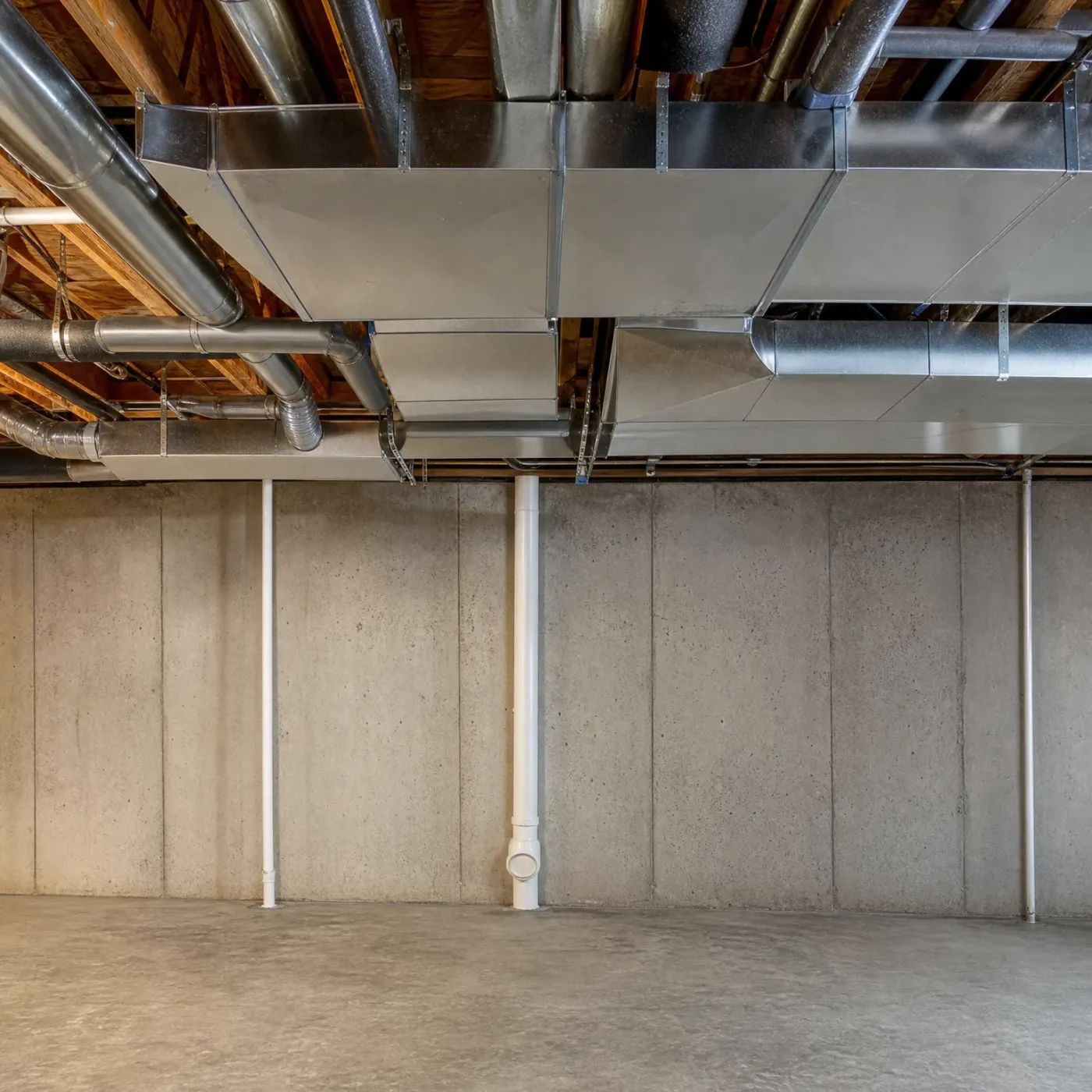
Unfinished basement with poured concrete walls, a bare concrete floor, white PVC pipes running down the wall, and exposed sheet-metal HVAC ductwork beneath wood floor joists.
Metal ducts and PVC drain lines run straight and tight along the joists, with no gaps or sagging where the sections meet.
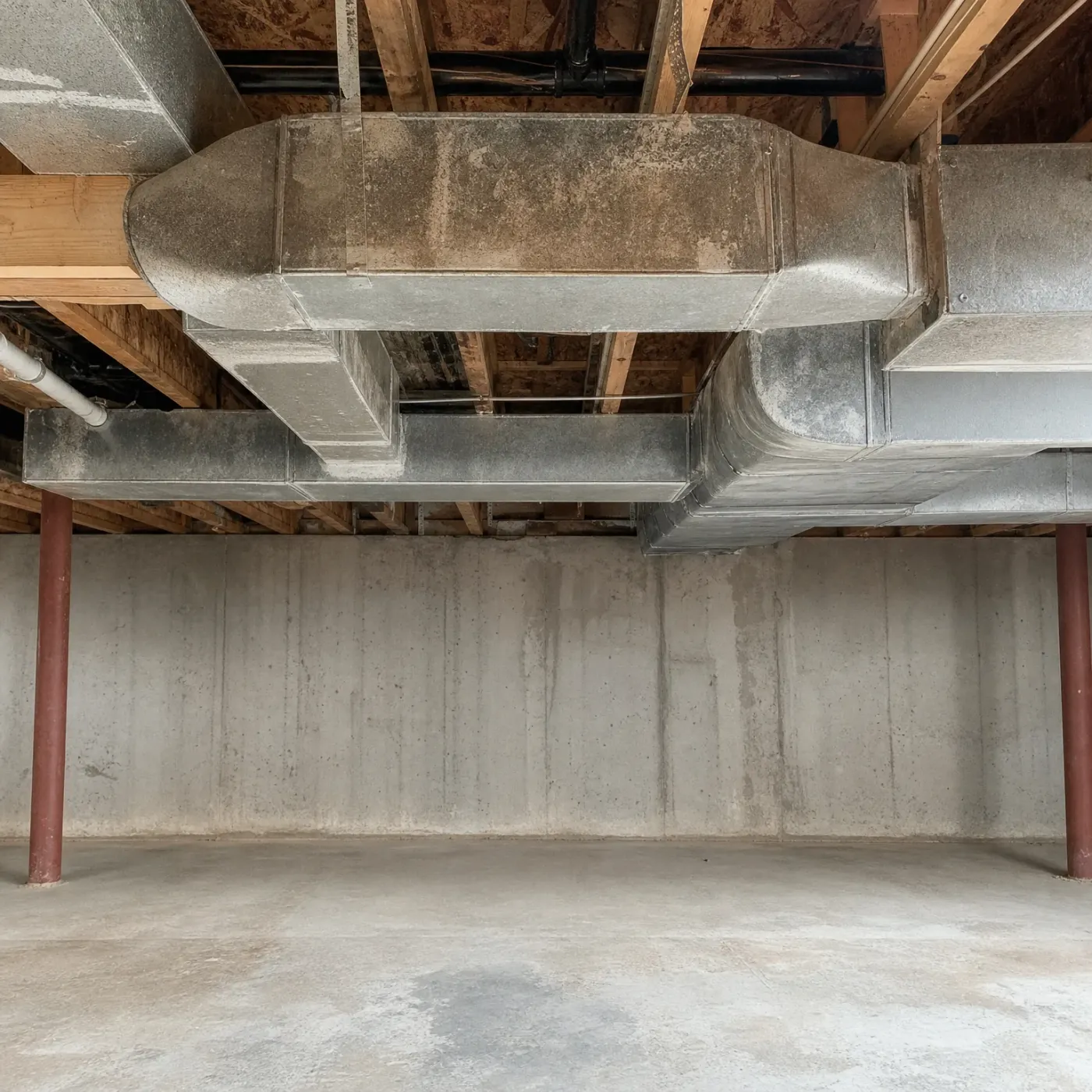
Unfinished basement with bare concrete walls and floor, galvanized sheet-metal HVAC ducts running beneath wooden floor joists, and two red steel support columns.
Here the ducts sag between the joists and the joints have pulled apart enough to leak air and collect dust at every seam.
  1. Dust and pet hair settle inside the duct walls where airflow runs slowest.

  2. Loose joints and gaps pull in more dust from the attic or crawlspace.

  3. The furnace or AC blower stirs that buildup loose every time it runs.

  4. Loosened dust rides the airflow straight out through the vent registers.

Basement ceiling with galvanized sheet metal ductwork, round pipes and rectangular plenums running between wooden joists above a bare concrete foundation wall and floor.
Before you get your ductwork cleaning
Empty basement room with bare concrete walls and floor, and an exposed wood-joist ceiling carrying sheet-metal ductwork, insulated pipes, and recessed lights.
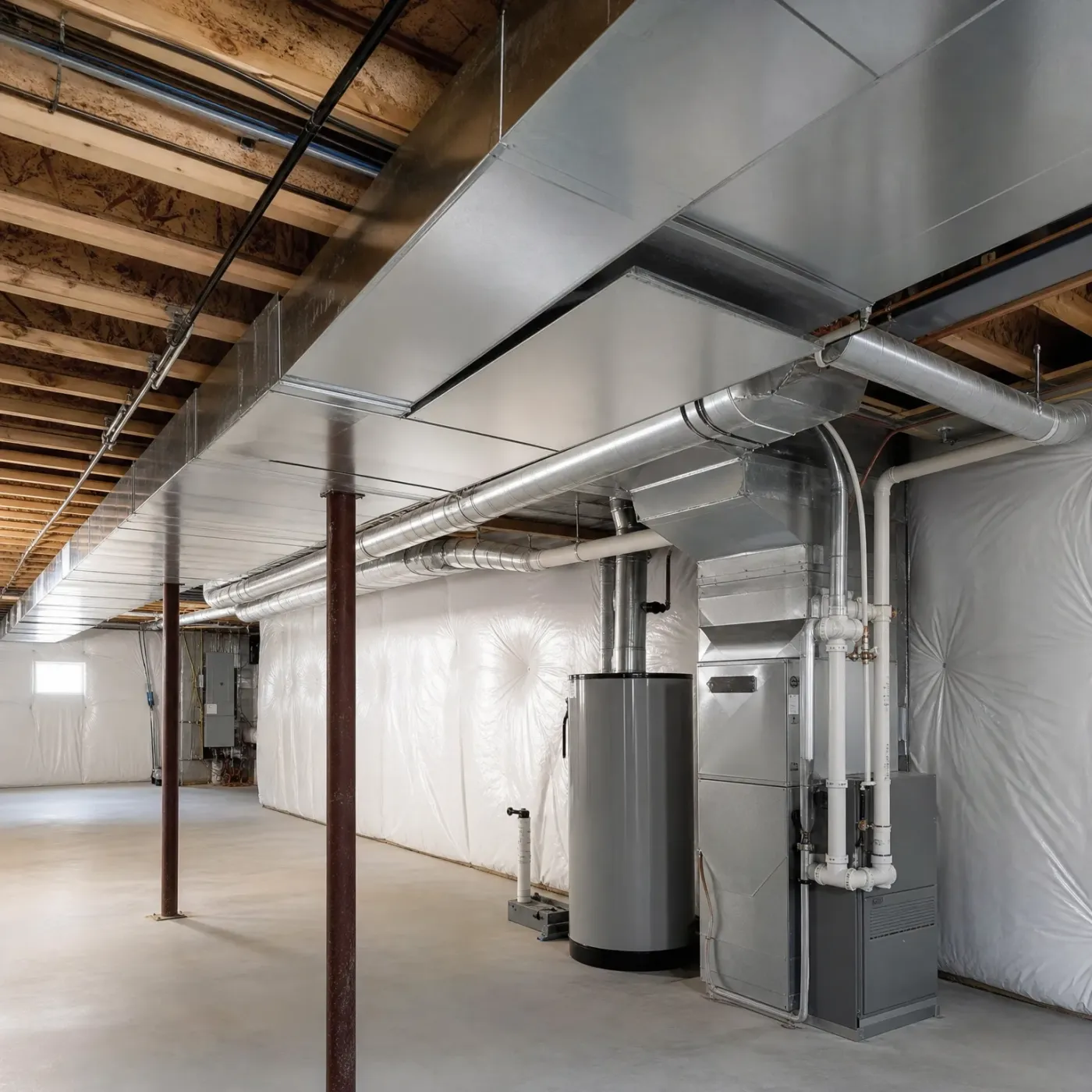
After you get your ductwork cleaning
Unfinished basement with concrete floor, plastic-sheeted insulated walls, exposed wood joists, metal support posts, sheet-metal supply ducts, a cylindrical water heater and a furnace with PVC piping.

Get matched with a duct system pro in Missoula County

Once you send the form, finding a pro is off your list.

Get matched with someone who does this kind of work in Missoula County.

Get my match

No fee to send it, and nothing to sign.

Can I just vacuum the vents myself instead of cleaning the ducts?

A shop vac on the register covers the first foot or two of duct, and it does pick up the dust sitting right at the opening. But that's the easy part of the system. The buildup that keeps settling on your furniture is further back, past the boot and into the trunk line, where a hose can't reach and the suction can't follow.

Vacuuming the vents helps, but it doesn't reach the dust causing the problem

A vent register comes apart easily enough, and running a vacuum hose a foot or two inside it will pull out what's sitting right there. What it won't do is reach the bends and joints further back in the run, which is where dust actually collects and where it builds up thickest. A proper cleaning uses equipment that gets air moving through the whole duct, from the furnace or AC all the way out to every register, so debris gets pulled out of the system instead of just stirred loose. If your ducts sag between the joists or the joints have pulled apart, as they do in a lot of older Missoula County houses, vacuuming a vent won't touch that either.

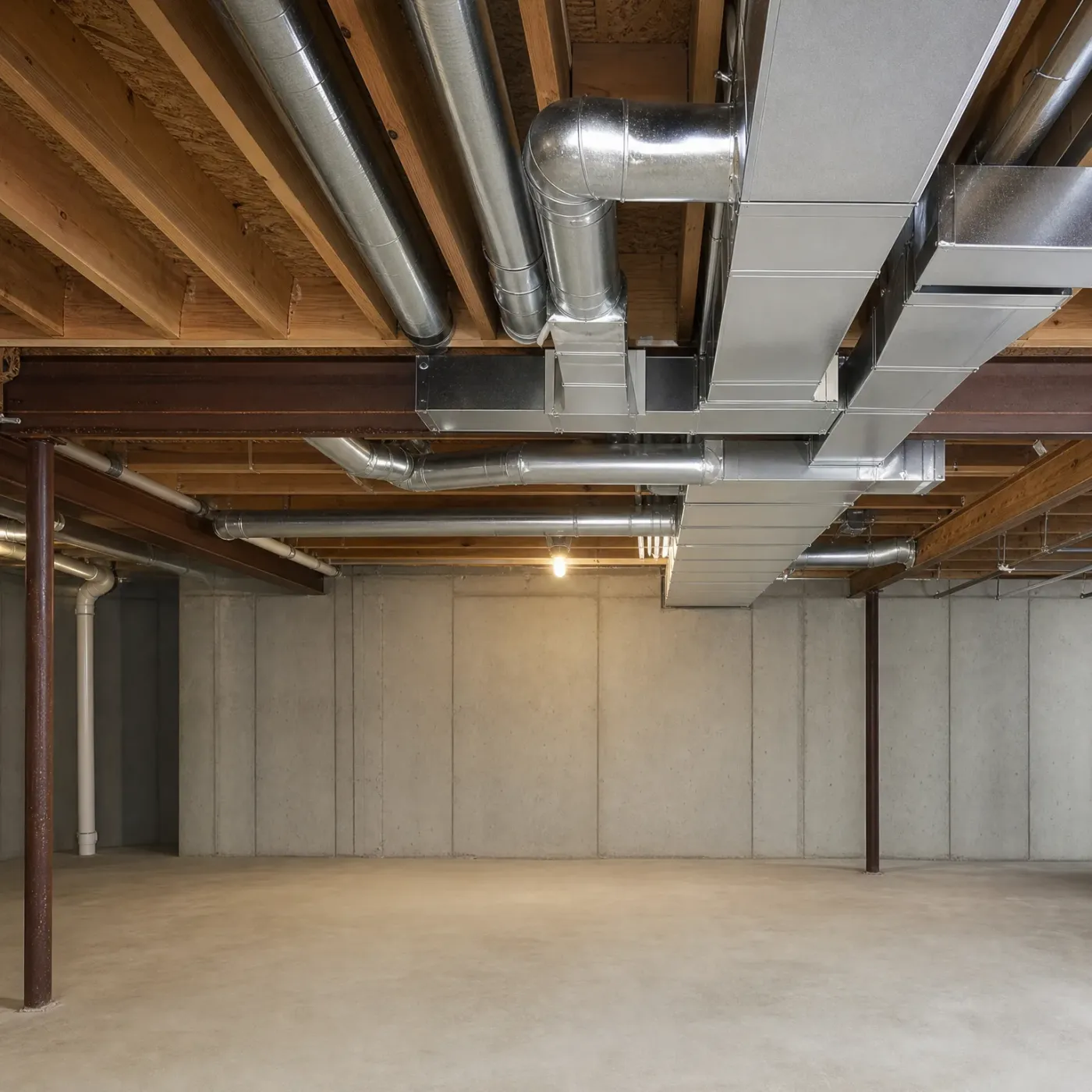
An empty unfinished basement with concrete floor and walls, exposed wood joists, steel beams and support posts, galvanized ductwork and pipes, and a single bare bulb light.

Ductwork running clean

Sheet-metal trunk lines and round flex ducts run tight along the joists, sections fitted close with no gaps at the seams. Air moves through without picking up buildup it shouldn't. A system like this in your basement or crawlspace needs cleaning on a schedule, not because something's gone wrong with it.
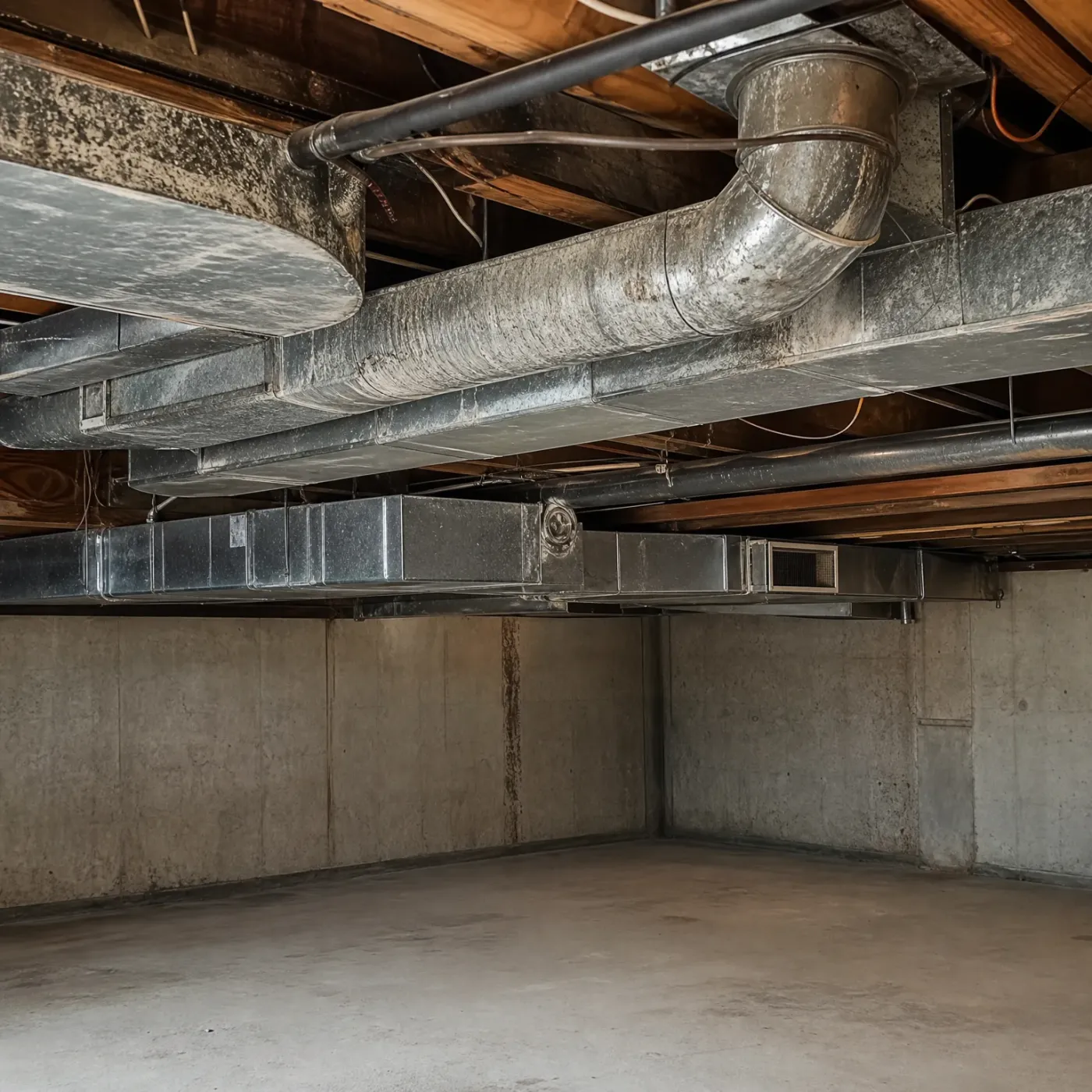
Empty basement with bare concrete walls and floor, with galvanized sheet-metal HVAC ducts, a round duct elbow, and pipes running along the wooden joists of the ceiling.

Ductwork in trouble

Galvanized ducts sag between the joists and the joints have pulled apart, open enough to pull in dust from the crawlspace itself. Dark staining shows on the wood and the duct surfaces where moisture's been sitting. That's mold riding the air every time the furnace kicks on, not just dust.

Clean the Ducts or Hold Off

Clean the ducts

  • A cleaning clears out the dust and debris sitting in the slow-moving air near the duct walls, including the buildup at bends and joints a vacuum can't reach.
  • It's worth doing once a fresh filter is in place and dust is still settling on furniture, since that points to the ducts and not the filter.
  • A contractor doing the work can spot loose joints, sagging sections or gaps where outside dust is getting pulled into the system.
  • It addresses the whole run, not just the foot or two of duct behind each register that a shop vac can reach.
  • Once it's done, the furnace or AC blower isn't stirring loose years of settled dust every time it kicks on.

Leave them alone

  • If the dust problem clears up after swapping in a fresh filter, the ducts likely weren't the cause and cleaning them won't add much.
  • A duct system with tight joints and no sagging between the joists has less reason to be holding onto buildup in the first place.
  • Skipping it means any loose seams or gaps pulling in attic or crawlspace dust stay as they are.
  • Musty air when the system kicks on and rooms that stay dusty no matter how often you clean are signs that tend to point back to the ducts, not away from them.
  • Dust and pet hair keep settling inside the duct walls where airflow runs slowest, and that buildup doesn't clear itself out over time.
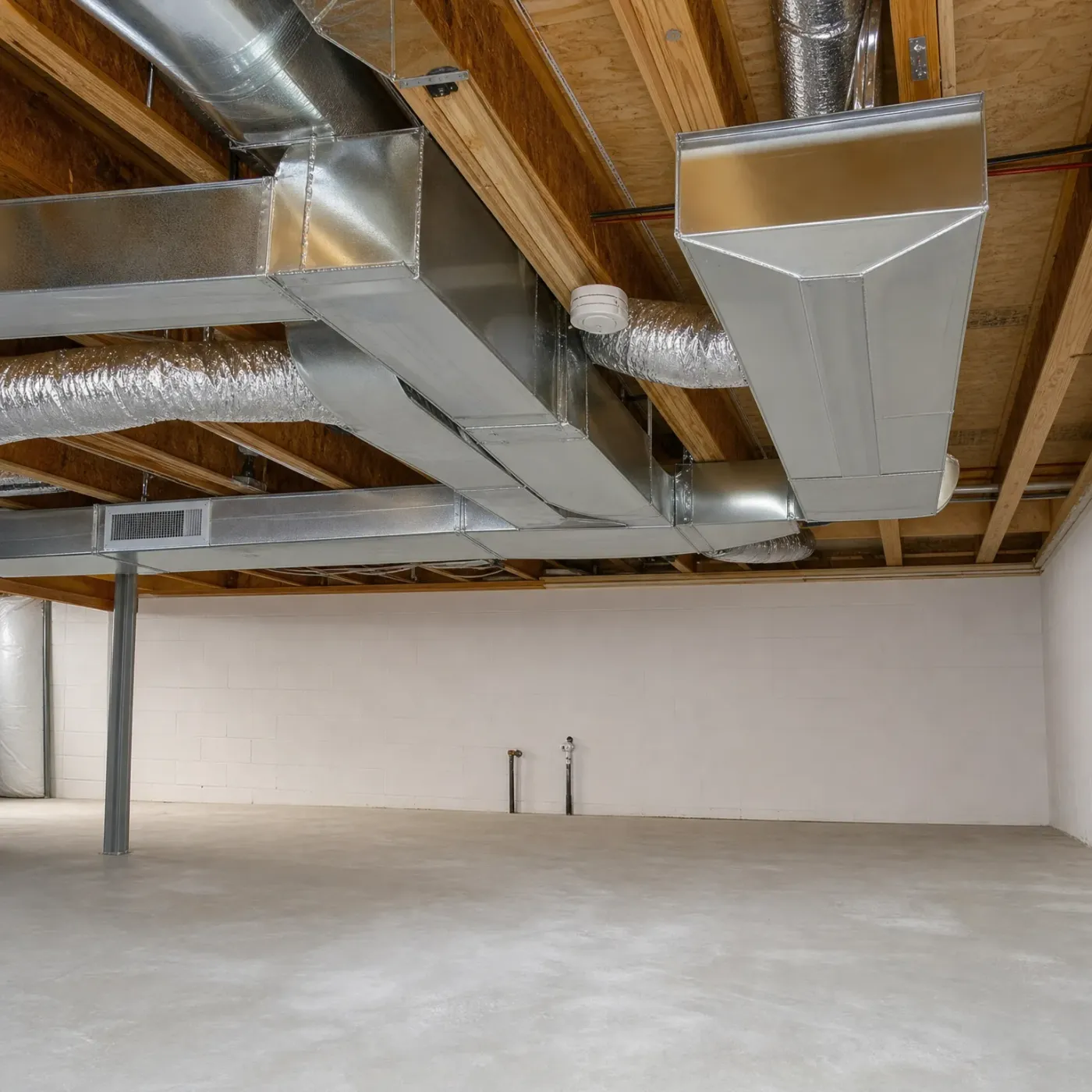
Empty basement with bare concrete floor, painted block walls, and an exposed wood-joist ceiling with sheet-metal and insulated flexible ductwork and a steel support column.

Ductwork running clean

Sheet-metal trunk and flex duct run tight against the joists, sections fitted close with no sag between them. The floor stays bare and dry under the runs. Air moves through without picking up dust it shouldn't carry into the house.

Galvanized rectangular and round sheet-metal ductwork running beneath a wood-joist ceiling in a basement with concrete walls and floor, with pipes and wiring alongside.

Ductwork overdue for cleaning

Dust and grime coat the trunk line and the branch duct feeding it, thick enough to dull the metal underneath. Every bend and joint along this run is holding buildup the blower stirs loose each time the furnace kicks on.

A woman in a gray sweater and jeans stands in an open wood front door of a white stucco house while a man in a dark jacket walks toward her on the entry path.

You know what to look for now

Dust back on the furniture a day after you clean, a musty smell when the furnace kicks on, rooms that never stay clean no matter how often you vacuum. Those are the signs, and in Missoula County, with half the ductwork in the county dating to 1985 or earlier and the furnace running from September into June, the system has a lot of hours to work dust loose and pull more in through any gap in the run. A fresh filter is still worth trying first. If the dust keeps coming after that, the ducts are where it's living.

Getting a straight answer on your own system means having someone look at the actual runs in your basement or crawlspace, not just going by the house's age. Once you send the request, that part stops being on you. A contractor who takes on duct cleaning in Missoula County gets your information and reaches out, and from there it's a conversation about what your ducts are actually doing, not a guess from a search box.

A mug and a small round vase sit on a wooden windowsill beside sheer and heavier curtains, with blurred autumn trees seen through the rain-speckled window and a sofa with cushions and a throw in the foreground.
A woman wrapped in a thick textured blanket sits on a sofa with an open book on her lap, beside a lit lamp and bookshelf, with a frost-patterned window behind her.
A smiling older woman with gray hair in a loose bun wearing a ribbed beige sweater stands in a dimly lit kitchen beside a window showing darkness outside, with a loaf of crusty bread on a wooden board in the foreground.

Ductwork Cleaning

Get your ductwork to the right pro

After you send the request, you're done searching.

A smartphone with a blank green screen stands upright against a plain light gray background.
Duct and vent cleaningDucts or ventsMissoula County, MT
Step 1 of 2

What ZIP code is the job in?