Duct cleaning can ease allergy symptoms if dust, pollen or pet dander has built up in your ducts, but it is not a cure. Montana summers are hot and dry, and that dry air carries fine dust through the house all season, some of which settles inside the ductwork and gets stirred back into the air every time the furnace or AC kicks on. If your filter is old or the wrong size for your system, more of that dust gets past it and into the ducts in the first place. Cleaning removes what has already collected. It does not stop new dust and pollen from getting in, so most people who notice a real difference are also pairing it with a better filter or sealing up gaps where outside air sneaks in. If your allergies track with the furnace running or windows being shut for weeks at a time, the ducts are a reasonable place to look.
Clean ductwork moves air through the house without adding to what's already floating in it.
Dust built up at a duct junction gets pushed into every room each time the furnace or AC kicks on.
Dust doesn't sit still in a duct system. It settles where the airflow slows down, mostly at the low points where a horizontal run meets a vertical one. Montana's dry summer air works against it too, keeping dust loose instead of letting it clump, so it rides farther into the system before it finally drops. The return side usually has more buildup than the supply side, since that's the path pulling household dust back into the furnace. A cleaning crew works branch by branch, running a brush or air whip through each line to break the debris loose, then pulling it out under negative pressure so it doesn't just resettle somewhere else. Every time the blower cycles on, it nudges whatever dust is left a few feet further down the line. That's why a technician checking the ducts usually checks the coil and blower wheel too. Dust collects there the same way, and leaving it out of the cleaning means it just works its way back into the air you're breathing.
How the dust actually moves
Dust and pollen settle at the low points of the duct run, usually where a horizontal section meets a vertical one.
A cleaning crew runs a brush or air whip through each branch line to knock debris loose before vacuuming the system under negative pressure.
The return side pulls in whatever is loose in the house, so it usually carries more dust than the supply side does.
Dry Montana air during summer keeps dust from clumping, so it travels farther into the duct system before it settles.
The furnace blower moves that settled dust a few feet every time it cycles on, not all at once.
A technician checks the coil and the blower wheel too, since dust collects there the same way it does in the ducts.
Before you get your ductwork cleaningAfter you get your ductwork cleaning
One request and it's handed off
Skip calling around for someone who cleans ducts.
Send the form and finding a duct cleaner is handled.
Dry summer air here doesn't just dry out your skin. It keeps fine dust moving through the house instead of settling and staying put, and a lot of it ends up pulled into your return vents. If anyone in the house gets stuffy or starts sneezing more when the furnace or AC runs, that's worth paying attention to. It's a sign the air moving through your ducts is picking something up on the way.
Once you know that, the next step is just getting someone qualified to look at your system and clean it if it needs it. That part can turn into its own chore: finding a crew that actually does duct cleaning, calling around for availability, explaining the same symptoms twice, then sitting with a stack of quotes trying to tell them apart. Send the form here and that search is done. You hear back from someone ready to look at your ducts, not a list of names to vet yourself.
Ductwork doing its job
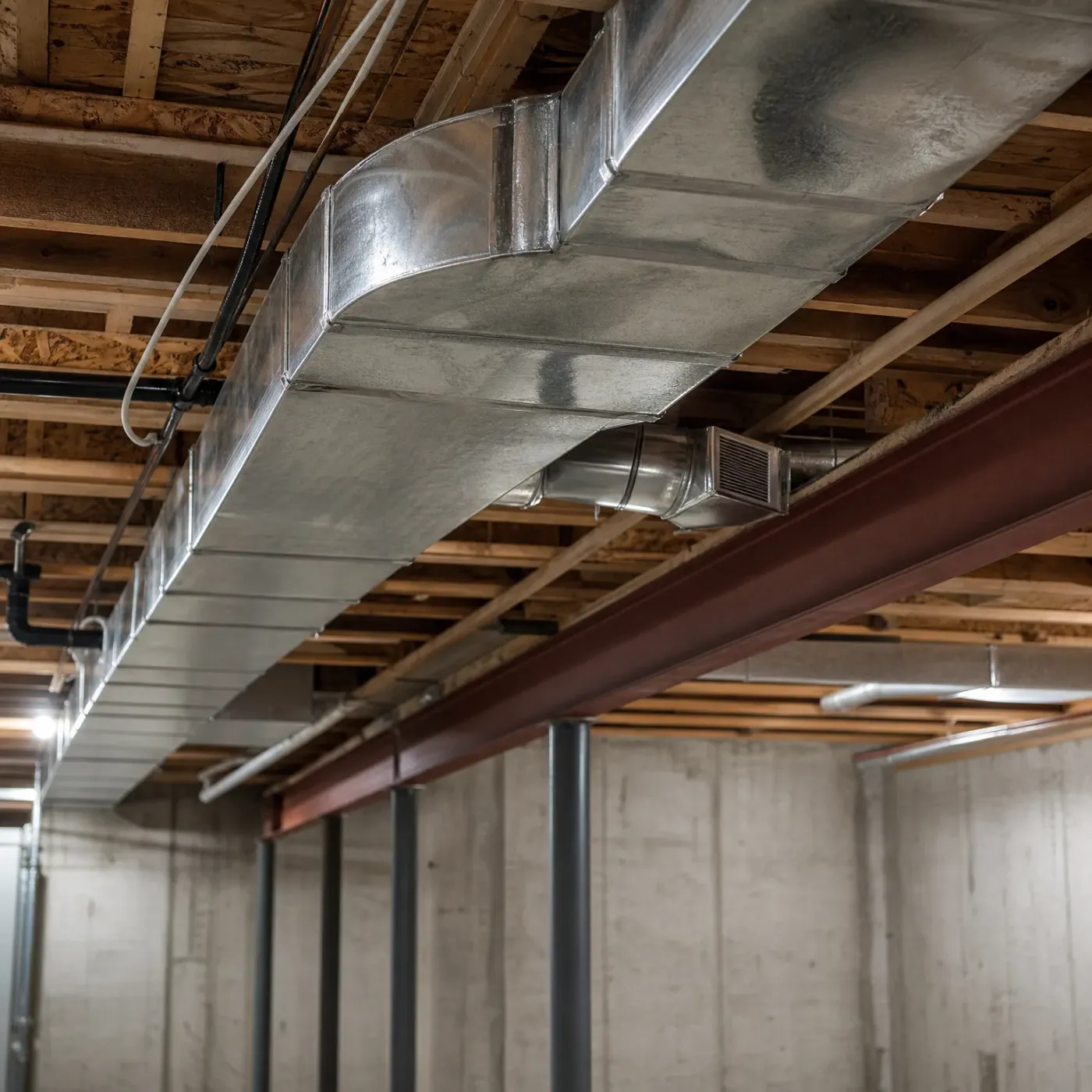
This is what a duct run looks like when it's keeping up. Air moves from the furnace through the metal runs overhead without a layer of dust sitting in the joints. Nothing in the system is adding to what's already in the air in a dry Montana summer.
Ductwork that's fallen behind
Dust collects at every seam and joint along runs like these, especially where a horizontal line meets a vertical drop. Each time the furnace or AC cycles, some of it gets pushed back into the rooms you're breathing in.
Power costs 12.99 cents per kilowatt-hour statewide
At under 13 cents a kilowatt-hour, running the blower longer than usual isn't what's driving your bill up. A cleaning crew checking the system properly, running the fan to pull dust out of every branch line, costs you little either way.
EIA-861 2025 statewide residential average
Where this leaves you
Duct cleaning helps most when dust or dander has actually built up in the runs, not as a routine fix.
Montana's dry summer air keeps fine dust moving through the house instead of letting it settle and stay put.
The low points where horizontal and vertical duct sections meet are where debris collects and later gets pushed into rooms.
A cleaning crew brushes each branch line loose and vacuums the system under negative pressure rather than just blowing air through it.
Running the blower longer during a cleaning costs little with power here under 13 cents a kilowatt-hour.
Clean ducts stop adding to what's already in the air, they don't filter what's already there.
If someone in the house has been sneezing more since summer dust started moving through the vents, cleaning the ducts is worth doing, and it works best as a response to that buildup rather than a yearly habit. Montana's dry air is the reason the dust keeps circulating instead of settling on the furniture and staying there. It gets pulled into the return vents and collects at the low points in the duct run, the joints where a horizontal section drops into a vertical one. A crew that does this right brushes those spots loose and pulls the debris out under negative pressure, not just a blower pushing air around. That's a real difference, and it's worth asking about before you hire anyone. What cleaning won't do is filter the air going forward. The ducts stop being a source of dust, but they were never the thing removing it. That job still belongs to the filter and, if the air is bad enough in the house, to something made for filtering. None of this costs much extra in power, running a blower a while longer on a system already priced under 13 cents a kilowatt-hour barely moves the bill. The straightforward part is knowing what to ask for. The harder part has been finding someone local who'll do the brushing and the vacuuming instead of a quick pass with a hose. That's the part a request through this page takes off your plate.
Ductwork Cleaning
Done looking for a duct system pro
Answer a few questions about the duct cleaning and skip the search.