Ducts doing their job
This is what a clean run looks like: round metal pipes carrying air branch to branch with no fur along the seams. Air moves through, nothing collects at the joints, and what comes out the vents upstairs is just air.
Dust in Billings works its way into ductwork fast, dry summers pull it in through every gap, and a hard winter running the furnace day after day pushes it right back into your house. Whether cleaning is worth it for you depends on what's actually sitting in your ducts, how your system was installed, and what's circulating through it now. That's not something to guess at from a search result. A local contractor who works on duct systems around Yellowstone County every season can look at yours and tell you plainly if it needs cleaning or if your money is better spent elsewhere. Send the form below and that question stops being yours to research. You're not left comparing companies or fielding calls from several crews bidding against each other. One licensed local contractor gets your request, looks at what you've described, and reaches out. The legwork of finding someone who knows this equipment and this area ends the moment you hit send.
It depends on what's actually in your ducts, but for most homes around Billings it's worth doing once, then checking every few years rather than on a fixed schedule. Dry summers here pull dust and grit into the system through every gap and return, and a furnace running hard all winter circulates it through the house instead of outside. If you can see dust building up around vents, or someone in the house has been sneezing more than usual, that's a sign the ducts are holding more than they should. If the system runs clean and nobody's bothered, cleaning won't fix a problem that isn't there. The real value is in catching it before it gets bad enough to strain the furnace or spread dust through every room it feeds. A cleaning crew can also tell you if what's built up is just dust or something else worth knowing about, like a leak or a pest.
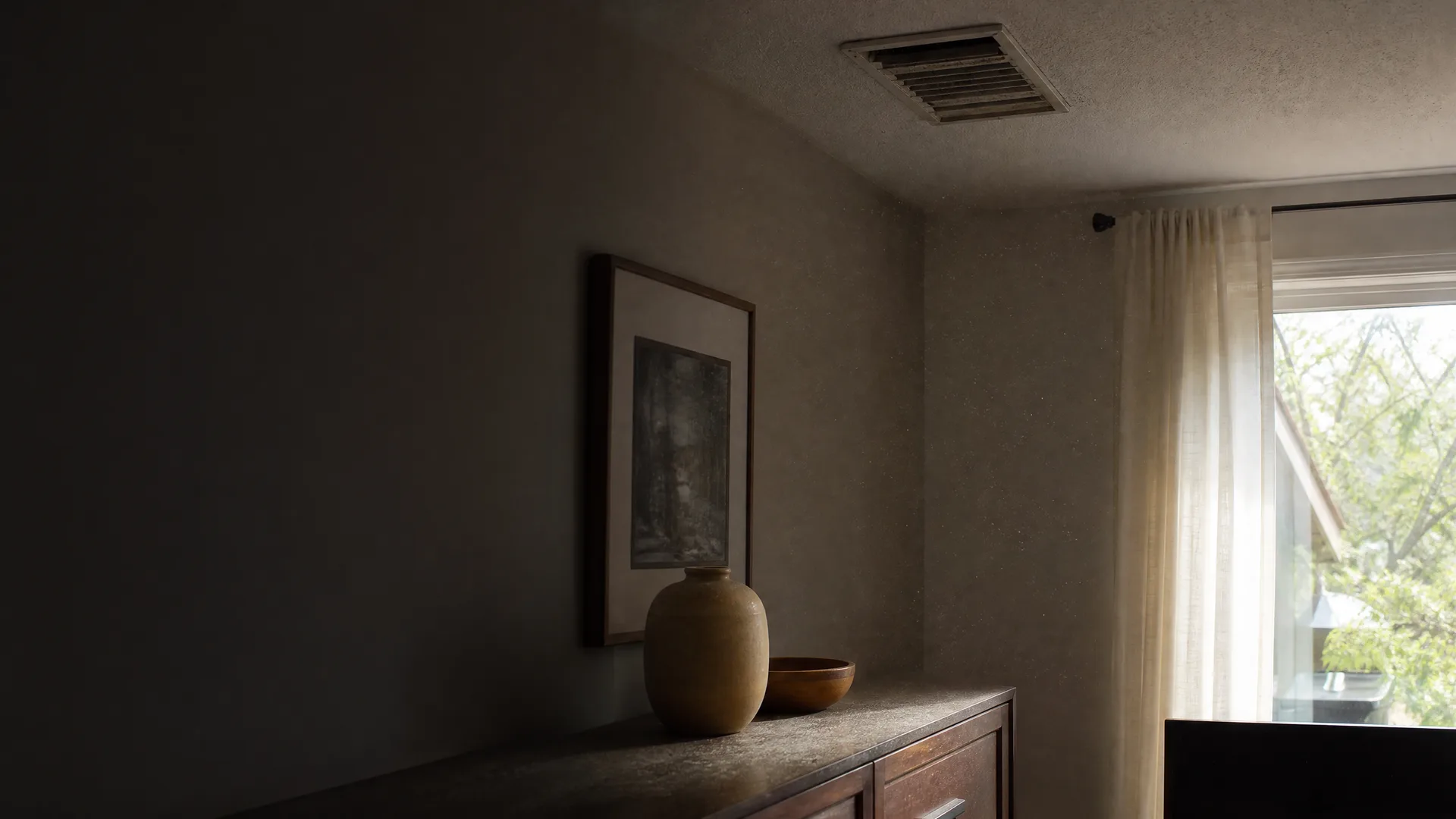
You're dusting the end table on a spring afternoon when you catch it, the ceiling vent grille above the couch, gray and furred along every slat. You wipe the table and it needs wiping again before you've even put the cloth away. The furnace ran most days since October and the summer before that was dry enough to coat every windowsill in town. Now it's sitting in your living room instead of outside it. You look up at the grille again and wonder how long it's looked like that.
Half the homes here were built by 1982
Half the homes in Yellowstone County were built in 1982 or earlier. Older ductwork is more likely to have loose seams or gaps where dust gets pulled in.
Heat runs September through May
Furnaces here run about nine months a year, September through May. That's nine months of air moving through the same ducts, carrying whatever's in them.
Cooling runs July through August
Air conditioning only runs about two months, July and August. The furnace does most of the work moving dust around your house, not the AC.
ACS 2020-2024 · NOAA nClimDiv 1991-2020

This is what a clean run looks like: round metal pipes carrying air branch to branch with no fur along the seams. Air moves through, nothing collects at the joints, and what comes out the vents upstairs is just air.

Same kind of basement, same metal ductwork, but dust has built up at the joints and along the seams where sections meet. The longer it sits, the more a running furnace stirs loose and sends up through the house.
You vacuum the bedroom and the air coming off the floor vent still smells faintly stale, like a closet that doesn't get opened. A film builds back on the TV stand within days of dusting it. Somebody in the house is sneezing more in January than they do in July, even though nobody's sick. You crack open a return grille and the inside edge is gray and soft with buildup, not just dusty but packed. None of this means your ducts are unsafe. It means they're holding onto more than they should, and every month the furnace runs, it's moving that same dust through the rooms you spend the most time in.




A technician cuts access ports into the main trunk lines.
A negative air machine hooks up to pull the system under vacuum.
Agitation tools knock dust loose from inside each duct run.
The vacuum pulls loosened dust out before it resettles.


A furnace that runs nine months a year moves a lot of air through the same metal runs, and every pass carries whatever dust is already loose in there back through your registers.
That's why a system cleaned once often stays reasonably clear for several years after, instead of needing attention every season.


A furnace that runs nine months a year doesn't leave much room to put this off indefinitely. Every heating cycle between now and spring is another pass of air through the same runs, picking up whatever's loose in there and pushing it back through your registers. If you've already seen gray on a vent grille or noticed dust settling again right after you wipe it down, that's your answer, and waiting through another winter just means more of it circulating while you decide. Finding a contractor who works on ductwork in homes around Billings regularly, someone who knows what loose seams from an older system look like and what a summer's worth of dry dust does to a return line, takes the guesswork out of it. Send the request and that search is handled. You get matched with one local contractor who deals with this kind of system all the time, not a stack of callbacks to sort through while the furnace keeps running.

If your filter still looks reasonably clean at the one month mark, if nobody in the house is sneezing more than usual, and if the vents aren't showing fur when you look close, your ducts may be handling the load fine on their own. Some homes around Billings go years between cleanings and never notice a difference either way. A newer system with tight seams tends to hold up better than an older one, since there's less for dust to catch on inside the runs.

If you've had work done on the furnace or ductwork recently, construction dust and debris can sit in the runs long after the job's finished, and that's worth clearing out before another winter pushes it through the house. Same goes for a home that sat with the system off for a stretch, or one where someone just moved in and has no idea what the last owner did or didn't do. A visible film on the vent grilles is the clearest sign something needs to come out.
At 14.42 cents per kilowatt-hour, running a negative air machine through your ductwork isn't the expense here, the furnace is. Keeping those runs clear of dust means your furnace isn't working harder than it needs to over nine months of heating, which is where your power dollars actually go.
EIA-861 2025
So the answer is the one you started with: it depends on what's actually built up in your ducts, and the house itself tells you that more than any schedule would. If your ductwork dates to 1982 or earlier, the seams are more likely to have opened up enough to pull dust in with every return cycle. If your furnace has been running close to nine months a year, it's been pushing that dust through the same runs the whole time, which is why the vents and the filter are worth a look before you decide either way.
If you do move on it, who you hand it to matters as much as the decision itself. Ductwork around Yellowstone County tends to fail in the same places, loose seams at the joints, runs that collect more than others, and a contractor who works this equipment every heating season has usually already seen the version of it sitting in your house. That's different from someone guessing at a system they've never been inside.
Sending a request through this page puts it in front of one contractor, local to the area, rather than scattering your number across several companies and sorting through whoever calls back first. You get someone who already knows what Billings ductwork tends to look like after a few winters, looking at yours specifically. From there, it's their read on your system that tells you whether this is worth doing now or worth waiting on.

One request and it's handed off