
HVAC Repair in Hamilton, MT
If your system quits, tell us what it's doing and a licensed contractor who covers Ravalli County will get in touch.
Tell us about the job
It takes about a minute.

Eleven months of heat, one hard winter
Your furnace runs from August through June in Hamilton, eleven months out of the year. On winter nights that average 16°F, it cycles on and off for hours to keep the house warm, and that kind of use wears on the igniter and the heat exchanger long before the unit is old.
Cooling barely factors in here. Summer afternoons average 73°F, so the air conditioner or heat pump does little work most years. What matters more is what happens when the power goes out. Montana saw 18% of households lose power for 24 hours or more in 2024, and a gas furnace still needs electricity to run its blower and controls. When the power drops on a cold night, the house goes cold even with gas still flowing to the burner.
- 11 months
- August through June, your system heats
- 16°F
- the average winter night it heats against
- 73°F
- the average summer afternoon it cools against
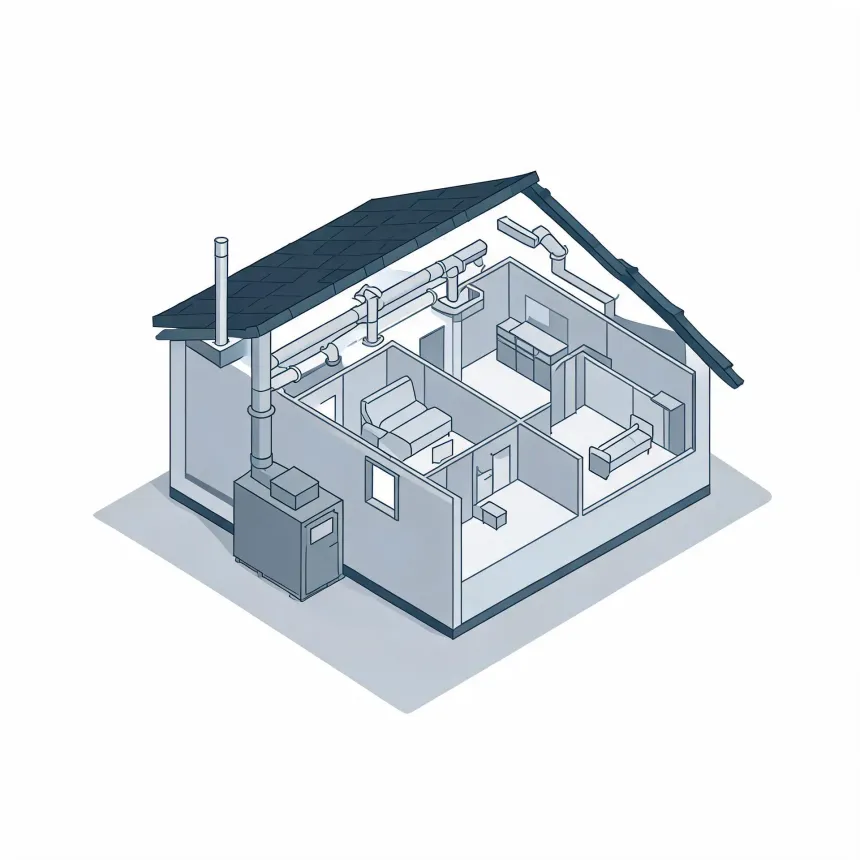

A new furnace and air conditioner would cut about $100 a year off heating and cooling for a typical Ravalli County home.
Estimates for a typical Ravalli County home, compared with an older unit built to the previous federal minimum, from EIA household energy data, Montana fuel prices and NOAA climate normals. Your home will differ.
Repair makes sense when one part has failed.
Replacement makes sense when the furnace's heat exchanger is cracked, the air conditioner's compressor has failed, or repairs keep coming.
Montana requires HVAC contractors to hold a state license.
The license comes from the state's Department of Labor and Industry, and it covers the contractor, not the specific job in your home. Montana tested that contractor and keeps a record of them. Work under $2,500 does not need a licensed contractor at all, so a small repair can legally be done without one.
For a heating and cooling repair above that threshold, this license is what stands behind the person working on your system. It is the state's record that the contractor was tested and is accountable for the work under their name.
Source: Montana Legislature
- Why is my heat not working?
- Start with the thermostat and the power to the furnace. If the thermostat screen is blank or the furnace won't respond at all, check the breaker and any switch that looks like a light switch near the unit, since that's how furnaces are shut off for service. If it has power but won't light, the igniter is a common failure and it wears out over time rather than all at once. Winter nights here drop to around 16°F, so a furnace that's cutting out rather than failing outright can still leave a house cold fast, and that's worth a same-day call rather than waiting to see if it clears up.
- Why is my system running but not cooling the house?
- If the blower is running but the air isn't cold, check the filter first. A clogged filter starves the coil of airflow, and when that happens the coil can ice over and stop cooling even though the fan keeps blowing. If the filter's clean and you're still getting warm air, it could be low refrigerant or a failing compressor, and neither of those is something to diagnose yourself. Cooling issues here are rare enough that most homes go without needing it, but when a system won't cool at all it's worth having someone look at it rather than running it and making a coil problem worse.
- What can I check before calling for HVAC repair?
- Check the thermostat batteries and settings first, since a dead battery or a thermostat set to the wrong mode looks exactly like a bigger failure. Check the breaker panel and any power switch near the furnace or air handler. Check the filter, since a filter that's clogged can cause problems that look like a failing blower or a frozen coil. If none of that explains it, note what you're seeing, whether it's no power, no heat, strange noise, or a smell, since that detail helps a contractor figure out what's wrong before they even arrive.