Mini Split Installation in Polson, MT
Tell us about the house, and a licensed contractor who covers Lake County will get in touch.
Tell us about the job
It takes about a minute.
A mini-split here works ten months a year
Polson needs heat September through June. Winter nights average 20°F in December, January and February, and the mini-split has to hold the house warm through all of it, not just take the chill off in spring and fall. There is almost no cooling to do. Summer afternoons average 76°F, so the compressor spends nearly its whole life running in heating mode.
Any new mini-split has to meet the federal minimum for a split-system heat pump. That is 14.3 SEER2 for cooling and 7.5 HSPF2 for heating. In a place that leans this hard on heat, the HSPF2 number tells you more about how the unit will perform than the cooling number ever will.
- 10 months
- September through June, your system heats
- 20°F
- the average winter night it heats against
- 76°F
- the average summer afternoon it cools against
Montana requires HVAC contractors to hold a state license.
The license is issued to the contractor, not to a single job. It follows them from one installation to the next rather than being applied for each time. Montana does carve out an exception. Work under $2,500 does not need a licensed contractor. A mini-split installation typically runs well above that, so this is a licensed job.
The license is what protects you here, since Montana is one of the states that tests and records who holds one. Beyond that, most cities and counties require a permit for this kind of installation, along with an inspection once the work is finished. That inspection is where someone checks the work was done right, separate from whatever the license already tells you about the contractor.
Source: Montana Legislature
- Is a mini split worth it?
- For a house here that needs heat from September through June, yes, if the unit is sized to handle winter nights near 20°F. A mini split with a cold-climate heat pump can still pull heat from outside air at those temperatures, which is the main thing to check before buying one. It also gives you a heat source that does not depend on ductwork, which matters if the space you are heating does not already have any.
- How many rooms can a mini split cover?
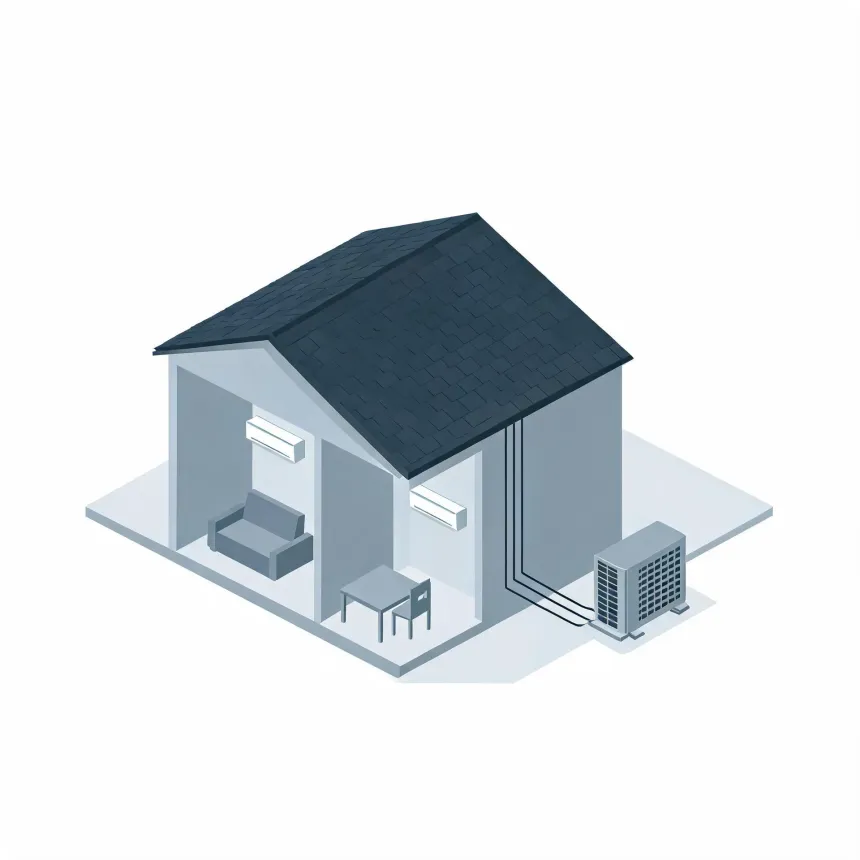
- A single indoor unit heats and cools the one room or open area it sits in. If you need coverage in several rooms, a multi-zone system runs more than one indoor head off a single outdoor unit. Each zone is set and controlled on its own, so a bedroom and a living room can run at different temperatures at the same time. A contractor can tell you how many zones a given outdoor unit will support.
- Can a mini split heat a whole house?
- It can, but only if it is designed for the whole house from the start, with enough indoor units placed to reach every room. A single head warms the space it is in and whatever rooms are open to it, not the rest of the house. Getting this right means a contractor has to work out the heat loss for each room, especially with winter nights averaging 20°F here, and place zones so the whole layout is actually covered.