Mini Split Installation in Missoula, MT
Tell us about the house, and a licensed contractor who covers Missoula County will get in touch.
Tell us about the job
It takes about a minute.
Missoula asks a mini-split to run most of the year
Homes here need heat from September through June, ten months a year. Winter nights average 17°F from December through February, and a heat pump has to work harder to pull warmth out of air that cold. Summer afternoons average 74°F, so the unit spends almost none of its time cooling.
Any mini-split installed new has to meet the federal minimum for a split-system heat pump, 7.5 HSPF2 for heating and 14.3 SEER2 for cooling. With ten months of heating and none of cooling here, the heating number is the one worth paying attention to when you're comparing units.
- 10 months
- September through June, your system heats
- 17°F
- the average winter night it heats against
- 74°F
- the average summer afternoon it cools against
Montana requires HVAC contractors to hold a state license.
Montana's Department of Labor and Industry issues that license. It covers the contractor as a business, not each job separately, so the same license applies to this installation and to every other job that contractor takes on. Montana does carve out one exception. Work under $2,500 does not need a licensed contractor. A mini-split installation typically costs more than that, so this job falls under the license requirement.
Because Montana licenses at the contractor level, that license is what stands behind the person doing this work. A mini-split installation also needs a permit from the local building office in most cities and counties, with an inspection once the work is finished. That inspection is separate from the state license. It is what checks the installation itself, not the contractor's credentials.
Source: Montana Legislature
- Is a mini split worth it?
- For most homes here, yes. A mini split is a heat pump, so it moves heat instead of generating it, which keeps it efficient through most of the year. Homes here need heat from September through June, so a unit that both heats and cools covers nearly the whole calendar. Winter nights average 17°F here, so ask a contractor whether the model they're proposing keeps producing heat at that temperature.
- How many rooms can a mini split cover?
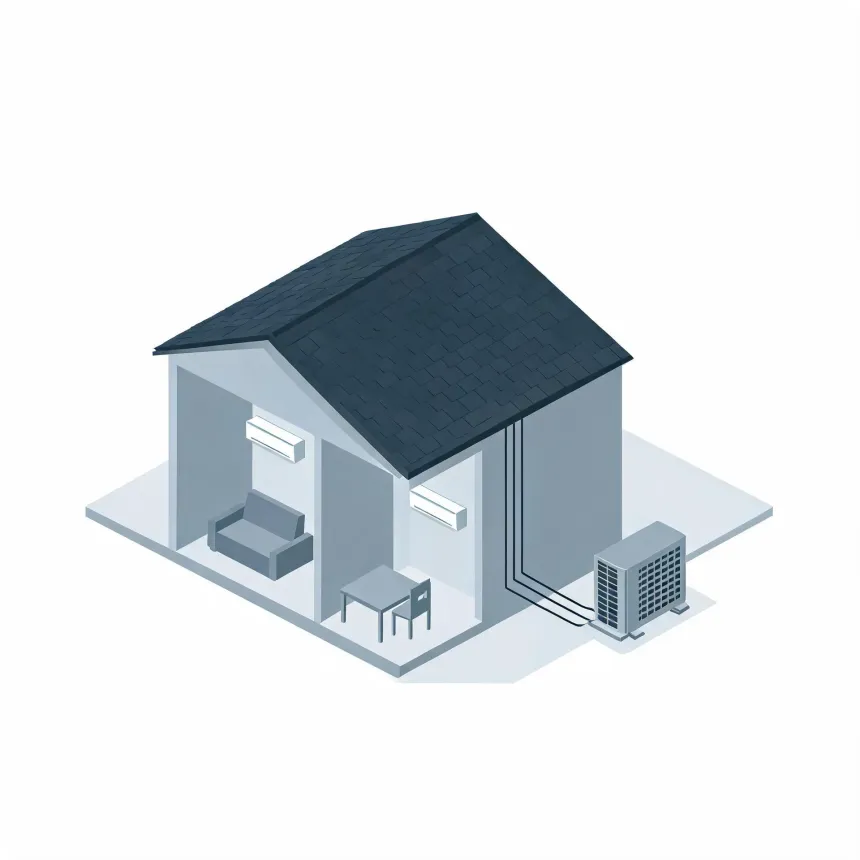
- A single outdoor unit can run one indoor head or several, in what's called a multi-zone system. Each indoor head is sized for the room or area it serves, so the number of rooms covered depends on how many heads are installed, not on the outdoor unit alone. A contractor will size the system to your house rather than guess at a number that fits every home.
- Can a mini split heat a whole house?
- It can, if it's sized and placed for the whole house rather than a room or two. That usually means a multi-zone system with an indoor head in each main living area, since a mini split heats the room the indoor unit is in, and open floor plans carry that heat further than closed-off rooms do. Winters here average 17°F on the coldest nights, so the units chosen need to be rated to keep heating at that temperature. A contractor can walk through your house and say what it would take to cover it.