Mini Split Installation in Miles City, MT
A new system here will heat from September through May and cool from June through August every year. Tell us about the house, and a licensed contractor who covers Custer County will get in touch.
Tell us about the job
It takes about a minute.
Miles City asks a mini-split to run almost year round
Nine months of heat and three months of cooling add up to a mini-split working in one direction or the other nearly all year in Custer County. Winter nights average 11°F, cold enough that the heat pump side has to pull hard to get warmth out of that air. Summer afternoons average 84°F, so the same unit reverses course and cools for the months in between.
A mini-split installed new falls under the federal split-system heat pump minimums, 14.3 SEER2 for cooling and 7.5 HSPF2 for heating. With nine months of heating against three of cooling, the HSPF2 rating is the one that reflects most of what the unit will actually be doing here.
- 9 months
- September through May, your system heats
- 3 months
- June through August, it cools
- 11°F
- the average winter night it heats against
- 84°F
- the average summer afternoon it cools against
NOAA nClimDiv, 1991–2020 normals
Montana requires HVAC contractors to hold a state license.
Montana's Department of Labor and Industry tests contractors before it licenses them, and it keeps a record of who holds that license. The license covers the contractor, not each job they take on. Work under $2,500 does not need a licensed contractor at all, but a mini-split installation runs well past that figure, so the contractor doing yours should hold the state's license.
The license tells you the contractor was tested and is on record with the state. It does not cover what happens after the unit is installed. In most cities and counties, a mini-split installation needs a permit from the local building office and an inspection once the work is done. That inspection checks the installation itself, separate from anything the state looked at when it licensed the contractor.
Source: Montana Legislature
- Is a mini split worth it?
- For a lot of homes here, yes. Winters average 11°F, and a heat pump has to work hardest exactly when it's that cold outside, so a lot rides on how the house is heated now and which rooms need help. A mini split is a strong fit for an addition, a garage, or a room that gas heat does not reach well. A contractor can look at the space and tell you whether it should carry the load on its own or work alongside the heat you already have.
- How many rooms can a mini split cover?
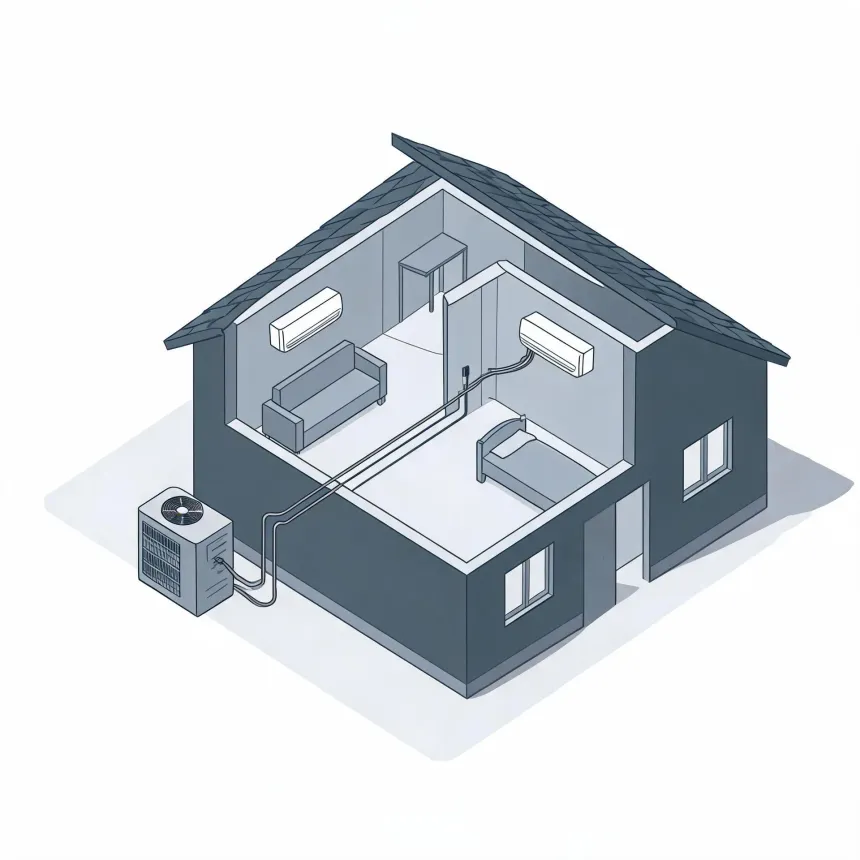
- A single outdoor unit can run one indoor head or several. Each indoor head heats and cools the room it sits in, so coverage comes down to how many heads get installed, not the size of the outdoor unit alone. The layout of the house, where the walls are, and how the rooms connect all affect how many zones make sense. A contractor can walk the house and size a system for the actual rooms.
- Can a mini split heat a whole house?
- It can, if there are enough indoor heads placed in the rooms that need heat, and if the system is sized for how cold it gets here. With winter nights averaging 11°F, the heat pump has to be rated to keep working at that temperature without falling back on another heat source. Most homes here already heat with gas, so a mini split is often added for a room or an addition rather than replacing the whole system. Whether one can carry the entire house depends on the layout and the equipment, and that is something a contractor needs to size in person.