Mini Split Installation in Havre, MT
A new system here will heat from September through June and cool from July through August every year. Tell us about the house, and a licensed contractor who covers Hill County will get in touch.
Tell us about the job
It takes about a minute.
Havre asks a mini-split to run nearly all year
Winter nights here average 8°F from December through February, and homes need heat from September through June. That is ten months of the year the heat pump side of a mini-split is doing the work, with only July and August, when afternoons average 80°F, asking for cooling instead. There is almost no season where the unit sits idle.
Any mini-split installed new has to meet the federal minimum for a split-system heat pump, 14.3 SEER2 for cooling and 7.5 HSPF2 for heating. That rating is tested at conditions well above an 8°F night, so how the unit performs on the coldest nights matters here more than the number on the label.
- 10 months
- September through June, your system heats
- 2 months
- July through August, it cools
- 8°F
- the average winter night it heats against
- 80°F
- the average summer afternoon it cools against
NOAA nClimDiv, 1991–2020 normals
Montana requires HVAC contractors to hold a state license.
That license is issued to the contractor by the state, not to each job, so it is the business and the people behind it that Montana has tested and put on record. Work under $2,500 falls outside that requirement, so smaller repairs can legally be done without a licensed contractor. A mini-split installation runs well past that line, which puts it squarely under the license rule.
Since Montana licenses HVAC contractors, that license is the main thing standing behind this job. Most cities and counties also require a permit for an installation like this, along with an inspection once the work is done, which gives a local building official a chance to look at what was installed.
Source: Montana Legislature
- Is a mini split worth it?
- For most homes here, yes, because heat is needed from September through June and a mini split covers that along with the two months of summer cooling in one system. Winter nights average 8°F here, so the heat pump has to keep working on the coldest nights, and a contractor should confirm the unit you're looking at is rated to hold its heat output at that temperature. Some models fall off well before they hit that mark, others are built to keep going. Whether it makes sense for your house also depends on how it's heated now and which rooms need coverage, which is worth going over with a contractor who can look at the space.
- How many rooms can a mini split cover?
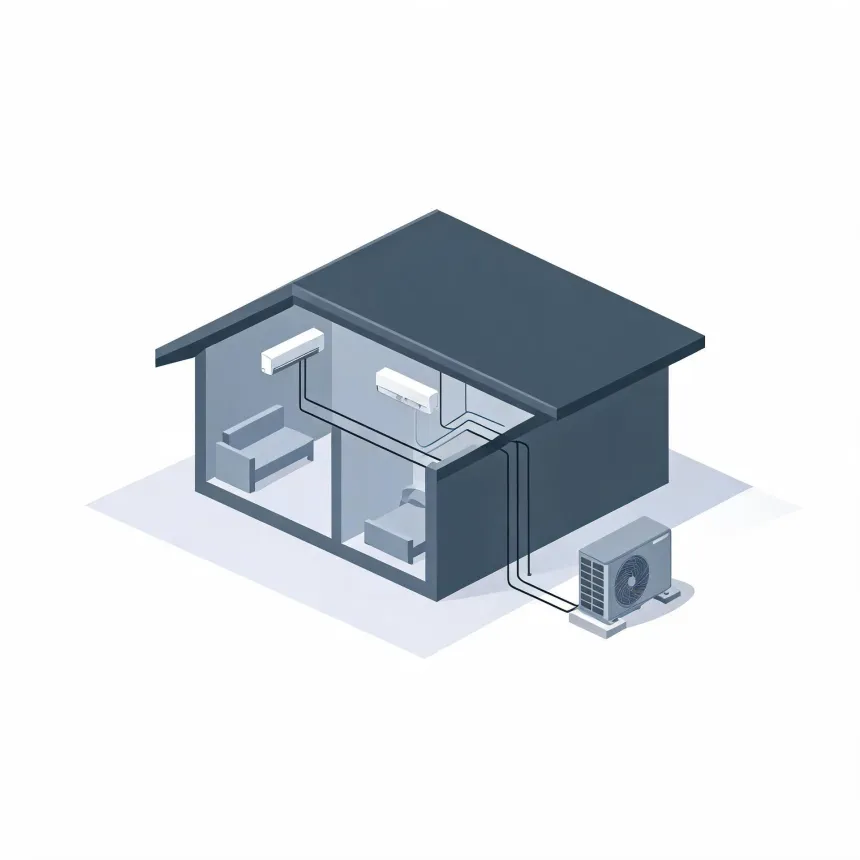
- A single outdoor unit can run one indoor head or several, depending on the system. A single-zone system covers one room or open area. A multi-zone system runs several indoor heads off one outdoor unit, each set to its own temperature. How many rooms actually get good coverage depends on the size of each room, the layout, and where the heads are placed, so a contractor will work that out room by room for your house.
- Can a mini split heat a whole house?
- It can, if enough indoor units are placed to reach every room, but that takes planning around your specific layout. An open floor plan needs fewer heads to cover well. A house with several closed-off rooms and hallways will need more thought given to placement, and rooms far from any head may stay colder than the rest. Since homes here need heat from September through June, getting this right matters more than it would somewhere milder, so it's worth having a contractor map out head placement against your floor plan before deciding.