Mini Split Installation in Anaconda-Deer Lodge County, MT
Tell us about the house, and a licensed contractor who covers Deer Lodge County will get in touch.
Tell us about the job
It takes about a minute.
A mini-split here has to hold heat all year, at 13 below zero
Deer Lodge County asks a mini-split to run twelve months, not just carry the shoulder seasons. Winter nights average 13°F from December through February, and the unit has to pull heat out of that cold air every one of those nights. Summers stay mild, averaging 71°F in the afternoon, so cooling is the easy part of the job.
A new ductless heat pump installed here still has to meet the federal minimum for a split system, 14.3 SEER2 for cooling and 7.5 HSPF2 for heating. But the number that matters most for this county is how the unit performs on the coldest nights, since it's doing the real work all winter with barely any summer load to balance it out.
- 13°F
- the average winter night it heats against
- 71°F
- the average summer afternoon it cools against
Montana requires HVAC contractors to hold a state license.
Montana tests the contractor through the Department of Labor and Industry and keeps that license on record, but it belongs to the business, not to any single job. The state also draws a line at $2,500. Work under that amount does not need a licensed contractor at all, so the size of the job decides whether this rule even applies.
A mini-split installation almost always runs past that line, which means the contractor doing it should hold the state license. That license is not the only check on this job. Most cities and counties also require a permit for this kind of installation, with an inspection once the work is done. The license says the state has tested and tracked the contractor. The inspection says someone looked at the finished work in this home.
Source: Montana Legislature
- Is a mini split worth it?
- For a lot of homes here, yes, especially if you're adding heat or cooling to a room that doesn't have ductwork reaching it. Winter lows here average 13°F, so whatever unit goes in has to be sized and rated to actually keep up on the coldest nights, not just take the edge off. A mini-split installed new has to meet 7.5 HSPF2 for heating and 14.3 SEER2 for cooling under the current federal standard, so efficiency isn't something you have to shop for separately. Whether it's worth it for your house depends on what you're trying to heat or cool and what's there now, and that's a question a contractor can answer once they've looked at the space.
- How many rooms can a mini split cover?
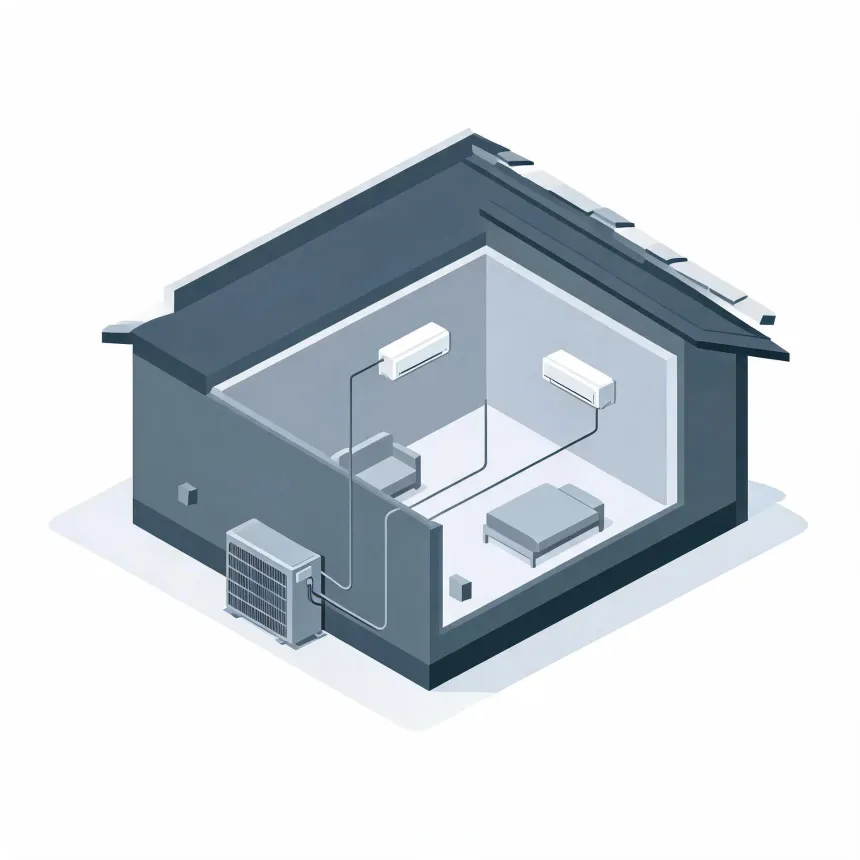
- A single indoor unit is built for one room or one open area. If you need several rooms covered, a multi-zone system runs more than one indoor unit off a single outdoor unit, and each room gets its own thermostat control. How many zones a house can support comes down to the size of the outdoor unit and the layout of the rooms, so a contractor will need to see the house to say what's realistic.
- Can a mini split heat a whole house?
- It can, but it takes the right setup, usually a multi-zone system with an indoor unit in each main area of the house. Homes here need heat for all 12 months of the year, so the system has to be sized for winter nights that average 13°F, not just mild weather. That's a bigger job than covering one or two rooms, and it means the outdoor unit and the number of zones both have to match the size of the house. A contractor can walk the house and tell you what it would take to heat the whole thing this way.